Tag Archives: Ancient Science fiction

AN 1892 NOVEL ABOUT ALIEN ABDUCTIONS: THE GERM GROWERS

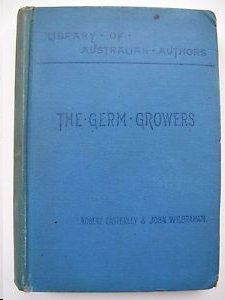
germ-growersTHE GERM GROWERS (1892) – Robert Potter wrote this work of “ancient” or vintage science fiction dealing with biological warfare and alien abductions.

The two main characters are two Welsh men named Robert Easterley and Jack Wilbraham. In 1892 Easterley witnesses a stranger being abducted by aliens and carried off in their spacecraft. The extraterrestrial vessel is invisible but does cast a shadow on the ground as it flies past Robert Easterley, convincing him of the reality of what he witnessed.

Anticipating UFO conspiracy kooks by several decades Easterley and his friend Wilbraham speculate that old stories about humans being abducted by “little people” and other supernatural figures may really be accounts of abductions by aliens. Not long afterward the area suffers multiple deaths from a mysterious disease. Continue reading

8 Comments

Filed under Ancient Science Fiction

EIGHT MORE EXAMPLES OF ANCIENT SCIENCE FICTION (1744-1910)

Speedy JourneyOne of the most popular posts here at Balladeer’s Blog was my 2014 list about “ancient” science fiction from 1634-1909. Here is a followup list of sci fi tales that were way ahead of their time. FOR THE ORIGINAL LIST CLICK HERE     

THE SPEEDY JOURNEY (1744) – Written by Eberhard Christian Kindermann. A five-man crew from Earth pilot a spacecraft to a moon of Mars, where they encounter alien life-forms of all kinds as well as secrets tying the inhabitants to Earth people by way of odd religious parallels. The space travelers also encounter a world-destroying meteor and a “space whirlpool.” CLICK HERE   Continue reading

14 Comments

Filed under Ancient Science Fiction

TO THE MOON AND BACK IN NINETY DAYS (1917)

to-the-moon-and-back-in-ninety-daysTO THE MOON & BACK IN NINETY DAYS (1917) – By John Y Brown. Balladeer’s Blog presents more Ancient Science Fiction (or Vintage Science Fiction if you prefer). This story was first penned in 1917 and later published by the Lunar Publishing Company in 1922.

Brown himself pretended to narrate the adventure, which hewed so closely to what was known about the moon back then that it must have both educated and entertained readers. The story says that in 1914 our narrator met Captain Horace Ewald, a brilliant nautical engineer and scientist in Alton, IL.

Captain Ewald invited Brown along on his planned expedition to the moon in what he dubbed his “Ethereal Vessel” but which we would call a spaceship. The craft was 235 feet tall with the shape of a dome fused to prisms. Ewald and his team constructed the Ethereal Vessel out of aluminum plating and used electric batteries to power the anti-gravity pods.   Continue reading

4 Comments

Filed under Ancient Science Fiction

THE PROFESSOR’S EXPERIMENTS (1910): ANCIENT SCIENCE FICTION

professor's experiments opening story pic

Mascot 1

Balladeer’s Blog

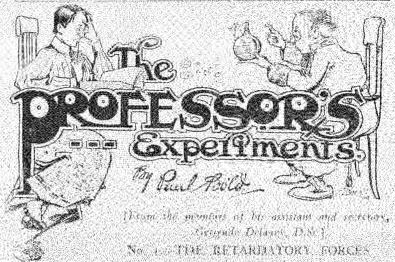
THE PROFESSOR’S EXPERIMENTS (1910) – By Paul Bo’ld (sic) – real name: Edward George Paul Bousfield. (Not to be confused with John Paul George Ann Ringo.) A possible influence on H.P. Lovecraft’s Herbert West, Reanimator in style but not in content. This collection of six short stories centered around mad scientist Jerome Mudgewood and his assistant Dr Gertrude Delaney.

Mudgewood’s envelope-pushing experiments unleash forces beyond his control, resulting in death and tragedy. The stories in order:

The Retardatory Force – Professor Mudgewood tries to harness a pair of sub-atomic and extra-atomic forces, believing that eternal life can be achieved by doing so. He, Dr Delaney and their housekeeper instead find themselves confined in an energy field that slows matter down and eventually dissolves it into nothingness. Jerome and Gertrude survive but the housekeeper isn’t as lucky.   

The Magnetic Essence – The Professor isolates a particle in iron, a particle which he believes causes iron to be attracted to magnets. Dubbing this particle “the magneto component” he plans to implant it into any object he wishes to magnetize. It turns out the force is also responsible for maintaining an atom’s integrity and so extracting “the magneto component” figuratively splits the atom, unleashing incredibly deadly explosions.      Continue reading

6 Comments

Filed under Ancient Science Fiction

CAPTAIN GARDINER OF THE INTERNATIONAL POLICE (1916): VINTAGE SCIENCE FICTION

captain-gardinerCAPTAIN GARDINER OF THE INTERNATIONAL POLICE (1916) – Robert Allen Dodd wrote this story one hundred years ago under the name Robert Allen. Narration informs us that the story is set 60 years after the conclusion of the then-raging World War. Since we know it ended in 1918 we can look forward to visiting the “far-off future” of 1978.

A multi-national entity called the International Federation is one of the major world powers along with the Chinese-Japanese Alliance and the Muslim Confederation. The International Police have been the Federation’s military and intelligence service but after decades of peace there is emerging pressure to disband the I.P. Amid the ongoing political and bureaucratic wrangling over that prospect our hero Captain Gardiner and his colleague Major Wilkie undertake a dangerous mission. Continue reading

2 Comments

Filed under Ancient Science Fiction

PAUL AERMONT AMONG THE PLANETS (1873): ANCIENT SCIENCE FICTION

venus-landscapeA NARRATIVE OF THE TRAVELS AND ADVENTURES OF PAUL AERMONT AMONG THE PLANETS (1873) – I shortened the title when naming this blog post. Paul Aermont was the pseudonym of an unknown author, so full credit cannot be officially given.  

Paul Aermont, an American descendant of fallen French aristocrats, is living in Albany, NY with his parents. After running off to sea years earlier Paul has sown some wild oats and now seems willing to settle down. In his travels he has learned how to be a pharmacist but while pursuing this stable profession by day the still-adventurous young man spends his free time experimenting with gases and balloons.  

In the early 1820s Aermont discovers a fictional gas which enables his aeronautical balloon & cart vehicle to escape the Earth’s gravitational field and explore our solar system. Like other vintage science fiction that Balladeer’s Blog has reviewed this story presents space travel being possible without breathing equipment. Once in space Paul is rendered inert and is unaware of the “space currents” (sic) blowing him toward Jupiter.   Continue reading

6 Comments

Filed under Ancient Science Fiction

ANCIENT SCIENCE FICTION: THE UNPRETENTIOUS PHILOSOPHER (1775)

The spacecraft departs from Mercury.

The spacecraft departs from Mercury.

THE UNPRETENTIOUS PHILOSOPHER (1775) – By Louis-Guillaume de La Follie. The original French title of this work of proto-science fiction was Le Philosophe sans Pretention ou l’Homme Rare, but in the 21st Century it’s more generally known by the slightly shorter title. 

One of the central characters of this story is an Earth scholar named Nadir, and I have no idea if it’s a coincidence or if the people behind the 1960s film Frankenstein Meets The Space Monster were paying sly homage to de La Follie by naming one of the characters Nadir. At any rate Nadir is visited by Ormisais, a space traveler from the planet Mercury.

Ormisais regales Nadir with details about life on Mercury and also informs him that he has crash-landed on Earth and needs rare elements to repair his electrically -powered craft so that he can return to his home planet. The Mercurians had a planetary version of the British Royal Society and the French Academy, but it had a much more limited membership. Continue reading

8 Comments

Filed under Ancient Science Fiction

TEN EXAMPLES OF “ANCIENT” SCIENCE FICTION: 1634 – 1909

Forget the stories written by the usual science fiction pioneers like Jules Verne and H.G. Wells. This list will examine some of the nascent works of science fiction going back to before the world at large even used those words to describe this emerging genre. Though technically this examination could begin as far back as 150 C.E. with the Greek philosopher Lucian’s works like Icaromenippus and True History – both involving journeys to the moon via man-made craft – I will instead begin in the 1600s and move on to the early 20th Century.
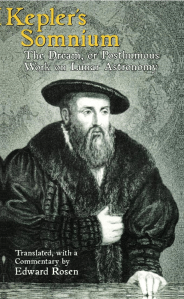
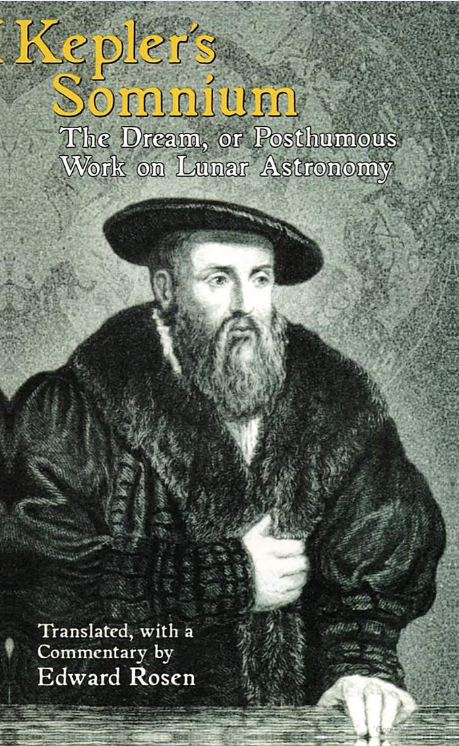
Somnium10. SOMNIUM (1634) – Written by Johannes Kepler. Yes, this is THE Johannes Kepler the famed astronomer so this may be the earliest work of proto-science fiction written by a figure with a grounding in something approaching our own notions of rational science.

Somnium depicted a fictional visit to the moon with story details based very loosely on observations Kepler had made while observing Earth’s natural satellite through a telescope – a fairly new device at the time.  

Kepler’s work depicted the moon as a celestial body of extremes which was bisected into two regions of blazing heat and freezing cold. Nights on the moon were very mild on the side facing Earth because of the amount of reflected sunlight that our planet sends its way. Believe it or not life existed in this world of extremes – reptilian creatures which lived in caves and breathed in the lunar atmosphere. Kepler also depicted plant life – cone-shaped vegetation which went through its entire life-cycle within two weeks.

Fearing the type of persecution that Galileo had faced Kepler never published Somnium during his lifetime and even wrote it in Latin accompanied by copious technical footnotes, possibly to try to disguise it as a thesis. Even though Kepler’s story came out posthumously he might have been spared any persecution for his Copernican views even if he had published it earlier since he took the precaution of explaining the lunar journey away as a mere dream (the meaning of the word “somnium”).   
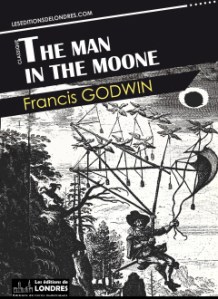
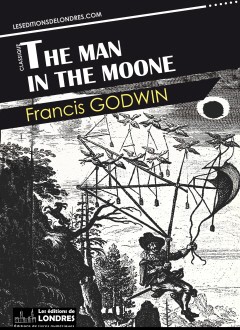
Man in the Moone9. THE MAN IN THE MOONE (1638) – Written by Bishop Francis Godwin. The Man in the Moone depicted Godwin’s fictional hero Domingo Gonsales who trained a huge flock of specially-bred swans to transport him to the moon. The book was written in the style of the accounts that the great nautical explorers of the age wrote of their travels and is often considered the first science fiction story written in English. 

Despite the tale’s thoroughly unscientific method of reaching the moon Gonsales dealt with sensations of weightlessness on his space journey in a nicely prescient bit. Godwin came very close to stating a theory of gravity even before Isaac Newton! In a nod to Dante’s Divine Comedy from centuries earlier the story also featured some of the spirits of deceased humans inhabiting the space between worlds.

Godwin depicted the moon itself as fairly Earth-like and inhabited by a race of Continue reading

20 Comments

Filed under Ancient Science Fiction, Neglected History

THE MEN OF THE MOON (1809): ANCIENT SCIENCE FICTION

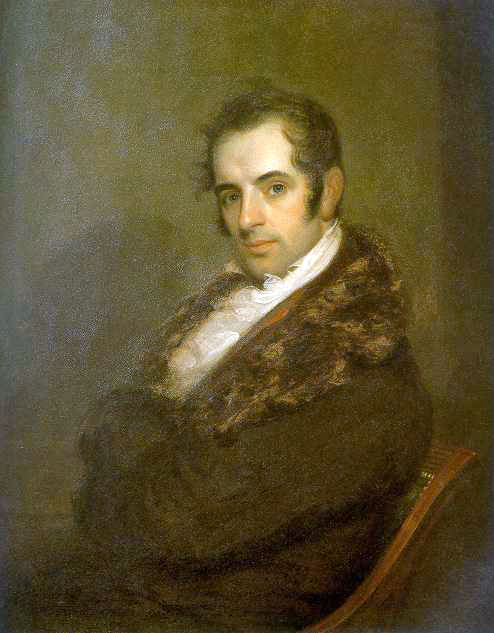
Washington Irving giving us his sexiest come-hither stare.

Washington Irving giving us his sexiest come-hither stare.

THE MEN OF THE MOON (1809) – Several decades before H.G. Wells would use his fictional invasion from Mars in War of the Worlds as an allegorical condemnation of colonialism the American author Washington Irving beat him to it. In Irving’s work The Men of the Moon a technologically advanced race from the moon conquered the Earth and treated its inhabitants the way that European and Muslim colonialists treated the indigenous inhabitants of the areas they subjugated.

Irving tongue-in- cheekly called his invaders from the moon “Lunatics” and depicted them as green-skinned humanoids with tails and one eye each instead of two. Their most bizarre feature is the fact that they carry their detached heads tucked under one arm with a spinal column “cord” attaching the head to the body. For refreshment the moon men drink liquid nitrous oxide.  Continue reading

6 Comments

Filed under Ancient Science Fiction

EDISON’S CONQUEST OF MARS (1898): THE CONCLUSION

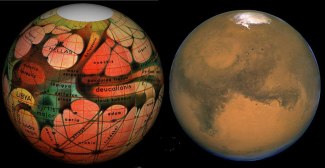
MARSBalladeer’s Blog concludes its examination of Garrett P Serviss’ odd sequel to Fighters From Mars, his blatant imitation of War of the Worlds.

PART TWELVE

Soon the freed Earthwoman Aina (ah-EEE-nuh) was fluent enough in English and the High Command of the Terran fleet were well-versed enough in the ancient tongue of Aina’s people AND the Martians’ own language. In the present state of affairs Aina could understand and be understood enough that Edison, Serviss, Colonel Smith and the others could make clear to the former slave-girl their strategic needs.

When Aina gave the Earthmen a breakdown on all that she and her people had learned during their servitude on the Red Planet a plan came to mind. Thomas Edison’s strategy took the shape of the soon-to-be- formula “unstoppable army who can be defeated by a single quick blow inflicted at a ridiculously obvious point of weakness.” Continue reading

4 Comments

Filed under Ancient Science Fiction