Tag Archives: 1800’s horror

MALDOROR 13: THE GREAT TOAD-ANGEL

Balladeer’s Blog resumes its examination of the macabre 1868 French language work The Songs of Maldoror.

THE GREAT TOAD-ANGEL 
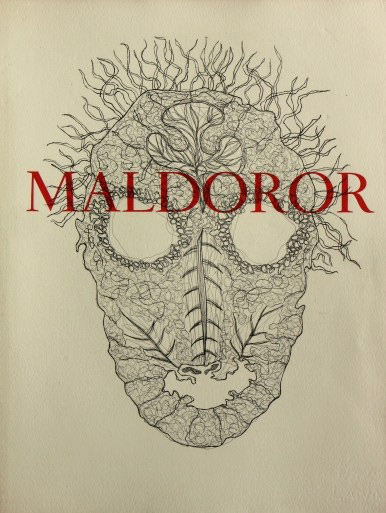
Maldoror 13This stanza opens up with the supernatural being Maldoror contemplating the worms he pulls from the swollen belly of a dead dog. Slicing the worms into small bits he philosophizes on how human beings should learn a lesson about their own mortality from the state of such dead, worm-riddled bodies. 

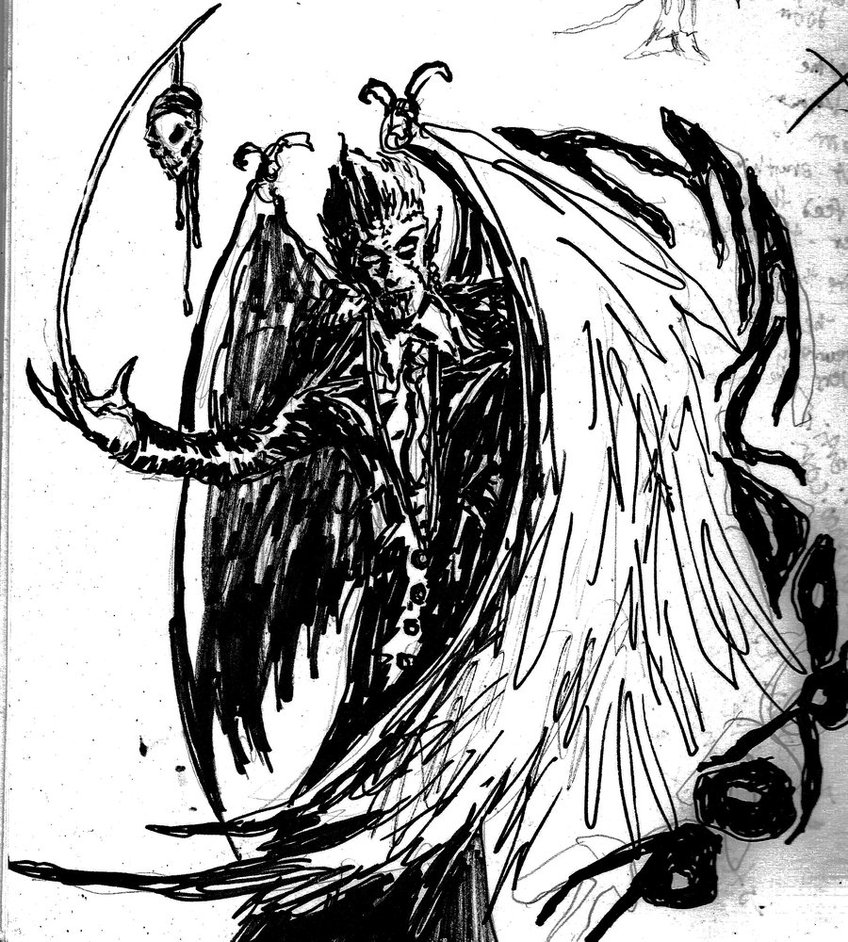
Night is falling. In the distance he spies a horse-sized toad with white wings flying down from the sky and landing on the road he is traveling. As the two draw nearer to each other Maldoror senses something familiar about the creature and reflects that its face is “as beautiful as suicide”. He resents the being over how beautiful it looks even in its massive ugliness and the halo over the toad’s head tells him it has come from Heaven and his archrival God. 

Maldoror being Maldoror he tells the Toad-Angel how much he loathes it and berates it for the manifest unfairness and injustice of the world that God has created. He taunts the being that it is only what Maldoror perceives as the deity’s “might makes right” attitude that lets him inflict so much punishment on hapless humanity while feeling no regret.
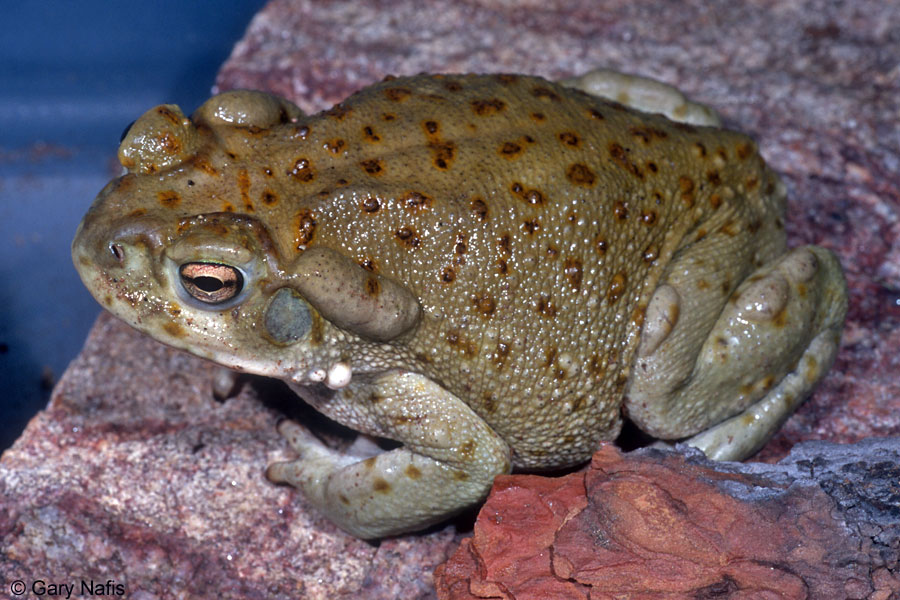
bufo alvariusAt length the Toad-Angel reminds Maldoror that the two have met before. Once he was an ordinary bufo alvarius (a species of toad whose skin secretions are hallucinogenic and usually fatal) that Maldoror used to lick for psychotropic inspiration. Just as our vile protagonist received mind-altering visions from oral contact with the toad the eldritch chemicals in Maldoror’s mouth eventually elevated the common toad into the higher being it is now.   Continue reading
12 Comments

Filed under Halloween Season, Maldoror

MALDOROR 12: THE PHILOSOPHICAL GRAVEDIGGER

Balladeer’s Blog resumes its examination of the macabre 1868 French language work The Songs of Maldoror.

THE PHILOSOPHICAL GRAVEDIGGER

Maldoror gravediggerThe supernatural being Maldoror, here referring to himself as “He who knows not how to weep”, found himself in Norway in his wanderings. While in the Faroe Islands he observed men who hunt for the nests of sea birds in mountain crevices hundreds of feet deep. He mused that if he was in charge of such an expedition he would have knicked the strong rope the mountain climbers use, weakening it so he could enjoy watching at least one of them plummet to a bone-shattering death far below.  

This image of a human body fatally falling into a massive hole in the earth put him in mind of freshly-dug graves. Thus inspired, Maldoror indulged in a nocturnal exploration of the area’s graveyards. In one in particular he passed a band of necrophiliacs violating beautiful corpses and stopped to chat with a nearby gravedigger.

With typical vanity Maldoror told the gravedigger to consider himself lucky to be interacting with him. He (Maldoror) fancied himself a figurative “great whale” momentarily raising his head above the waters of the Sea of Death in which he made his home, granting a mere mortal like the gravedigger the privilege of seeing him in his dread majesty.    Continue reading

10 Comments

Filed under Halloween Season, Maldoror

MALDOROR 11: DISTANT SCREAMS OF MOST POIGNANT AGONY

Balladeer’s Blog resumes its examination of the macabre 1868 French language work The Songs of Maldoror.

DISTANT SCREAMS OF MOST POIGNANT AGONY

Maldoror 11For a change of pace we readers are not immersed entirely in a first person narration by Maldoror himself. This section begins with a mother, father and their beloved child Edward spending a quiet evening together. The parents are advanced in age and did not have Edward until very late in life after years of longing for a child of their own. 

The happy trio catch a glimpse of the supernatural being Maldoror peering in at them through a window. Though they think they succeed at shooing him away from their home little Edward cannot get the hideous man out of his mind. The family’s conversation is periodically and repeatedly punctuated by what the author describes as “distant prolonged screams of the most poignant agony.”  Continue reading

4 Comments

Filed under Halloween Season, Maldoror

MALDOROR 10: A RAIN OF BLOOD FROM MY MIGHTY FORM

Balladeer’s Blog resumes its examination of the macabre 1868 French language work The Songs of Maldoror.

A RAIN OF BLOOD FROM MY MIGHTY FORM

krew.png (222×239) An uncharacteristically vulnerable Maldoror wonders if he is in his final hours. He defiantly and gleefully boasts that none of the world’s lying, parasitic clergy will be attending him when his end comes. If his supernaturally long life is at last over he plans to meet it cradled on the waves of the sea or atop a forbidding mountain peak. 

Our narrator further points out that no sign of either sorrow or fear will mark his hideous visage at the approach of his merciless annihilation. Against all the odds he marshals what is left of his strength and begins to float across the sky, so that he can watch man’s inhumanity to man to the very last. His eldritch form spreads like a coal-black cloud, blotting out the sun and inflicting violent eruptions of lightning on the ground below. Continue reading

4 Comments

Filed under Halloween Season, Maldoror

MALDOROR 9: I SALUTE YOU, ANCIENT OCEAN

Balladeer’s Blog resumes its examination of the macabre 1868 French language work The Songs of Maldoror.

I SALUTE YOU, ANCIENT OCEAN  

Maldoror OCeanThe supernatural figure Maldoror reflects on his fascination with the ocean. He reminds readers that he is a monster and that his hideous face doesn’t come close to matching the ugliness of his soul. His demented reflections on the nature of the ocean follow, along with the oft-repeated line “I salute you, ancient ocean”. (“Je te salue, vieil ocean”)

Per his perverse nature Maldoror’s attempt to sing the praises of the ocean can’t help but be couched in eerie and disturbing imagery. He longs to lie beside the ocean in the tentacles of an affectionate octopus as the two kindred spirits admire the waves and the watery vastness.  Continue reading

33 Comments

Filed under Halloween Season, Maldoror

MALDOROR 8: AN INSATIABLE THIRST FOR THE INFINITE

Balladeer’s Blog continues its poem by poem examination of the 1868 French language work The Songs of Maldoror by Isidore Ducasse, the self-titled Count de Lautreamont.

AN INSATIABLE THIRST FOR THE INFINITE

Maldoror 8This section begins with Maldoror wandering through the darkness of the night, at times nostalgically recalling the terror and dread with which he used to regard the sounds and distant impressions of the overnight hours. But that was when he was merely a human child and his mother would try to calm him as he huddled beneath his blankets listening fearfully to the savage or vaguely sinister sounds made by the beasts who roam the night.

She would explain away the horror of the distant noises by assuring him that the beasts meant no harm, but were instead filled with an insatiable thirst for the infinite, the same thirst she sensed in the son she was trying to comfort. Now, fully grown and more than human Maldoror prowls the night as one of the beasts making noises that terrify others in their beds. Supreme in his element our narrator blissfully describes some of the nightly tableaus that catch his attention. Continue reading

4 Comments

Filed under Halloween Season, Maldoror

MALDOROR 7: FROM TODAY I ABANDON VIRTUE

Maldoror 7Balladeer’s Blog continues its poem-by-poem examination of the 1868 work The Songs of Maldoror by Isidore Ducasse, the self-titled Count de Lautreamont. The title I’m assigning to this 7th piece for cross-reference purposes is From Today I Abandon Virtue. Prose translations are readily available in English for those who dislike poetry.

FROM TODAY I ABANDON VIRTUE

This poem begins with our supernatural figure Maldoror boasting of a tacit alliance he has made with prostitution to sow discord among families and erode the societal bond. He begins to recount the origin of that pact.

One night while walking through a graveyard Maldoror encountered a glow-worm as large as the mausoleum it stood next to. The light given off by the creature was blood-red, not greenish like glow-worms usually give off. The glow-worm, speaking to him in French told him he was providing illumination for him to read the inscription on a nearby tomb. Continue reading

18 Comments

Filed under Halloween Season, Maldoror

MALDOROR 6: THE BLOOD AND TEARS OF A CHILD

Maldoror 2Balladeer’s Blog resumes its examination of The Songs of Maldoror, the neglected 1868 masterpiece of surreal horror written by Isidore Ducasse, the self-designated Count de Lautreamont. As I’ve mentioned previously this 1868 work was so far ahead of its time it is still considered disturbing not only for its violence and demented sexuality but also for its vehement assault on religion and its overall tone.  

The Blood and Tears of a Child is the title I have chosen for this 6th poem from The Songs of Maldoror. I will be assigning unofficial titles to each poem for the sake of clarity and for easier cross-referencing. Titles will work better in the memory since otherwise we have only the poem numbers to go by. My unofficial titles should be more efficient than having to refer to a section of the book as “the part where Maldoror is crucified and his testicles are full of spiders” or such.  

THE BLOOD AND TEARS OF A CHILD

This section begins with our mysterious, once-human figure Maldoror rhapsodizing about how wonderful it is to let one’s fingernails grow for fifteen days (shades of Coffin Joe or Freddy Krueger’s bladed glove). He considers it the perfect length for plunging them into the breast of a child you’ve snatched from its bed. He cautions against killing the child outright, so that its long-term suffering can be better enjoyed.

Blindfolding the child first is a must, the monster maintains, because after days of slashing the child’s flesh from its body and breaking the child’s bones Maldoror enjoys slipping away, then returning to the torture room pretending to be a good Samaritan rescuing the child. Continue reading

10 Comments

Filed under Halloween Season, Maldoror

MALDOROR: A NEGLECTED MASTERPIECE OF SURREAL HORROR

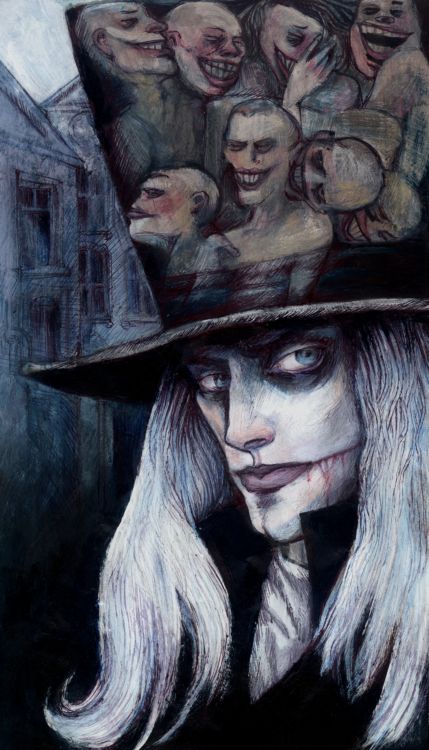
“Maldoror and His Smile” by Lord Orlando

Balladeer’s Blog begins a comprehensive examination of The Songs of Maldoror, often referred to as just Maldoror. The original 1868 French language work by the self-designated Count de Lautreamont (real name Isidore Ducasse) was in verse form, which is great for poetry geeks like me but if you prefer prose there are plenty of prose translations available. 

This work of surreal horror was so far ahead of its time that the author himself, in one of the few existing copies of his correspondence, expressed fears that he might be jailed or thrown into an insane asylum and requested that the publisher literally “stop the presses.” Just 88 copies of the book were completed in that initial run and for a few decades The Songs of Maldoror languished in obscurity.  

By the 1890s those few copies of Maldoror had been circulating among the more adventurous literati of the time period and the work began to be hailed as a forgotten masterpiece by Maeterlink, Bloy, Huysmans and de Gourmont. This new acclaim ultimately resulted in a new run of copies – this time in the thousands instead of dozens like the first run. This also accounts for why some reviewers mistakenly refer to The Songs of Maldoror as an 1890s work, despite its original publication date of 1868. Continue reading

51 Comments

Filed under Halloween Season, Maldoror