
Balladeer’s Blog’s look at the gods and myths of Bellona and Rennell Islands has proven very popular as a sub-category of Polynesian myths. (CLICK HERE )
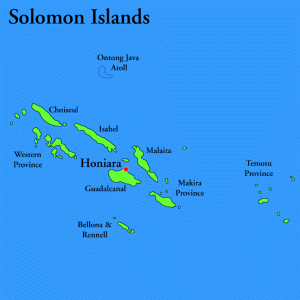 TANGAHAU – In my opinion Tangahau is more like an Odysseus of Bellona and Rennell Islands than Takitaki (covered previously). However, Tangahau’s reputation as a wanderer originally from the Duff Islands seems to tip the balance to Takitaki. Here’s a brief look at Tangahau’s cycle of myths.
If there is enough interest I will do one of my exhaustively detailed examinations, like with Nayanazgeni in Navajo myths, Pele and Hi’iaka from Hawaiian myths, Mwindo from Africa or Baybayan from the Philippines and so many others that I’ve covered.
I) On Taumako Island, Tangahau, a sea captain renowned for his raids on many islands, was preparing for another voyage. The young bachelor’s mother was crying and rending her ears in sorrow since she knew every one of his dangerous journeys might be his last.
II) Tangahau and his crew, which included the priest Nasiu and his son, set out and eventually passed between two flaming islands which Nasiu warned were one of the entrances to the realm of the dead. (Rationalizations of the flaming islands of this tale attribute them to volcanic activity during the early stages of island formation.)
III) Next the voyagers spotted Rennell Island off in the distance. Like many ancient mariners they at first mistook it for an enormous whale. As they drew closer, they spotted Mount Gugha and realized their mistake. They determined to stop and mount a raid. Continue reading
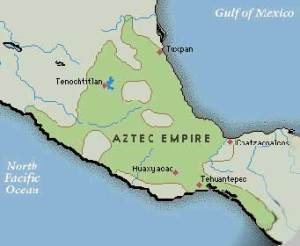 TEZCATLIPOCA – The god of sorcery and human sacrifice as well as the patron deity of thieves and other evildoers. Tezcatlipoca was originally also a war god but his martial attributes were later taken over by Huitzilopochtli. Many myths about Tezcatlipoca involve his conflicts with the wind and culture god Quetzelcoatl, conflicts that even caused the destruction of two of the previous worlds.
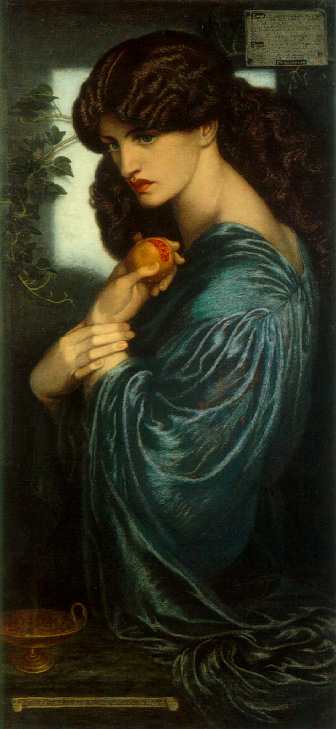
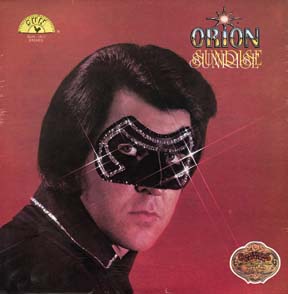
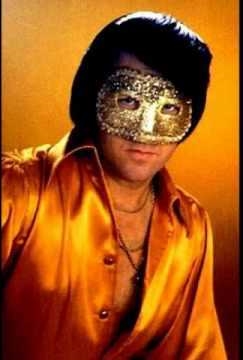
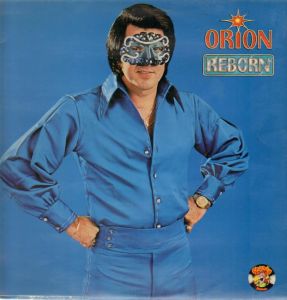 ITEM: Claims are made that enigmatic power players managed to get the novel removed from bookstores. The claims are sometimes accompanied by insinuations that this was done because the book might have struck too close to reality with its “fake death” ending.
 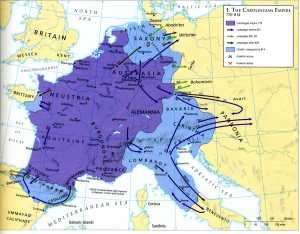 Tradition and folklore hold that Charlemagne was crowned Emperor by the Pope on Christmas, but in real life it apparently did not happen until the following February. Still, Charlemagne’s anointing as Holy Roman Emperor on top of the kingly titles he already held was recounted as a Christmas tale for quite a while.
 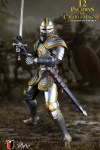 THE TWELVE PEERS – This term was the Charlemagne equivalent of King Arthur and his Knights of the Round Table.
 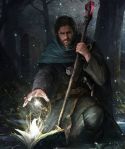 MAUGRIS THE ENCHANTER aka MALAGIGI – This magician was the Frankish equivalent of Merlin from King Arthur lore. Maugris was raised by a Fairy named Oriande and appears in a supporting role in many tales of Charlemagne’s Paladins, often in a mystical disguise.
  BRADAMANTE – This female Paladin was the sister of Reinold de Montaubon. She wore a suit of all-white armor, making her the original White Knight.
 ILAGANIQ – The Inuit hero Ilaganiq was born in the village of Imitchaq, which was famous for being right near the edge of a cliff overlooking the Bering Sea. Ever since he was very young Ilaganiq and his brothers were subjected to extensive physical conditioning by their father.
  NGUATUPU’A AND TEPOUTU’UINGANGI – The parents of many of the major gods and goddesses in Bel-Ren myths, like Izanagi and Izanami in Shinto beliefs. Nguatupu’a and Tepoutu’uingangi were revered AND feared by ALL of the clans of the two islands. They were represented by two large black stones in the region of Bellona Island called Ngabenga.
 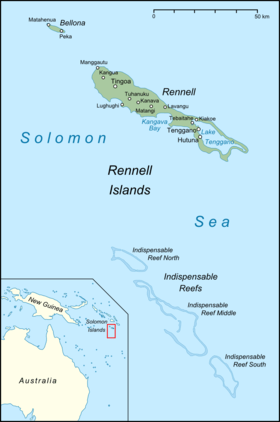 Balladeer’s Blog’s previous look at the gods of Bellona and Rennell Islands has proven to be as popular as my examination of the gods of their fellow Polynesian island groups like Hawaii and Samoa. For the main list CLICK
  Balladeer's Blog