
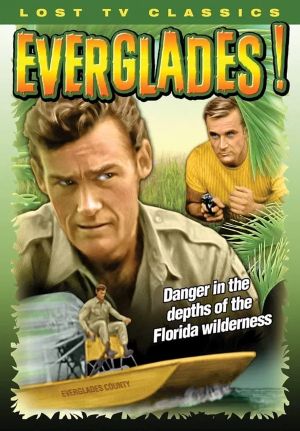
 EVERGLADES aka Lincoln Vail of the Everglades (1961-1962) – This short-lived syndicated series stood out from other law-enforcement programs of its era by not being set in either a big city or the American West. Constable Lincoln Vail of the Everglades County Patrol policed the Florida Everglades in his airboat, giving this series its signature visual appeal.
Even here in 2025 the shots of the airboat speeding along through Vail’s turf really catch the eye. In the starring role was Ron Hayes, stuntman and devoted conservationist in real life. The unique situations and challenges of law enforcement in an area like the Everglades have ensured this program’s lasting cult legacy, but sadly the expensive series lasted just 39 half-hour episodes.
Lincoln Vail was part wildlife ranger, part liaison with the Seminole Tribe and part traditional cop. The up-and-coming Burt Reynolds, former Florida State Seminoles football star, appeared in 3 episodes of Everglades. Continue reading
 THE GREAT ADVENTURE (1963-1964) – This hour-long series presented dramatizations of well-known and obscure events from United States history.
 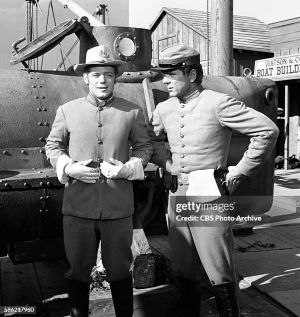 THE HUNLEY – In February of 1864 the Confederacy launched the experimental submarine Hunley, named after its inventor Horace Lawson Hunley. Two previous crews had drowned on test runs but on its final voyage the eight-man sub used a torpedo to sink the Union Navy’s warship the USS Housatonic. The Hunley was also destroyed by the blast and the crew killed.
 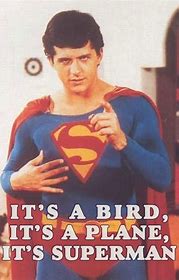 IT’S A BIRD … IT’S A PLANE … IT’S SUPERMAN! (1975) – It’s the bomb that asks the musical question “How many Lembecks can you handle?” Even the most die-hard Superman fans would have a hard time forcing themselves to watch all of this made for tv movie version of the 1966 stage musical.
 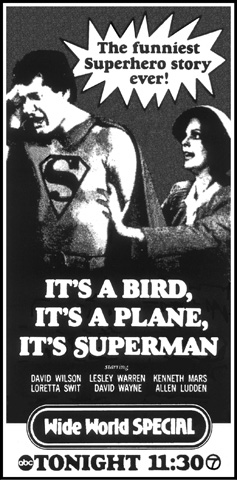 Despite music by Charles Strouse, lyrics by Lee Adams and script by David Newman & Robert Benton this Superman musical was Broadway’s biggest flop in history as of the 1960s. It’s no great shakes in its televised form, either.
 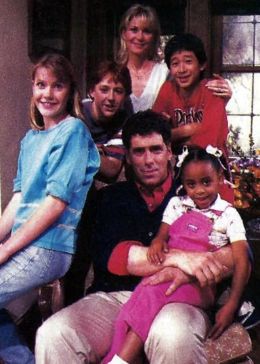 TOGETHER WE STAND (1986-1987) – With the new attention being paid to Ke Huy Quan/ Short Round in recent years, I decided to take a look at the sitcom he co-starred in with Elliott Gould, Dee Wallace Stone and others.
 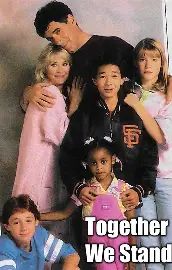 The first episode unrealistically dealt with a social worker leaning on the Randalls to adopt two more children, Sam (Quan) and an African American girl named Sally (Natasha Bobo). But hey, My Mother the Car and The Flying Nun proved long ago that realism isn’t necessary.
 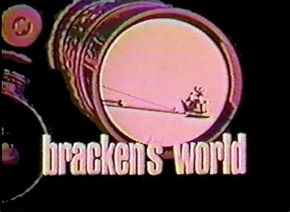 BRACKEN’S WORLD (1969-1970) – This one-hour drama has the dubious distinction of being the series that replaced Star Trek on NBC’s Fall Schedule for the 1969 into 1970 season. The program was set at fictional Century Studios in Hollywood and presented dramas about life in the film industry. Dorothy Kingsley created and produced the show and wrote several episodes.
 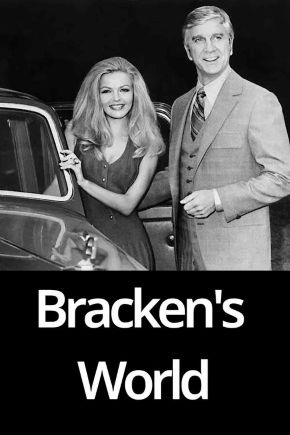 The episodes were sometimes self-contained with assorted guest stars at the center of each week’s backstabbing and maneuvering, but most revolved around a regular cast portraying figures who worked at or were under contract to Century Studios.
  101. FADE IN – Brandoesque Tom Hudson tries to make his mark as an actor, Paulette Douglas is reluctant to do a nude scene in her first film, but her ambitious show-business mother (Jeanne Cooper) insists she do it. Producer Kevin Grant’s marriage is in trouble over his use of the casting couch. Tony Curtis, Omar Sharif and Raquel Welch make brief appearances as themselves to sell the supposed “star power” of Century Studios.
  EMPIRE (1962-1963) – Ryan O’Neal, Charles Bronson, Richard Egan and Terry Moore starred in this modern-day (1960s) drama about a family ranch in New Mexico.
  RICHARD EGAN starred as Jim Redigo, the brawny ranch manager with an MBA. That was an intriguing idea, and this character helped capture the new complexities of operating a ranch in the modern era while retaining the raw machismo that 1960s viewers would have expected from a ranch manager.
 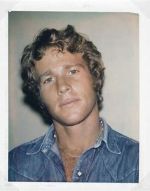 RYAN O’NEAL played Tal Garret, Lucia’s son who was being groomed to take over the family ranch one day. His relationship with Redigo went from being like an uncle and nephew to more like a father and son but Tal struggled for the respect that he felt the older man was not giving him. Neither as a young man nor a rancher.
 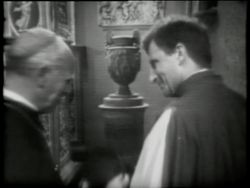 THE SUCCESSOR (1965) – This made for British television drama was as deep as a 1965 production was going to go in depicting the deliberations and the behind the scenes maneuvering as the College of Cardinals chooses the next Pope. All the characters are fictional, but it’s acknowledged that the events are slightly based on the election of Pope John XXIII in October of 1958.
 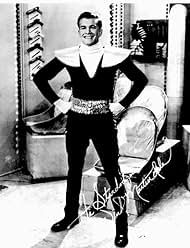 MARS PATROL (1953-1955) – At age 19 – and already smiling like somebody just broke his jaw – the go-getting Winston Conrad “Wink” Martindale was the star of 514 episodes of Memphis’ weekday show Mars Patrol. (Ignore the incorrect IMDb entry which lists him as the star of just 1 episode. Memphis newspapers and Martindale himself recount how he starred in the entire series.)
 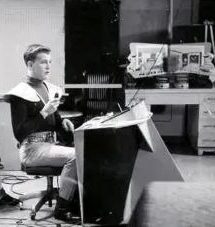 Martindale and the diminutive Mars Guard members wielded ray-guns in their adventures and also hosted episodes of old Flash Gordon and other space serials of the past, making Wink a kind of movie host variant as well. The young fans of Mars Patrol could write in and join the show’s Star Dodgers Club, complete with Captain Martindale photos and other merchandise.
 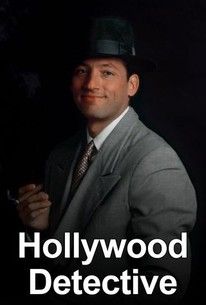 HOLLYWOOD DETECTIVE (1991) – I want to be very clear – this review covers the six-episode Arts & Entertainment Network original program Hollywood Detective, NOT the 1989 Telly Savalas made for TV movie The Hollywood Detective.
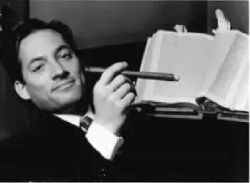 The stories are played straight but there’s always a tongue-in-cheek air about the proceedings because the nostalgia and quasi-historical events are more than half the appeal. Some critics complained about the less than trail-blazing mystery writing in the series but that’s like complaining about how the shows Columbo or Monk didn’t reflect authentic police work. Or how the Moses Wine novels had the detective interacting with pastiches of recognizable 1960s and 1970s public figures.
 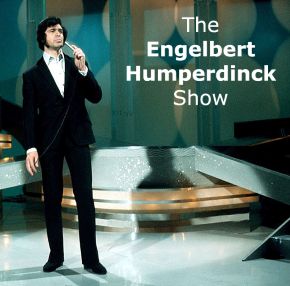 THE ENGELBERT HUMPERDINCK SHOW (1969-1970) – No, it wasn’t a Meeting of Minds type of educational program depicting the long-ago German composer Engelbert Humperdinck interacting with other historical figures. Although I would have watched a show like that! (But I’m kind of weird.)
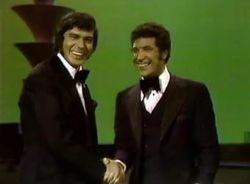 PILOT (Dec 2nd, 1969) – The Dinckster shared the stage with Barbara Eden, Jose Feliciano, Dionne Warwick and his entertainment doppelganger Tom Jones. The Mike Sammes Singers, the Jack Parnell Orchestra and the Paddy Stone Dancers were on hand as well. This episode was rebroadcast on December 26th.
 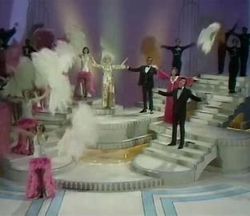 EPISODE ONE (Jan 21st, 1970) – E-Bert’s guests this time were Tony Bennett, Leslie Uggams, Donald O’Connor and Ed Bishop from UFO. The Irving Davies Dancers joined the Mike Sammes Singers and the Jack Parnell Orchestra as the figurative house entertainers.
  Balladeer's Blog