
Balladeer’s Blog takes its third and final look at the best silent film comedies of the legendary comedienne Mabel Normand. For 1910-1915 click HERE. For 1916-1920 click HERE.
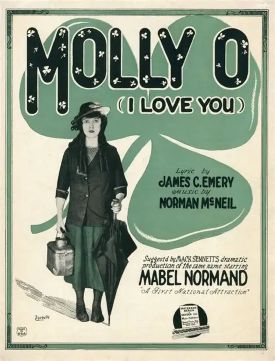
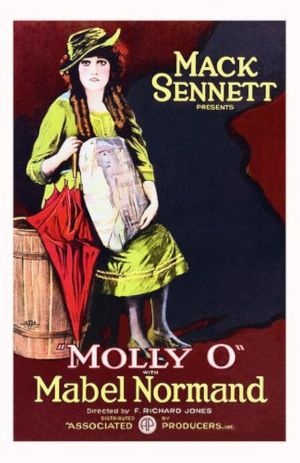 MOLLY O’ (1921) – This film was produced by Mabel’s longtime romantic partner Mack Sennett (the musical Mack & Mabel is about them) and co-written by Mary Hunt. Originally 80 minutes long, this comedy was once considered completely lost like so many other silent movies.
Part of the surviving 57 minutes of footage has an unusual survival story. Because the film centers on the romance of a poor struggling Irish girl, Molly O’Dair (Normand) and wealthy MD John Bryant (Jack Mulhall), much of the comedy centers on class stereotypes of Molly’s poor but honest family and Jack’s wealthy but villainous family.
The Soviet Union edited out all the funny parts and presented what was left as one of their propaganda films depicting life in America as one long nightmare of evil rich capitalists ridiculing and being cruel to poor working-class people.
 That footage from the fallen U.S.S.R.’s film archives helped UCLA film historians flesh out what surviving footage they held with the chopped-up Russian version to make the 57-minute cut. Luckily the ending is intact and reviews from 1921 help fill in any missing story beats.
Molly’s Irish family runs a laundry and when she delivers some clothing to Dr. John Bryant, they fall for each other. Dr. Bryant is the only decent member of his family, and he & Molly struggle to make their romance work despite the snobbish machinations of his hoity-toity clan who despise the Irish.
The brother of John’s former lady is the main villain and tries to send Molly/ Mabel to her death from a high-flying dirigible in the thrilling finale. Dr. Bryant uses a bi-plane to reach the dirigible and executes a daring leap to board the lighter than air vessel to overcome the bad guy and save his true love.
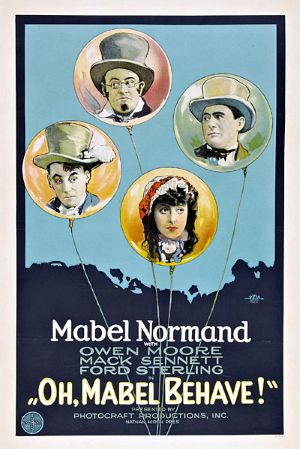 OH, MABEL BEHAVE! (1922) – Filmed in 1916 but not released until 1922, this movie reflects Mabel’s earlier, more physical and rambunctious comedy.
Evil Squire Peachem (Ford Sterling) and his henchman (Mack Sennett) try to use the mortgage Peachem holds on Mabel’s innkeeper father’s establishment for a forced marriage.
Mabel’s true love, Randolph Roanoke (Owen Moore) stands in their way, so they try increasingly underhanded ways of getting rid of him.
Clever and feisty Mabel out-thinks and often out-does them physically to ensure that she gets Randolph in the end.
In my opinion, Mabel always works better as a self-possessed and capable heroine. 50 minutes.
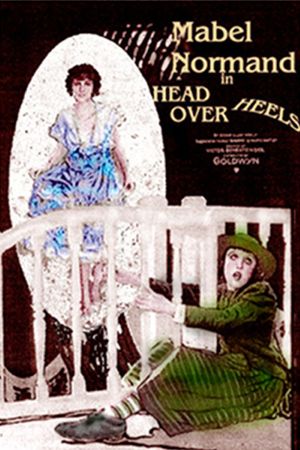 HEAD OVER HEELS (1922) – Our Ms. Normand combines her impeccable comedic talents with gymnastics in this movie. Mabel portrays Italian acrobat Tina Bambinetti, brought to America by theatrical agent Sterling (THE Adolphe Menjou).
Sterling tells his junior partner Lawson (Hugh Thompson) that the dynamic but tomboyish and plain Tina will be their next big client once they pretty her up and “civilize” her. Incensed by Sterling’s condescending attitude toward her, Bambinetti unleashes a whirlwind of mischief throughout Sterling & Lawson’s offices.
After the kinder Lawson calms Tina down, he takes her for beautification treatments which are presented comedically, of course. Once completed, Tina’s dazzling beauty is clear, and she and Lawson fall for each other.
Amid some comical bits with Papa Bambinetti, complete with organ grinder’s monkey, who thinks Sterling & Lawson are pimps, Tina gets swept up in her meteoric rise to stage stardom. She begins to question her commitment to the warm-hearted Lawson and ponders other men. Her jealousy when spotting a female client putting the moves on Lawson prompts Tina to keep him. 50 minutes.
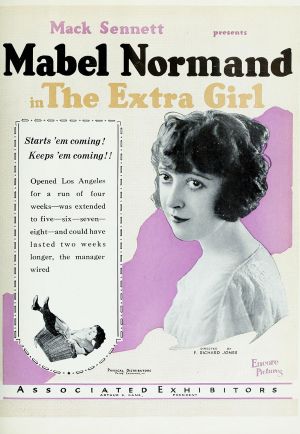 THE EXTRA GIRL (1923) – One of Mabel Normand’s most famous comedies. Through a misunderstanding, Sue Graham (Normand) believes her photograph was selected in a contest to make her a star.
She leaves her small-town home but after she arrives in Hollywood she learns the truth. Humiliated, she informs her family she is thriving in show business despite just working in the studio costume department.
Just before her parents and hometown boyfriend Dave (Ralph Graves) arrive for a visit, Sue gets a screen test. Rather than what’s expected, she fails spectacularly while doing a hilarious sendup of the over-the-top thespian antics that many critics considered AC-ting back then.
Sue is rejected, but in another cutesy meta joke the studio bigwigs tell her she’d be “a natural at comedy.” When Ma, Pa and Dave arrive in L.A. the parents get conned out of their life savings by a swindler.
Dave and Sue – who uses what acting ability she has picked up – manage to get the money back from the con man. Sue is disgusted with the people of Hollywood and goes back home with Dave and her parents. NOTE: Teddy the Sennet Dog appeared. 68 minutes.
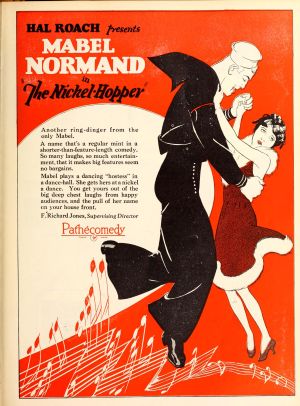 THE NICKEL-HOPPER (1926) – Mabel tried a few years on the New York stage to escape negative publicity over her various scandals of the time. That went nowhere, so she returned to Hollywood – this time signed with Mack Sennett’s biggest comedy rival – Hal Roach.
Normand plays nickel-a-dance taxi girl Paddy. Future comedy legend Oliver Hardy plays the drummer at the club where she dances and future horror legend Boris Karloff plays an oafish and lecherous customer who mishandles Paddy until she outmaneuvers him.
At home, Paddy’s father is an ogre who lives off his wife and daughter’s earnings and drives away potential suitors for Paddy so he can keep leeching money off her.
A happy ending comes along when our heroine meets a decent man among all the trouble, stands up to her father and finally leaves home. 37 minutes.
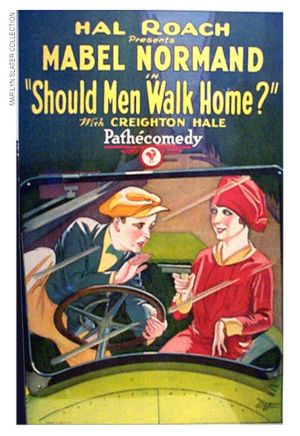 SHOULD MEN WALK HOME? (1927) – Mabel’s hard living was visibly affecting her health in her Hal Roach shorts. It makes this otherwise funny flick kind of melancholy. She would be dead of pneumonia in three years.
In this movie, Normand is credited as “The Girl Bandit” who is given a lift by Creighton Hale as “The Gentlemen Crook.” The larcenous lovebirds crash a high society party to pick pockets and otherwise make off with as much loot as they can.
Oliver Hardy has a small part as a party guest this time around and Eugene Pallette plays an inept detective who fails to catch our pair of romantic rogues. 20 minutes.
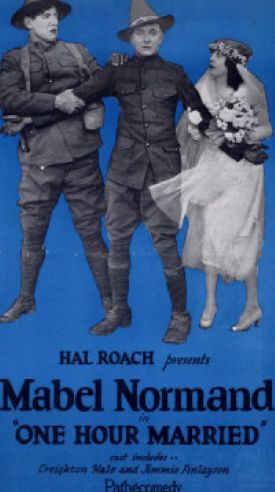 ONE HOUR MARRIED (1927) – Mabel Normand’s final onscreen appearance as she joined the legions of entertainers whose health was destroyed by excess.
One Hour Married is set during World War One. Mabel and Creighton Hale play newlyweds who, one hour after saying “I do” are separated by the army taking the man off to the battlefield.
Our heroine sets the standard for Lucille Ball decades later in terms of the wild, wacky lengths she goes to in order to be reunited with hubby amid the shot and shell of the Great War. 20 minutes.
And so ended the career of one of the greatest comediennes of all time.
 Balladeer's Blog