
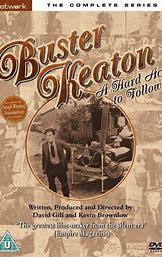
 Reactions to Balladeer’s Blog’s reviews of silent movies have been positive enough that I’d like to offer a quick take on a few multi-part documentary series on the subject. Both were from British Film Historian Kevin Brownlow, who did a better job of depicting the Age of Silent Movies than any Americans ever did.
Brownlow secured interviews with as many survivors of the era as possible, given their VERY advanced age. These are only a few of Brownlow’s documentaries, he also did a series on European Silent Films as well, plus several restored versions of silent classics. I plan to cover more of those in the future.
BUSTER KEATON: A HARD ACT TO FOLLOW (1987)
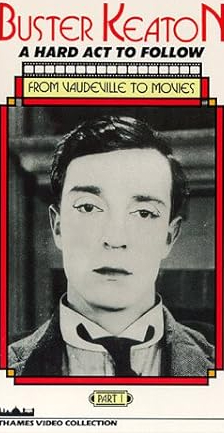 PART ONE – From Vaudeville to Movies: Brownlow and his colleagues scoured the best available footage remaining from Buster Keaton’s silent comedies. (For newbies to silent film history I’ll mention that countless movies from that period are lost forever due to decomposition prior to efforts to preserve them.)
Excellent selections of still photos are also featured, along with brief excerpts of interviews with stars, directors and others who worked with Keaton decades earlier.
This opening installment sets the pattern – the emphasis is on footage of Buster’s silent comedy classics accompanying the narration. Keaton’s career as a child performer in vaudeville is covered, followed by his drift into silent comedy shorts, at first backing up his mentor and longtime friend Roscoe “Fatty” Arbuckle.
Buster’s genius shone through and he was soon heading up his own unit writing and directing his comedy shorts and later features. In addition, the Great Stone Face did his own stunts, thus suffering many injuries over the years.
From Vaudeville to Movies features hilarious scenes from Keaton classics like One Week, Cops, The Electric House, Sherlock Junior, The Playhouse, Three Ages and The Navigator.
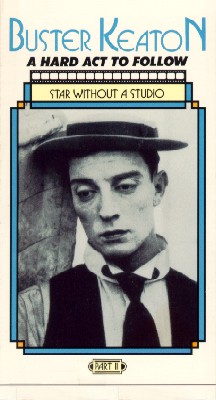 PART TWO – Star Without a Studio: Using the same formula of narration over silent footage plus interviews and still photos, this second part starts out with the years during which Buster Keaton’s career was still steadily rising.
Despite this being a fruitful period when plenty of the Great Stone Face’s most acclaimed hits were produced, he was still plagued by sadness in his personal relationships. Eventually a crippling blow struck with the arrival of the era of domination by the big studios.
Stripped of his independence & most of his creative control and ordered to stop doing his own stunt work, Keaton found that period a somber follow-up to the preceding years in which he had churned out masterpieces like The Cameraman, Seven Chances, The General and Steamboat Bill Jr.
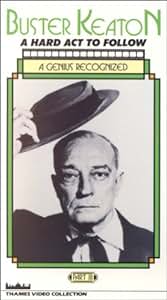 PART THREE – A Genius Recognized: If you are in this strictly for silent movie history, most of this final chapter is irrelevant. It’s also quite frankly very sad and frustrating as the introduction of talkies pounded another nail in the coffin of Buster Keaton and other silent film legends.
Keaton was insultingly demoted to being a silent sidekick to comic Jimmy Durante, whose style was the exact opposite of Buster’s. The Great Stone Face turned to booze more and more, ultimately reduced to a gag writer for the new generation of film comedians.
A rare positive from that period came with the perfect fit for Buster – concocting silent gags with Harpo Marx for the latter’s nonspeaking roles in a few Marx Brothers movies. In the 1950s, Buster’s clever television advertisements filled with silent comedy reignited his career and he was given his own show.
His descent was sad, but Part Three does end happily with Buster’s happiest and longest-lasting marriage and the recognition he deserved for his contributions to film history.
HAROLD LLOYD: THE THIRD GENIUS (1990)
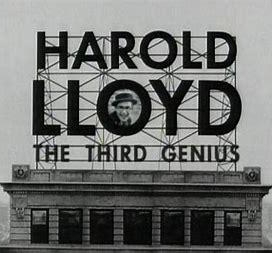 EPISODE ONE: This was the first of two episodes of American Masters which examined Harold Lloyd and his career in silent movies and talkies. Brownlow and David Gill once again burrow deep, this time going far beyond Lloyd’s reputation as a “thrill comic” from the 1920s.
Because Harold Lloyd’s career lacks the dramatic rise, fall and rise structure of Buster Keaton’s he is sometimes seen as a less sympathetic figure. In my opinion, the fact that in 1919 Harold lost two fingers on one hand to an on-set explosion by a prop bomb he was holding kind of makes up for his life story’s deficit of conventional show-biz drama.
Wearing a special prosthetic glove that made it look like he still had all his fingers (at least in black & white), Lloyd returned to his brilliant silent comedies, still doing many of his own stunts like Buster Keaton.
Years earlier, a storied coin flip decided if Lloyd would seek his fortune in New York or California. It came up California.
We follow Harold from his days as an extra in films like The Old Monk’s Tale, Samson and the silent Oz flicks, on to his days as a pale Charlie Chaplin imitator called Lonesome Luke and from there to his break-through character: the bespectacled go-getter who always came out on top no matter the odds.
Hits followed, like Look Out Below, High and Dizzy, Never Weaken and, of course, the all-time thrill comedy classic, the one against which all other thrill comedies are measured – Safety Last.
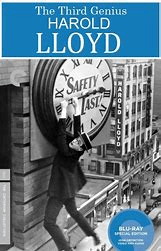 EPISODE TWO – Much of the footage from this episode comes from Harold Lloyd’s sound movies with comparatively few looks at his silent film efforts. Footage of Harold interacting with the original, silent film Little Rascals cast is included, however.
Picking up from Lloyd’s remaining silent triumphs like The Freshman, The Kid Brother and Speedy (with a cameo by THE Babe Ruth), this episode then moved on to coverage of the talkie sequel to The Freshman, The Sin of Harold Diddlebock. A look at his other talkies followed.
Rather than booze and studio interference, Lloyd’s decline in popularity was brought on by the arrival of the Great Depression, during which his perpetually upward-bound and prosperous character lost its appeal.
With the rediscovery of silent movie classics in the 1960s, Harold Lloyd’s reputational boat rode that rising tide back to popular acclaim.
FOR A SIMILAR LOOK AT DOUGLAS FAIRBANKS’ SILENT SWASHBUCKLER MOVIES CLICK HERE.
FOR STARLET THEDA BARA’S SILENT FILMS CLICK HERE.
FOR HARRY HOUDINI’S FOUR SILENT FILMS AND ONE SILENT SERIAL CLICK HERE.
FOR TWENTY-FOUR CLASSIC SILENT HORROR FILMS CLICK HERE.
FOR ALFRED HITCHCOCK’S SILENT MOVIES CLICK HERE.
 Balladeer's Blog
Good movies! 👌well shared
Thank you!
😁
😀 😀
👏👏👏
These two deserve applause!
🌷🌷
Flowers, too!
You deserve
Thanks! You are always so kind-hearted.
😘😘
Ha! Such a character!
🥹🥹🥹
OOOO
😨😨😨
😀 😀 😀 😀
🤨🤨🤨
Why so sad?
🙄🙄🤭
Ha!
😜😜😜
Pretty funny!
😕😕😕
You’re a character!
🤩🤩🤩🤩
That’s a lot!
Don’t you like 🙄🙄😇
Yes, I like them.
😄😄😄😄🫠🫠🫠
💙
Thanks!
A great melancholy genius. 👌
Yes he was!
A great melancholy genius 👏 🙌 👌
You said it!
Sorry, friend, for the duplicate! I have a new Mobile Phone and must still set it up! 😜🙏
No problem!
And Stan Jefferson [Laurel}?
Yes, I plan to review his silent film work at some point, too.
We used to watch Harold Lloyd on TV with my dad! I don’t remember what channel it was but I suppose it was probably PBS. I can still hear the theme song in my head …
Hooray for Harold Lloyd
Dodo-do-do-do-do-do-do-doo-do
Harold Lloyd
Dodo-do-do-do-do-do-do-doo-do
Harold Lloyd, he’s got style,
A pair of glasses and a smile!
Oh my God, I never knew about that!
Great reviews as always. I’m not a huge fan of Buster Keaton so I don’t know if this is a film I will watch. That being said, I do have interest in the silent film era. I love movies that capture the timea when silent films got produced. For instance, Damien Chazelle’s “Babylon” is a great movie that captured the beauty of this time period. One of the most underrated films ever made.
Here’s why it’s worth watching:
https://huilahimovie.reviews/2024/06/08/babylon-2022-movie-review/
Thank you! I am on my way to read your review of Babylon.
Thanks. It seems the link wasn’t working and I just realized that.
Here’s a link to the review that should work:
Okay, thank you!