
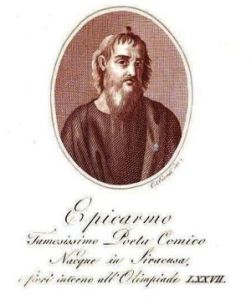
 Balladeer’s Blog takes another look at an ancient Greek comedy. Most of my previous examinations of these verse plays dealt with Attic Old Comedy or on what little is known about Susarion, a revered pioneer of stage comedy.
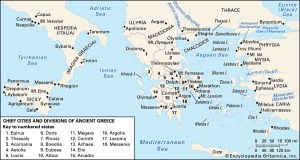
Epicharmus lived from approximately the 530s B.C. to the 440s B.C. He was born in one of the Greek colonies, with Megara-Hyblaea, Syracuse or the island of Cos/ Kos being the three most widely accepted possibilities. This figure wrote 35-52 comedies then became a philosopher.
Epicharmus is often credited with adding plots to the comedies, but this is sometimes disputed by those touting Susarion instead. Other innovations possibly pioneered by Epicharmus were stock characters like spongers and naïve rustics plus comedic back-and-forth duels of insults or of competing arguments.
 The chorus, so important to Attic Old Comedy, was not yet present on stage in Epicharmus’ time, but musical accompaniment was. Like so many other ancient Greek comedies, the plays of Epicharmus have survived only in very fragmentary form.
THE RUSTIC (No year known) – The Eudemian Ethics refers to the use of rustic figures early on in stage comedies. As we’ve seen in other ancient Greek comedies these rustics were used in two different ways – 1) As the butts of jokes for their supposed inability to appreciate the sophisticated pleasures of city life and/or for their supposed lack of intelligence.
Or 2) As naïve yet endowed with a common-sense form of wisdom that lets them outmaneuver ill-intentioned city folks who try taking advantage of them or humiliating them. (Think No Time for Sergeants or Beverly Hillbillies B.C.) Continue reading
 Balladeer's Blog