
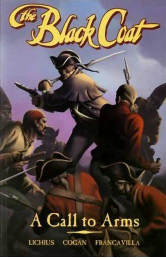
 This weekend’s light-hearted, escapist superhero post from Balladeer’s Blog looks at the independent comic book character the Black Coat, a masked hero in 1770s New York City.
This hero’s stories begin in March 1775, just a month before the Battles of Concord & Lexington will kick off America’s Revolutionary War. He has subsequent adventures set during the war itself.
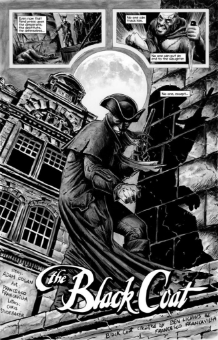 The Black Coat is really Nathaniel Finch, brilliant young scientist and friend of Ben Franklin himself. Our costumed hero runs his own covert network of rebels called the Knights of Liberty, men and women who risk everything to fight against tyranny. His coal-black horse Phobos stands ever-ready as well.
Part Zorro, part Dr. Syn the Scarecrow and part Shadow, the Black Coat uses his sword, pistols and steampunk (well, actually sailpunk) inventions to preserve the emerging United States of America. His right-hand lady Ursula Morgan runs the covert outfit’s day to day operations, with the Black Coat going into action against Great Britain, Tory Loyalists and assorted products of Britain’s weird science & occult arts.
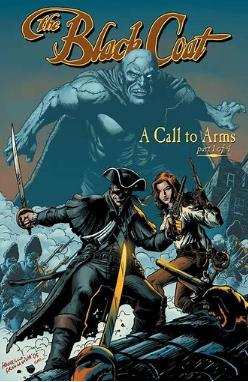 THE BLACK COAT Vol 1 #1 (2006)
Title: A Call to Arms, Part One
Villains: General Savidge, the Butcher and the League
Synopsis: This tale gets off to an interesting start as the Black Coat and some of his Knights of Liberty pilot his submersible proto-submarine the Scylla in their raid of a secret British ship trying to assassinate Ben Franklin under the guise of a pirate attack.
NOTE: It’s a nod to the real-life affair of the VERY primitive submarine the Turtle from the Revolutionary War. Except the Black Coat’s sub succeeds in its mission.
 The saved Franklin visits with our hero in his civilian Nathaniel Finch identity at the New York Sentinel, Finch’s patriot newspaper. Rumors of war breaking out at any moment are everywhere. British General Savidge has secretly allied himself with shadowy conspirators called the League – an evil version of the Founding Fathers’ Masonic Lodges. Continue reading
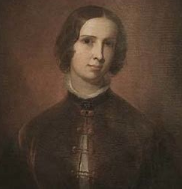 With the 4th of July holiday fast approaching, here is another seasonal post from Balladeer’s Blog. When it comes to women who dressed up as men and served as soldiers during America’s Revolutionary War, Deborah Sampson gets most of the attention. Here’s a look at two other women who disguised themselves as men to serve in the war.
  FEBRUARY 1st – At Drake’s Farm near Metuchen, New Jersey. In reaction to British losses throughout January as part of what some have called the Forage War, British General William Erskine sought to lure American forces into a trap.
 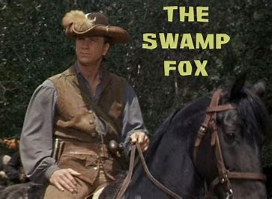 THE SWAMP FOX (1959-1961) – With the 4th of July fast approaching, it’s past time for a seasonal post. The Swamp Fox is a piece of Forgotten Television that ran sporadically on Walt Disney’s programs. Eight episodes were produced over two years with Leslie Nielsen in the lead role and each one filled a 1-hour time slot.
 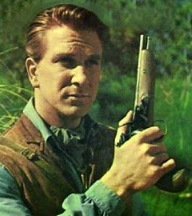 Marion and his men knew the South Carolina swamplands like the proverbial backs of their hands and could strike the British then disappear deep into the swamps, foiling any pursuit. Obviously, as a television production The Swamp Fox featured a very romanticized version of Marion and his escapades.
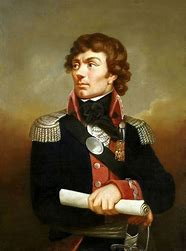 THADDEUS KOSCIUSZKO (1746-1817) – As my last name makes clear, I’m of Polish American descent. Last 4th of July I made a blog post about
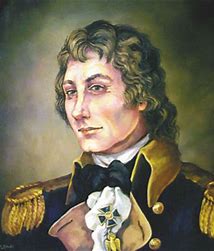 After receiving his education and military training in Europe, Kosciuszko sailed for America in June 1776. Unlike his fellow Pole Casimir Pulaski, he had missed out on serving in the Bar Uprising in Poland and was enthusiastic about fighting in the Revolutionary War. Poland’s long history of religious tolerance made Thaddeus feel a certain kinship with those who held similar sentiments in our emerging nation.
 ABRAHAM CLARK – Abraham’s two sons Aaron and Thomas were captured during the war and may have perished while captives of the British. Accounts vary and some sources even claim he had three sons die in the war.
 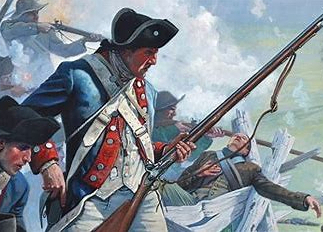 OCTOBER 24th – Near Sandy Hook, NJ American rebel Captain Adam Hyler leads an unknown number of men in a clash with an unknown number of British Loyalists. Hyler takes 6 prisoners during the action.
 NOVEMBER 1st-6th – At Gowen’s Fort, SC, Roebuck’s Battalion and civilian non-combatants were attacked and besieged by a combined force of British Loyalists and Chickamauga Indian allies of the British. On November 6th, the Americans surrendered after the Loyalist Captain William Bates guaranteed their safety.
 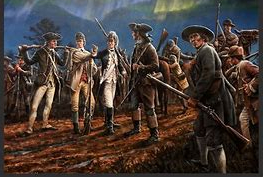 MARCH 1st – British troops led by Major John Maitland landed and took Cockspur Island at the mouth of the Savannah River in Georgia. The Redcoats clashed with American Militiamen and drove them off. Both sides were left with wounded men following the exchange of gunfire, but no fatalities are known.
  Four British warships, along with multiple smaller vessels, launched a joint land and sea effort to seize American rice ships in the area in order to feed the British forces. Over 300 British infantrymen took part in commandeering the rice boats by surprise overnight.
  JANUARY 8th, 1776 – In Charlestown, Massachusetts, British troops and American Tories were attending a performance of General John Burgoyne’s play The Blockade of Boston. The play was a farce ridiculing the supposed inadequacies of the American rebels. An unknown number of American soldiers carried out a raid on the town, panicking the theater audience, capturing 5 British soldiers and destroying 8 Tory buildings.
  Balladeer's Blog