
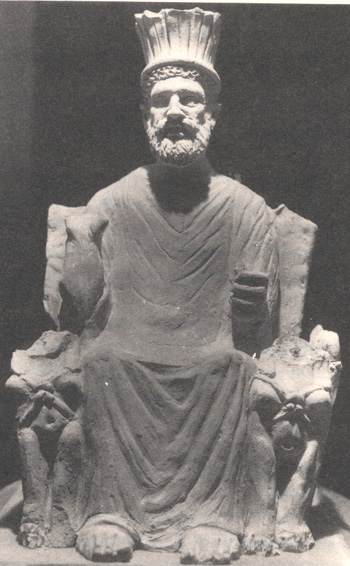
 Spring is the time of year that always puts me in mind of the many dead and resurrected deities who were featured in various seasonal myths around the world. This is a look at Baal, but if you want more dead and resurrected gods and goddesses click HERE
BAAL
Pantheon: Canaanite
The Tale: Baal, the storm god of the Canaanites, had emerged triumphant in his war with the sea god Yam and became very hubristic. He insisted he had authority even over Mot, the god of death and warned Mot that the only places on Earth that he could visit were the deserts.
Infuriated, Mot invited/ dared Baal to visit him in his subterranean realm, the land of the dead. Baal accepted the dare/ invitation lest he lose face and once there Mot fed him the food of the dead – mud – thereby trapping Baal in the Netherworld.
With Baal thus imprisoned no rains fell on the Earth and drought consumed the world, killing vegetation and the animals who fed on that vegetation, then the animals who fed on THOSE animals, etc.
In an interesting variation on these other seasonal myths in the story of Baal the “dead season” is not winter but summer, which, given the intense heat in that part of the world, was potentially more destructive to nature than winter. Continue reading
 It’s the time of year when Balladeer’s Blog highlights comparative mythology, both in terms of other cultures’ dying and resurrected deities or in this case by showcasing alternate gospels that Christian authorities of long ago deemed to be non-canonical.
 Balladeer's Blog