
 A JOURNEY TO THE WORLD UNDERGROUND BY NICHOLAS KLIMIUS (1741) – This novel was written by Danish author Ludvig Holberg and became a European sensation. Like Swift’s Gulliver’s Travels, Holberg’s work in this book had satirical political meaning and though the issues and social criticism no longer apply to the modern-day world, the fundamental story structure still holds up on its own.
The tale begins in 1665 as Nicholas Klimius, freshly graduated from the University of Copenhagen, is doing natural science research in the mountains of Norway. At one point, his colleagues on the expedition lower him by rope into a cavernous hole in the ground so he can explore it.
 The rope breaks, and Nicholas falls so far that his colleagues assume he was killed. Actually, Klimius fell down into the often-theorized Hollow Earth. In this case with an interior sun and small worlds in orbit around it.
The atmosphere in this subterranean realm provides nourishment and moisture, eliminating the need to eat and drink. After days of being trapped in an orbit of his own around the interior sun, Nicholas gets attacked by a griffin. The resulting battle pushes our main character out of orbit and he lands softly on a small planetoid he learns is called Nazar. Continue reading
 TRAVELS AND ADVENTURES OF JAMES MASSEY (1714) – This is Part Two of
  I’ll spare all of us any details of the actual cockfights. When the fighting was over, the family whose cock lost the fight welcomed the winner’s family over to their home. The winner’s family brought along all of the food they had prepared for this eventful day, and the two families feasted and drank together the rest of the day.
 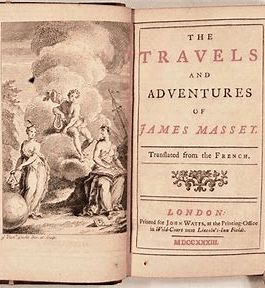 TRAVELS AND ADVENTURES OF JAMES MASSEY (1714) – By Simon Tyssot de Patot. Supposedly written in 1710 but not published until 1714, this novel dealt with the travels of the title character to exotic lands.
 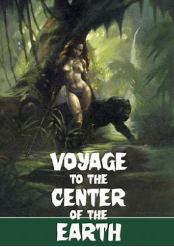 VOYAGE TO THE CENTER OF THE EARTH aka Planet at the Center of the Earth aka “Journey to the Centre of the Earth, or Various Adventures of Clairancy and His Companions, to Spitsbergen, to the North Pole, and to Unknown Countries, translated from the English of Hormidas Peath by M. Jacques Saint-Albin”.
 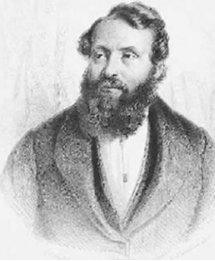 This particular story centers around the fictional seaman Hormidas Peath and his crew who became shipwrecked in the icy Arctic Sea in 1806. They were shocked to discover that temperatures got warmer the further north they went, so they kept following the warmer air until they reached the Iron Mountains.
  AN AUTOMATIC ENIGMA (1878) – By Julian Hawthorne, son of Nathaniel Hawthorne. In the past Balladeer’s Blog has reviewed some of
 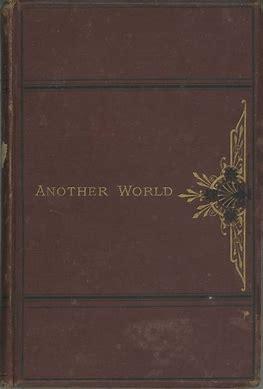 ANOTHER WORLD (1873) – This highly detailed account of life in Montalluyah (“God’s own city”), the capitol city of Mars, was written by British author Benjamin Lumley under the pen name Hermes. The book is presented as excerpts from historical accounts, including a biography of the Great Martian Reformer Tootmanyoso.
 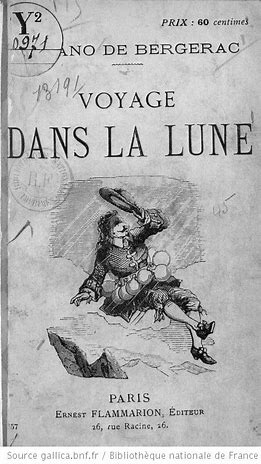 A VOYAGE TO THE MOON (1657) – Written by Cyrano de Bergerac. Yes, the one and only Cyrano de Bergerac, noted for his prominent proboscis and for Rostand’s play depicting his romance with Roxanne, at first acting on behalf of his friend. Some people still mistakenly believe Cyrano was a fictional character.
  Cyrano’s fictional space traveler was named Dyrcona and was the first to use multi-stage rockets to reach his destination. Dyrcona’s rocket design was based on firecrackers of the time period. The lunar inhabitants wore no clothing, had four legs and spoke in song. Their technology included transparent globes that captured solar rays for illumination, talking book-machines (early radio) and ray-guns that not only killed game but simultaneously cooked it.
 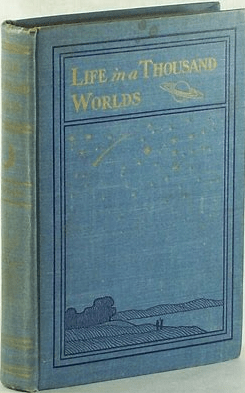 LIFE IN A THOUSAND WORLDS (1905) – Written by William Shuler Harris. This is yet another work of “ancient” science fiction that deals with life on other planets. Each celestial body that is visited gets its own chapter.
  A PESTILENT VAPOR (1903) – Written by Alice MacGowan, this neglected story introduced a figure who should have become as famous in his way as H.G. Wells’ Invisible Man.
 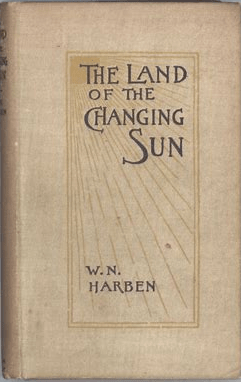 THE LAND OF THE CHANGING SUN (1894) – By William N. Harben, a former American literary giant who has since been forgotten.
 Balladeer's Blog