
 THE RAINBOW OF ADAMANT (1897) – Written by Charles Kelsey Gaines, this short story is an excellent example of how slowly word of scientific discoveries was spread in the 19th Century compared to our lightning-fast communications of today. The Rainbow of Adamant was written during the period when most of the world was still going by assumptions and theories about helium.
That element had been officially detected in 1868 and subsequently confirmed but its exact properties were unknown for decades. In 1895 a trio of scientists – Per Teodor Cleve, Nils Abraham Langlet and Sir William Ramsay – found helium emanating from “cleveite” (now known as a variety of uraninite) and documented its properties.
As word of the trio’s work was slowly disseminating among the rest of the scientific community and the general public, the April 1897 issue of The Pocket Magazine published Charles Kelsey Gaines’ short story The Rainbow of Adamant. That tale, reviewed below, presented a much more fanciful and exciting version of helium’s properties. Continue reading
 THE SICKLE OF FIRE (1896) – Written by Charles Kelsey Gaines, an American author who set this particular short story in British Columbia. The main characters are our narrator and a scientist named O.D. McKazy.
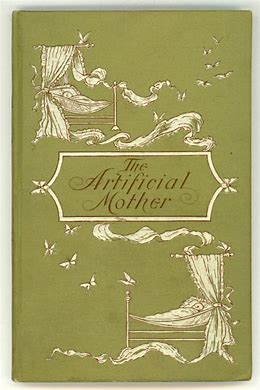 THE ARTIFICIAL MOTHER (1894) – This short story was written by George H. Putnam, who served in the Union Army during the U.S. Civil War and was also a Prisoner of War. He was part of the Putnam publishing empire and in 1901 authored the children’s story The Little Gingerbread Man.
  A.D. 2000 (1890) – Written by Alvarado M. Fuller, this was one of the earliest imitations of Edward Bellamy’s 1888 work Looking Backward. The main character is a Cavalry Lieutenant named Junius Cobb.
  With the cooperation of friends, Lt. Cobb seals himself away in a San Francisco replica of the Statue of Liberty with an alarm set to revive him in the year 1987. Due to a mathematical error, however, our main character is not awakened from suspended animation until the year 2000 A.D.
  THE PLANET JUGGLER (1908) – Written by J. George Frederick. An early space opera set in an undesignated future year. Absurdly enough, Esperanto has become the global language in a reflection of the high hopes held by Esperanto speakers at the time this book was written.
 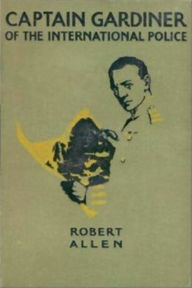 CAPTAIN GARDINER OF THE INTERNATIONAL POLICE (1916) – Robert Allen Dodd wrote this story over one hundred years ago under the name Robert Allen. Narration informs us that the story is set 60 years after the conclusion of the then-raging World War. Since we know it ended in 1918 we can look forward to visiting the “far-off future” of 1978.
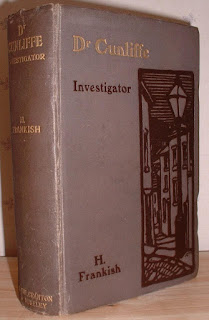 DR. CUNLIFFE, INVESTIGATOR (1913) – Written by Harold Frankish. This book was a collection of short stories centered around Frankish’s fictional “scientific detective” Dr. Theodore Cunliffe.
 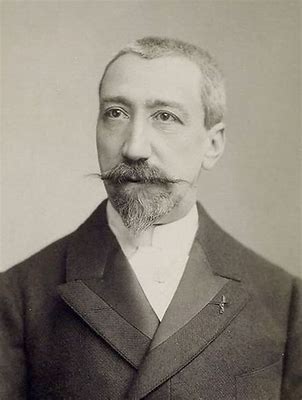 THROUGH THE HORN OR THE IVORY GATE (1905) – Written by Anatole France. In this story a Frenchman, the tale’s narrator, finds himself in the year 2270 A.D. The large buildings that used to fill Paris have been replaced by small cottages inhabited by people whose tastes run to fine art and statuary.
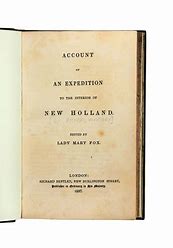
  ACCOUNT OF AN EXPEDITION TO THE INTERIOR OF NEW HOLLAND (1837) – Written by multiple parties, with Lady Mary Fox, Richard Whateley and Lord Holland the likeliest authors. “New Holland” was an old name for Australia. In 1860 the novel was reissued under the title preface The Southlanders.
  Southland boasts a population of roughly four million and is divided into eleven distinct regions which, though under one overall parliamentary government, enjoy a large amount of internal sovereignty. Some regions are republics and others live under a hereditary monarchy. In several of the republics, however, their chief executive figure is still called a king despite being elected.
