
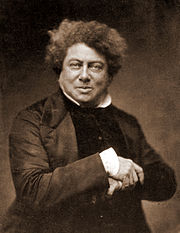
“HELLO DERE!”
Alexandre Dumas pere is synonymous with swashbuckling historical adventures like The Three Musketeers, The Count of Monte Cristo and The Man in the Iron Mask.
His name became SO associated with swordplay and intrigue that even a Dumas novel like The Corsican Brothers, which in reality lacks any true action elements, has long been adapted as if it’s a swashbuckler. That has always involved altering the original story beyond recognition, which is why no two Corsican Brothers movies bear much resemblance to each other and can’t even seem to agree on a time period.
That’s a shame since plenty of other novels by Alexandre Dumas are loaded with action and historical intrigue yet have been largely overlooked when it comes to movies and television.
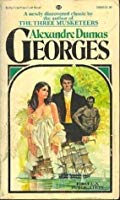 GEORGES (1843) – Published just one year before The Three Musketeers, this novel is not only a rollicking adventure full of action, romance and double-crosses but it deals with racial issues in such a way that you would have thought it would have been adapted for film four or five decades ago. The title character uses his sword to fight slavery! Continue reading
 Regular readers of Balladeer’s Blog will remember my review of three neglected swashbuckler novels by Alexandre Dumas. (For those three – Georges, Captain Pamphile and La Dame de Monsoreau click
  When I was a little boy thrilled with the Musketeers, Monte Cristo and Iron Mask I excitedly grabbed The Black Tulip to read, assuming it, too would feature derring-do and swordplay. Much to my disappointment the novel instead dealt with attempts to cultivate a black tulip, the mob-slaying of Netherlands politicians Johann and Cornelius de Witt, romance and the redemption of personal honor.
  Alexandre Dumas pere is synonymous with swashbuckling historical adventures like The Three Musketeers, The Count of Monte Cristo and The Man in the Iron Mask.
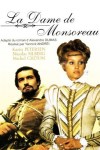 LA DAME DE MONSOREAU (1846) – A collaboration with Auguste Maquet. The title refers to the beautiful and fascinating Countess Diana de Monsoreau and her illicit romance with the novel’s male lead, Louis de Clermont de Bussy d’Amboise. Both characters are real but naturally Dumas and Maquet take the usual poetic license accorded to historical fiction.
  Balladeer's Blog