
 A VOYAGE TO THE WORLD IN THE CENTRE OF THE EARTH (1755) – This intriguing work was published in London anonymously and no author has yet been decisively identified. The novel’s narrator – who remains as anonymous as the book’s author – parties away his inheritance and then ships out for Italy.
Exploring on Mount Vesuvius our hero accidentally falls into what we readers are eventually told is just one of many holes that lead to the interior of the Earth, where another world awaits. A miraculous landing on a haystack saves the narrator’s life but he finds himself unable to move because of the greater gravity of this interior world.
A friendly inhabitant of the inner Earth applies a chemical salve to our protagonist’s body, a salve which allows him to stand up and move about in the higher gravity. A second salve massaged into the narrator’s body renders him capable of understanding and conversing in the language of Inner Earth. Continue reading
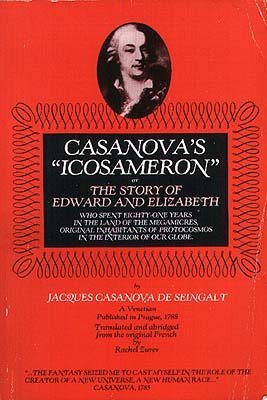 CASANOVA’S ICOSAMERON OR THE STORY OF EDWARD AND ELIZABETH WHO SPENT EIGHTY-ONE YEARS IN THE LAND OF THE MEGA-MICRES, ORIGINAL INHABITANTS OF PROTOCOSMOS IN THE INTERIOR OF OUR GLOBE (1788) – Yes, that IS the actual, complete title of this obscure item and yes, it was written by THE Giovanni Giacomo Casanova, the legendary ladies’ man and adventurer.
 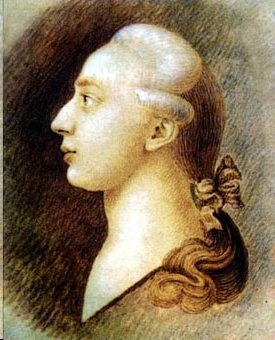 The pair of twenty-somethings prove their identity through that beloved fictional trope of birthmarks and scars, then proceed to tell their tale. When the ship that Elizabeth and Edward were aboard sank at sea the then-children climbed into an empty, water-tight coffin in the cargo hold.
  THE AMERICAN ADVENTURER: STORY OF THE SECOND TRAVELER (1879) – While looking for new blog posts to mark Frontierado this year I unexpectedly came across this short story that is more sci-fi than Wild West.
  TRAVELS IN THE INTERIOR (1887) – Nearly eighty years before the movie Fantastic Voyage, this work of “ancient” science fiction detailed a party of shrunken heroes on an odyssey through a human being’s body. This cleverly-titled tale was written by Alfred Taylor Schofield under the name Luke T Courteney.
 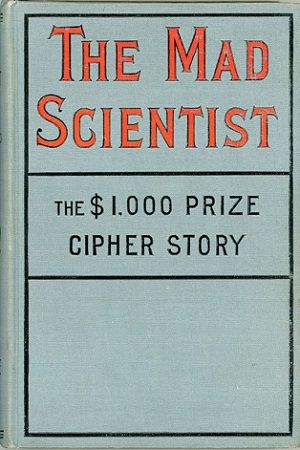 THE MAD SCIENTIST: A TALE OF THE FUTURE (1908) – Written by Raymond McDonald, a pen name for two Canadians – Raymond Alfred Leger and Edward Richard McDonald. An unusual aspect of this novel was the publisher’s offer of a thousand-dollar reward for any reader who deciphered and provided the best breakdown of a coded message in the story.
  WONDERWORLDS (Wunderwelten) (1911) – Written by Friedrich W. Mader. This novel was published in its native German in 1911 but not translated into English until 1932 under the title Distant Worlds. Some sources mistakenly list 1932 as its original year of publication.
  A TRIP TO THE MOON BY MR. MURTAGH MCDERMOT, CONTAINING OBSERVATIONS AND REFLECTIONS MADE BY HIM (1728) – The real author of this is unknown, since it was published using the pen name Murtagh McDermot. Unless, of course, the writer used their real name for the main character.
  THE STRUGGLE FOR EMPIRE: A STORY OF THE YEAR 2236 (1900) – Written by Robert W Cole. I left out the first half of the title for the headline, since The Struggle For Empire sounds like a mundane history book. In reality this novel was a very, very early example of the Space Opera sub-genre.
  Initially the Earth colonized and inhabited the planets and certain moons of our own solar system all the way out to Neptune. (Pluto was not discovered until 1930.) In a quaint quasi-Steam-Punk way, all of those planets and moons have Earth-like atmospheres and conditions.
  THE GUARDIAN OF MYSTERY ISLAND (1896) – Written by Dr Edmond Molcini. Mystery Island lies off the coast of Maine and everyone near the coast considers the place haunted by a true monstrosity – a large ghost-dog.
  Last month Balladeer’s Blog gave an overview of the German sci-fi hero Captain Mors the Air Pirate
  MASTER OF THE SKIES – The first short story featuring Kapitan Mors der Luftpirat is set in 1905. This origin tale saw him visit the mountain graves of his wife and children before leading his European and Indian crew against the villains responsible for their deaths and for his fugitive status.
  Balladeer's Blog