
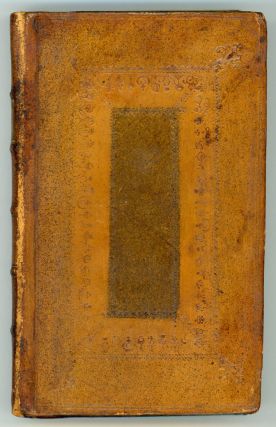
 A VOYAGE TO THE WORLD IN THE CENTRE OF THE EARTH (1755) – This intriguing work was published in London anonymously and no author has yet been decisively identified. The novel’s narrator – who remains as anonymous as the book’s author – parties away his inheritance and then ships out for Italy.
Exploring on Mount Vesuvius our hero accidentally falls into what we readers are eventually told is just one of many holes that lead to the interior of the Earth, where another world awaits. A miraculous landing on a haystack saves the narrator’s life but he finds himself unable to move because of the greater gravity of this interior world.
A friendly inhabitant of the inner Earth applies a chemical salve to our protagonist’s body, a salve which allows him to stand up and move about in the higher gravity. A second salve massaged into the narrator’s body renders him capable of understanding and conversing in the language of Inner Earth.
The inhabitants of this interior world dress in silk robes and live to be 200 years old or older. They possess limited telepathy. Precious gems litter the ground but those jewels are meaningless to the Inner Earthers. Their society is partially socialist but with families held sacrosanct and with paternal authority sovereign in each household until the children reach adulthood.
 Periodically a King is elected for a lifetime term. Common-sense morality prevails, and ingratitude is especially frowned upon. All of the inhabitants are strict vegetarians, as are the animals so the humans and the beasts interact peacefully.
In addition to the usual above-ground animals, Inner Earth also boasts gigantic birds who are trained to provide air travel throughout the subterranean land. Our hero gets to meet the reigning King in the world capital called Oudentominos.
The King makes him welcome but stresses that visitors are usually encouraged to leave after a year. That custom was set in place when a still-extant colony of British men and women discovered Inner Earth nearly a hundred years earlier and have been causing frequent problems.
During our protagonist’s stay the cantankerous Brits once again come close to mutinying so the Inner Earthers attack them and subdue them. The men are castrated and both sexes of the Anglos are scattered around Inner Earth to prevent any more rebellions from fermenting.
As for life on other planets in our solar system: Continue reading
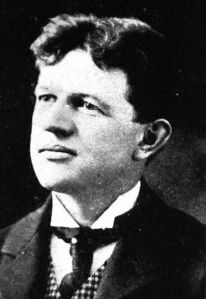 AN INTER-PLANETARY RUPTURE (1906) – Written by Frank L Packard. This work of Science Fiction is set in the far-off year 3102 A.D. Since the year 2532 all of the Earth has been united under one single government, which is headquartered in America’s Washington, D.C. (Yet this was written by a Canadian.)
 Full Title: A NARRATIVE OF THE LIFE AND ASTONISHING ADVENTURES OF JOHN DANIEL, A SMITH AT ROYSTON IN HERTFORDSHIRE, FOR A COURSE OF SEVENTY YEARS. (1751) – Written by Ralph Morris, supposedly a pseudonym used by an unknown man.
 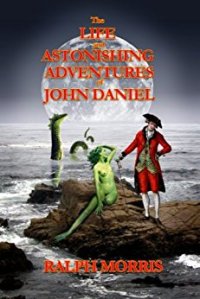 The unmarried son, Daniel (yes his name is Daniel Daniel) has a knack for inventing things and builds a flying machine. Its general shape is like one of our modern-day airplanes but the wings are leather over metal rod frames and in order to fly the wings must “flap,” which they do, powered by a pump.
  A DARWINIAN SCHOONER (1893) – Written by William Alden. With so many fans of the various Planet of the Apes movies still around, I figured it was a good time to post a review of this story that’s in a similar spirit.
  THE ABYSMAL INVADERS (1929) – Written by Edmond Hamilton. This is a nice mish-mash of elements that are part Creature Feature, part Doctor Who and part Jurassic Park. Hamilton gets bashed as a hack but his stories are harmless fun.
  FIVE HUNDRED YEARS HENCE (1818) – Written under the pseudonym “D” this work was published the same year as Mary Shelley’s novel Frankenstein. The story is presented as written observations of the world in October and November of the year 2318.
  THE BRICK MOON (1872) – Written by Edward Everett Hale, best known for The Man without a Country. This novella started out as a serialized story published in 1869 in the October, November and December issues of Atlantic Monthly. A follow-up installment, titled Life in the Brick Moon, was published in the February 1870 issue.
 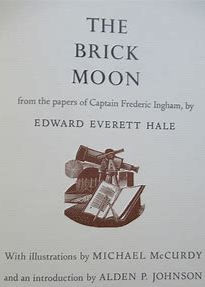 The story begins in the 1840s when Frederic Ingham, the tale’s narrator, and his college friends Orcutt and Halliburton plan a dream project which winds up taking decades to fulfill – a manmade artificial satellite, the first recorded in science fiction stories.
  THE END OF AN EPOCH (1901) – Written by A. Lincoln Green, this novel about a world-threatening disease presented the tale of brilliant young Adam Godwin, a recent Oxford graduate who pursues his interest in microbiology. During the course of his research into antitoxins, Adam becomes aware of the controversial Dr. Azrael Falk.
  Ultimately, Adam starts neglecting Evelyn to the point that she lays down an ultimatum: Godwin must choose between her and his research. Adam chooses his research, so the engagement is ended, and the willful Evelyn joins her father’s expedition to the North Pole.
 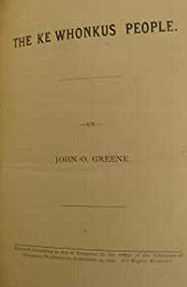 THE KE WHONKUS PEOPLE aka A Tale of the North Pole Country (1890) – The author John O. Greene was American, but the main character in this story is a Canadian named Sampson De Lilly. Sampson survives a shipwreck and is picked up by a steamship headed for the North Pole.
 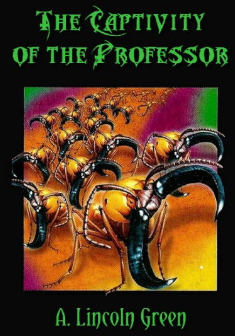 THE CAPTIVITY OF THE PROFESSOR (1901) – Written by A. Lincoln Green, a presumed pen name, this story was first published in Blackwood’s Edinburgh Magazine in the February 1901 isssue.
