
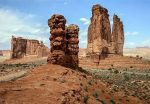
 HAPPY FRONTIERADO! The first Friday of every August marks Frontierado, the holiday devoted to the myth of the old west rather than the grinding reality.
Enjoy your buffalo steaks, rattlesnake fried rice, corn on the cob, mashed potatoes, tumbleweed pizza, cactus salad and more today and tonight, and enjoy the leftovers on Saturday and Sunday.
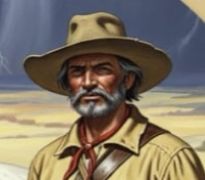 PRAIRIE DOG MORROW – This overlooked gunslinger was also called Prairie Dog Dave Morrow. He was born on April 14th, 1837 in Jackson, Ohio. His was a farming family but that life didn’t appeal to David Morrow so in his teens he left home and made his way to California in hopes of making his fortune.
Morrow was still out there when the U.S. Civil War broke out and he enlisted in the Union Army at Camp Latham near Los Angeles. David served in the First California Cavalry as part of the storied California Column under Colonel James H. Carleton.
The unit was stationed in New Mexico and Arizona during the war, fighting Confederate forces and driving them out of short-lived Confederate Arizona and out of New Mexico and part of Texas. During the war years the First California also dealt with hostile Navajo and Apache flair-ups. Morrow was injured in the left leg and was later awarded a Veteran’s Pension of $4.00 per month.
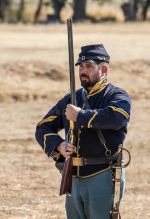 Other actions they were involved in were the Battle at Picacho Pass in Arizona, the Battle of Apache Pass and the First Battle of Adobe Walls.
Though the Civil War ended in April of 1865, David Morrow stayed in the army for another year fighting in clashes with Native American forces until getting honorably discharged in May, 1866.
Dave’s activities for the next four years are not known, but by 1870 when he arrived in the Plains States he was gathering a reputation as a buffalo “hunter.” While practicing this trade, Morrow met fellow hunters like future lawmen Bat, Jim and Ed Masterson as well as future crime lord Hoodoo Brown.
Periodic clashes with Native Americans were an occupational hazard, since the tribes depended heavily on buffalo. Prairie Dog’s skill with guns – gained during his army years – helped him survive battles with Native Americans, outlaws and rival buffalo killers.
Around this time, our man picked up the nickname Prairie Dog Morrow, used interchangeably with Prairie Dog Dave Morrow. The reason was that from September to March each year Dave “hunted” buffalo, then spent a few months catching and training prairie dogs and selling them to people in Hays City and Dodge City, Kansas.
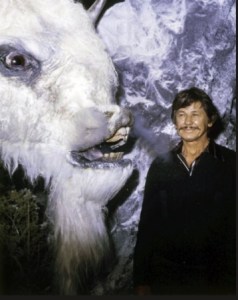
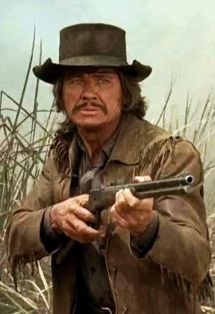
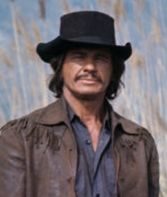
Charles Bronson would have made a good Prairie Dog Morrow.
In 1872, Prairie Dog Morrow caught the fever to find and kill a White Buffalo. Such bison did indeed exist but were very rare and very, very few were ever killed and had their heads and skins displayed. Around January 1st, 1873 Dave Morrow rode into Dodge City in his wagon and revealed that he had indeed located and slain a White Buffalo.
Moreover, he had to survive multiple Native American attacks while getting his wagon and the dead white bison all the way back to Dodge City.
Dodge City merchant Robert M. Wright bought the prize from Prairie Dog for $1,000, which would be equal to $27,800 here in 2026. Over the years this trophy’s head was displayed in stores and saloons as well as the State House in Topeka, Kansas. Ultimately, the head wound up at the Hubbell Museum in New York City where it was destroyed in a fire.
Legend holds that because White Buffalo are sacred to Cheyenne Indians Dave Morrow was targeted by the tribe and had to survive multiple random attacks from Cheyenne warriors in the years ahead. Once again, our man’s gunmanship with pistols and rifles kept him alive.
At any rate, Dave got 160 acres of land for a home near Dodge City where he could live when he wasn’t out hunting buffalo, elk or antelope. During the summer of 1874 Prairie Dog Morrow was on hand for the notorious Rocky Mountain Locust Plague. Literally billions of those locusts traveled from Colorado and preyed on Kansas, Missouri, Iowa, Nebraska and other states.
Swarms of the flying pests literally filled the sky like clouds and brought darkness as they flew along. Massive damage was done to crops, livestock and even some human victims.
 Spring 1875 saw Prairie Dog Morrow appointed a Constable of Ford County (where Dodge City was located), beginning Dave’s on and off law enforcement work for a few years. Our hero tended to work as a Constable mostly when the big cattle drives were in town and rowdy, drunken, trigger-happy cowboys ran amok and needed men skilled at gunplay to deal with them.
In November, 1877 Bat Masterson himself was elected Sheriff of Ford County and he immediately hired Morrow as one of his deputies. On January 27th, 1878 a gang of outlaws including Dirty Dave Rudabaugh robbed a train near Kinsley, KS. Sheriff Masterson, Deputy Morrow, John Joshua Webb and others rode off in a posse to corral the gang.
Despite the snowy conditions, Prairie Dog’s tracking abilities were as sharp as ever and before long Rudabaugh was arrested and informed on his fellow robbers. All of them were arrested and went to prison, but per Dirty Dave’s deal with Bat Masterson he was released.
September of 1878 brought unfounded panic to Ford County as fears of Cheyenne attacks saw gun sales skyrocket. No attacks ever materialized.
 By 1879, Prairie Dog Morrow was no longer a deputy because Bat Masterson had been defeated for reelection as sheriff. Bat recruited Dave, Doc Holliday, Texas Thompson, Dirty Dave Rudabaugh (yes), John Joshua Webb and Mysterious Dave Mather to join him as mercenaries fighting in the Royal Gorge Railroad War.
That drawn-out conflict was waged between hired guns for the Atchison, Topeka & Santa Fe Railroad and the Denver & Rio Grande Railroad. Masterson, Morrow and the others fought on the side of the Atchison, Topeka & Santa Fe but either lost or were paid off to finally stop fighting (sources vary).
During the summer of 1879 Prairie Dog Morrow and his allies even raided an armory and stole a cannon to use to defend their last remaining stronghold in Pueblo, Colorado. The so-called “Treaty of Boston” brought an end to the railroad war as the lawyers for the clashing rail lines signed legal documents bringing peace on March 27th, 1880.
The next major event for Dave came when he married Mary Etta Hodges in Dodge City, where he was working as a deputy under Ham Bell, on December 2nd, 1881. He was 44, she was 29. In 1884 their daughter Maud Myrtle Morrow was born. Some sources claim that Prairie Dog had also sired two children out of wedlock during the 1870s.
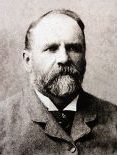 At any rate, Dave continued trading bullets with outlaws in Ford County for a few years, then tried making a go of it at farming with Mary Etta.
At some point his health went downhill and he passed away at the Fort Dodge Old Soldiers Home on October 18th, 1893. David Morrow was 56 years old.
FRONTIERADO 2021 – CHARLIE SIRINGO, GUNSLINGER.
FRONTIERADO 2022 – BUCKSKIN FRANK, GUNSLINGER.
FRONTIERADO 2023 – LONG HENRY, GUNSLINGER.
FRONTIERADO 2024 – THE BUFFALO SOLDIERS.
FRONTIERADO 2025 – WHISKEY JIM, GUNSLINGER.


I can definitely see Charles Bronson as Prairie Dog Morrow. Have a great weekend my friend.
Thank you very much, buddy! You too!
Pingback: PRAIRIE DOG MORROW: NEGLECTED GUNSLINGER FOR FRONTIERADO – El Noticiero de Alvarez Galloso
Logged, thank you!
Wonderful post as always. As a huge fan of the western genre, I found this post about the neglected gunslinger Prairie Dog Morrow extremely interesting to read.
I really appreciate that! Thanks!
Interesting to hear about the life of Prairie Dog Dave Morrow. I feel sorry for the buffalo, though ☹️
Thanks! I feel sorry for them, too.
Have you had fried rattlesnake? Oddly, it doesn’t taste like chicken – more like fish.
Yes, I have and I agree. It tastes great in fried rice with cactus.
I bet there were a lot like him. I can’t tolerate buffalo hunters, especially one after the sacred white buffalos. Dang!
I understand! I wanted to fit him in because of how obscure he is.
Dave was quite the man’s man. Tumbleweed pizza sounds … interesting, LOL!
Ha! Yes, it’s just regular pizza ingredients on a pita with cactus added.