
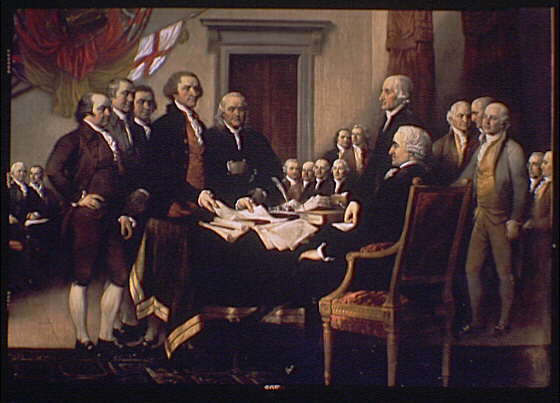
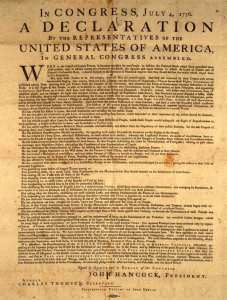
 The big names among the signers of the Declaration of Independence get all the attention they need, so Balladeer’s Blog will be spreading the love to ALL the signers in this article.
Those big names are covered too, of course.
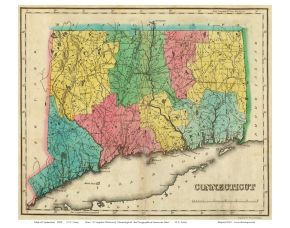 CONNECTICUT –
1. Samuel Huntington – Served as president of the Continental Congress from 1779 to 1781. After the war served as Connecticut’s Chief Justice and then Governor.
###2. Roger Sherman – In addition to signing the Declaration he also signed the Articles of Association, the Articles of Confederation AND the U.S. Constitution. ###
3. William Williams – Used his own money to finance various Connecticut Militia units and allowed American and later French troops to quarter in his home.
### 4. Oliver Wolcott – Went on to serve as a Major General and led his forces against British Loyalists who were launching raids along the Connecticut Coastline. He also served in the Long Island and Saratoga campaigns.
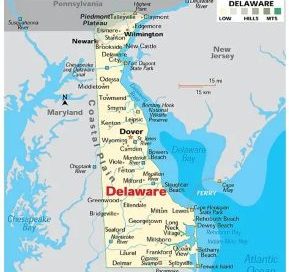 DELAWARE –
1. Thomas McKean – Despite being from Delaware he led the military unit called the Pennsylvania Associators (talk about a name guaranteed to strike fear into the hearts of the enemy) during Washington’s ultimately futile defense of New York City. When the British were moving through Delaware McKean had to move his family five times to keep them out of the Red Coats’ clutches.
###2. George Read – Served as the President of Delaware for part of the war and while fleeing the British advance he used an assumed name and bluffed the British soldiers who coralled him into thinking he was a Loyalist, so they let him go.
### 3. Caesar Rodney – I think we’re all sick of hearing about Rodney’s late-night ride to get back to Philadelphia in time to let him and McKean outvote George Read and cast Delaware’s vote FOR independence. Instead, I’ll mention Rodney’s service as a Militia General whose troops helped defend Delaware from the invading Brits.
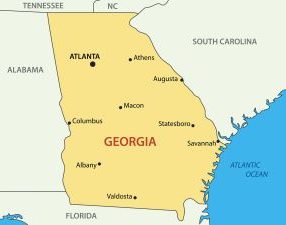 GEORGIA –
1. Button Gwinnett – Authored the Georgia State Constitution and while serving as Governor during the war oversaw a campaign into British-held Florida to quell raids across the border by the British and their Native American allies.
###2. Lyman Hall – For a time Hall was Georgia’s only representative at the Continental Congress because his home district of St John’s Parish was the only part of the colony ballsy enough to risk it at first. Gwinnett and Walton joined him later. Also, Hall’s home was burned down by the British.
### 3. George Walton – Left Congress in 1778 to serve in the Georgia Militia and was wounded and captured during the Savannah Campaign. Walton was held prisoner for a year before being exchanged for a British naval captain taken by the Americans.
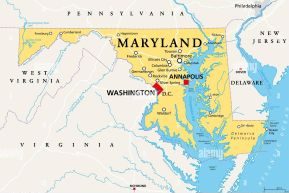 MARYLAND –
1. Charles Carroll – Was the last of the Declaration signers to die, passing away in 1832 at the age of 95.
###2. Samuel Chase – Later served as a Justice on the U.S. Supreme Court. President Thomas Jefferson, in another of his ugly episodes, played politics by trying to have Justice Chase removed from the court because he didn’t like the decisions he authored. Chase was impeached but in March 1805 was acquitted by the Senate.
###3. William Paca – He and Samuel Chase were early rebels in Maryland and once staged a mock public execution of an unpopular bill the Royal Governor had passed. They also won a court case striking down another unpopular bill that imposed a tax to support the Church of England.
### 4. Thomas Stone – Helped draft the Articles of Confederation and earlier had been the Crown Prosecutor opposing Chase and Paca in the case regarding the tax to benefit the Anglican Church.
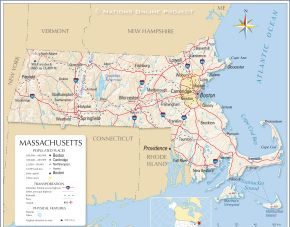 MASSACHUSETTS –
1. John Adams – Is known as “the Atlas of independence” for being the single-most dedicated prime mover in the debate over breaking from England or seeking a reconciliation with it.
###2. Samuel Adams – This presumed leader of the Boston Tea Party also helped draft the Articles of Confederation and when the Constitution was being worked on years later Samuel was one of the parties pushing for a Bill of Rights to limit the new government’s power.
###3. Elbridge Gerry – We’re all sick of hearing about the origin of Gerrymandering so instead I’ll mention his pioneering work in insider trading and war profiteering.
###4. John Hancock – As a young man he was in England on business and attended the coronation of King George III, America’s chief enemy in the Revolutionary War. After signing the Declaration this President of the Continental Congress dared the British to double the five hundred pound reward that was already on his head.
### 5. Robert Treat Paine – Was the lawyer on the opposite side of John Adams in the Boston Massacre Trials and is an ancestor of actor Treat Williams, who was named in honor of RTP.
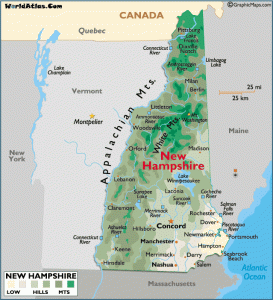 NEW HAMPSHIRE –
Josiah Bartlett – This M.D. went on to serve as a military doctor for the American forces and was present at the Battle of Bennington, where General John Stark said “Live free or die”, which saying became the New Hampshire state motto.
###2. Matthew Thornton – Thornton also served as the first President of the Nation of New Hampshire. ###
3. William Whipple – In January 1776, when New Hampshire became the first colony to officially break from England and become its own “nation”, Whipple helped organize the new government.
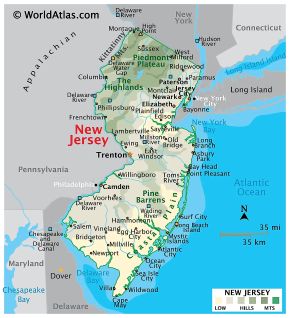 NEW JERSEY –
1. Abraham Clark – Abraham’s two sons Aaron and Thomas were captured during the war and may have perished while captives of the British. Accounts vary and some sources even claim he had three sons die in the war. ###
2. John Hart – In late 1776 the British invaded New Jersey and Hart spent weeks literally on the run in the wilderness to avoid being captured. He even slept in a cave at times according to tradition. ###
3. Francis Hopkinson – This songwriter and opera composer also designed the American flag that Betsy Ross notoriously sewed for the Americans. ###
4. Richard Stockton – Got betrayed into the hands of the British by Loyalist neighbors and became very ill while imprisoned. After months of confinement Stockton took advantage of Admiral Richard “Black Dick” Howe’s (insert your own sophomoric joke here) offer of a pardon to any rebels who would swear renewed allegiance to the king. Fellow signers defended Stockton’s actions since he clearly did it to get proper medical care at home. ###
5. John Witherspoon – His son James was killed in the Battle of Germantown, his home was burned by the British and Princeton University where Witherspoon was president, was vandalized by the Brits as well.
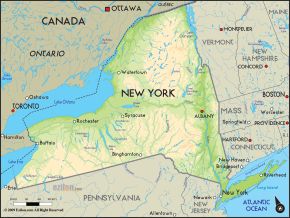 NEW YORK –
1. William Floyd – Prior to being sent to the 2nd Continental Congress in 1776 Floyd was a Militia General who, earlier in the year, had led New York troops in successfully driving off British forces in the Battle of Gardiner’s Bay on Long Island. ###
2. Francis Lewis – During the war his home was destroyed by the British who also dragged off his wife Elizabeth and imprisoned her. George Washington managed her release by having the wives of two wealthy Philadelphia Tories arrested, then exchanging them for Mrs Lewis. ###
3. Philip Livingston – The British occupied the wealthy Livingston’s many homes, burning some and using others as hospitals and barracks. He died of heart failure while attending the Continental Congress in May, 1778. ###
4. Lewis Morris – His plush estate, Morrisania Manor, was burned and looted by the British army and today is the neighborhood called “Morrisania”, a South Bronx ghetto.
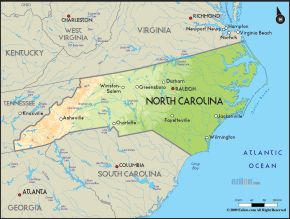 NORTH CAROLINA –
1. Joseph Hewes – Broke with his Quaker faith when the Quakers disapproved of his political agitation against the British. Hewes also pulled strings to get his friend John Paul Jones his first independent naval command. ###
2. William Hooper – Accomplished the seemingly impossible by actually impressing John Adams, who praised him in letters to his wife Abigail. He also lost both his homes when the British invaded North Carolina and while fleeing to avoid capture contracted malaria, which would plague him until his death in 1790. ###
3. John Penn – Was the most Pro-Independence member of the North Carolina delegation. He later was challenged to a duel by Henry Laurens of South Carolina (the reason has not come down to us) but both men made up over a shared breakfast (don’t go there) the morning of the duel and mutually agreed to call it off.
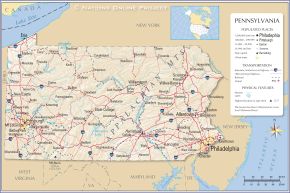 PENNSYLVANIA –
1. George Clymer – His home was ransacked by the British who destroyed all his furniture and stole all his booze. After the war Clymer’s business acumen saved the University of Pennsylvania from bankruptcy. ###
2. Benjamin Franklin – Just about everything is known about him so I’ll throw in two forgotten episodes – in 1774 he ignited a scandal when he intentionally leaked anti-rebel letters written by the Royal Governor of Massachusetts, an adventure that cost Franklin his position as Postmaster General. Also, he was part of the delegation sent to Canada to try to talk them into joining America in breaking away from England. ###
3. Robert Morris – A once-wealthy man who blew a large portion of his fortune keeping the rebel cause afloat. He later wound up in debtor’s prison, and George Washington showed him some moral support by dining with him there. ###
4. John Morton – On April 15th, 1777 he became the first Declaration signer to die and one of his deathbed pronouncements was to friends who disagreed with his vote for independence, ” Tell them they will live to see the hour when they shall acknowledge it to have been the most glorious service I ever rendered to my country.” ###
 5. George Ross – His nephew John was married to Betsy Ross, the famous seamstress of many of the first American flags. ###
6. Benjamin Rush – This M.D. served as Surgeon General of the armies in 1777, became “the father of American psychiatry” and established the first free medical clinic in America, the Philadelphia Dispensary. ###
7. James Smith – While he was serving in the Continental Congress his successful business collapsed due to negligence by his partners. ###
8. George Taylor – His ironworks made grapeshot, cannons and cannonballs for the American war effort, but he was very poorly paid for them after the war. ###
9. James Wilson – Went on to sign the U.S. Constitution as well and while serving as a Justice on the U.S. Supreme Court spent time in debtor’s prison over failed land investments.
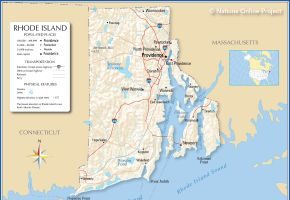 RHODE ISLAND –
1. William Ellery – During their three-year occupation of Newport the British looted and burned Ellery’s home. He, not Stephen Hopkins, stood by to watch each man sign the Declaration. ###
2. Stephen “Old Grape and Guts” Hopkins – His brother Esek was the very first Admiral of the American navy. When signing, Hopkins supposedly said “My hand trembles, but my heart does not.”
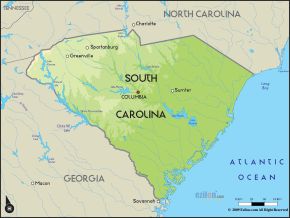 SOUTH CAROLINA –
1. Thomas Heyward, Jr – Heyward went on to serve as a Militia Captain in 1779, was wounded in action at Port Royal Island and was taken prisoner in May 1780 when the British attacked Charleston. He was freed in 1781 as part of a prisoner swap. ###
2. Thomas Lynch, Jr – Replaced his late father at the Continental Congress and signed the Declaration in his stead. ###
3. Arthur Middleton – He was also captured at Charleston while serving in the militia and was imprisoned at Fort Saint Marks. Like Heyward he was freed in the same prisoner exchange. ###
4. Edward Rutledge – Later served as an artillery captain and was captured at Charleston, then later released, like fellow prisoners Middleton and Heyward. After the war he helped ensure that Loyalists in South Carolina would be forgiven and not have their property confiscated.
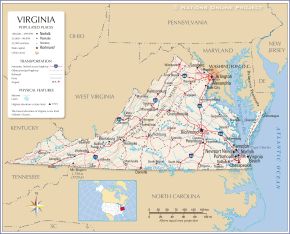 VIRGINIA –
1. Carter Braxton – His cargoes were seized by the British during the war ruining his business, his homes were destroyed by the Brits as well and the money he loaned the United States government was never paid back. ###
2. Benjamin Harrison – Supposedly forced John Hancock to accept election as President of the Continental Congress when Hancock was reluctant. He is also the ancestor of U.S. Presidents William Henry Harrison and Benjamin Harrison. ###
3. Thomas Jefferson – Never freed his slaves no matter how many times you hear that he did. ###
4. Francis Lightfoot Lee – Member of the famous Lee family who went on to be a big supporter of the Constitution against the family’s position. ###
5. Richard Henry Lee – Introduced Virginia’s Resolution on Independence on June 7th, 1776. He was the brother of General “Light-Horse Harry” Lee, the Revolutionary War cavalry hero buried at West Point. Light-Horse Harry Lee was the father (not grandfather) of Robert E Lee. ###
6. Thomas Nelson – Was part of the neglected Yorktown Tea Party of 1774, a similar tea dumping held in sympathy with the Boston event from the previous year. He also served in the Virginia Militia during the siege of Yorktown. ###
7. George Wythe – The law professor of future presidents Thomas Jefferson and James Monroe, future Chief Justice John Marshall and of future Speaker of the House Henry Clay. In 1806 Wythe was poisoned by a nephew hungry to inherit Wythe’s money.
© Edward Wozniak and Balladeer’s Blog 2012. Unauthorized use and/or duplication of this material without express and written permission from this blog’s author and/or owner is strictly prohibited. Excerpts and links may be used, provided that full and clear credit is given to Edward Wozniak and Balladeer’s Blog with appropriate and specific direction to the original content.


Wow! Great post! It’s so nice to see all the names of the signers. Thanks for sharing this.
Thank you for saying so! I’m happy to do it!
What a great summary. A lot of bravery on this list.
Thanks! I certainly agree!
Interesting post.
Thanks! I appreciate it!