
Previously, Balladeer’s Blog examined the 1910-1915 silent films of pioneering comedienne Mabel Normand. This time around I’m taking a look at her 1916-1920 work.
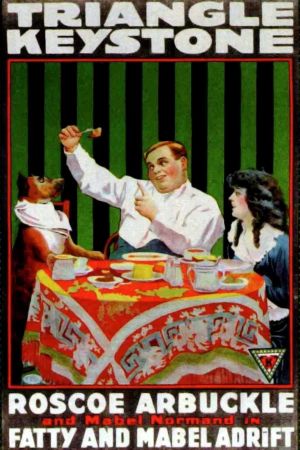 FATTY AND MABEL ADRIFT (1916) – This 34-minute film is not only one of the most popular shorts teaming Mabel with fellow comedy legend Fatty Arbuckle but it’s one of the most popular silent comedies ever. When Fatty wins Mabel’s hand in marriage his jealous rival (Al St. John) sabotages their honeymoon cottage by the sea.
The cottage drifts further and further out to sea and is gradually sinking, prompting some comedy set pieces from our stars as they struggle to survive. They send their dog Fido to shore with a plea for help attached to his collar and get rescued by a tycoon on his yacht. The villain gets his.
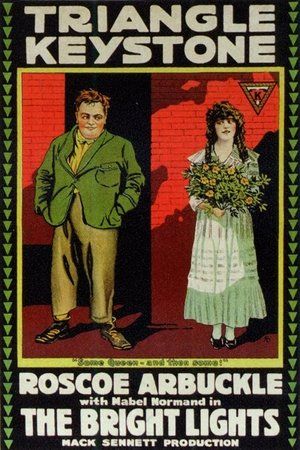 BRIGHT LIGHTS (1916) – Another Fatty and Mabel short. Mabel plays a maid and Fatty is a cook in a small-town hotel. The eccentric owner longs to compete with fancier high-end hotels which offer cabaret entertainment, so he forces all his employees to double as singers, dancers, etc.
The acts all hilariously misfire due to the amateurs performing them, but a big city lothario falls for Mabel and convinces her to run away with him. He makes her a virtual prisoner and it’s up to Fatty and a drunken old sailor to come to the rescue. 20 minutes.
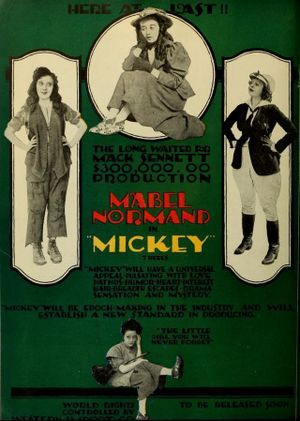 MICKEY (1918) – Mabel stars as the title character in what was the highest grossing movie of 1918! In fact, it was such a hit that it was rereleased to theaters in 1919, 1920 and 1921.
Mabel’s charm and comedic versatility made it a hit. The storyline is fairly typical. As Mickey, our heroine is poor, tomboyish and mischievous. She is sent east to stay with a snobbish wealthy family who treat her like a servant and worse.
Mickey and the handsome young son of the rich family fall in love but he is engaged to a shallow wealthy woman (Minta Durfee) who is only attracted to his money. Circumstances expose Minta’s true nature when it looks like the young man has lost his fortune.
He hasn’t, however, setting up the happy ending for him and Mickey. A standout bit is when Mabel masquerades as a male jockey to ride in a horse race her beau has bet on. 71 minutes.
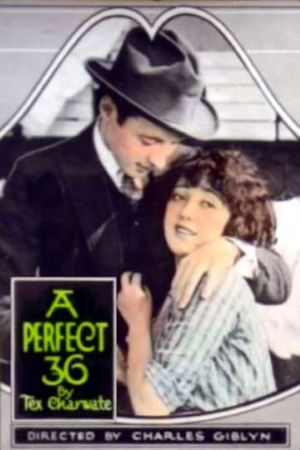 A PERFECT 36 (1918) – This 50-minute flick mixes some sex appeal in with the comedy. Mabel plays a waitress in a boardinghouse whose passion for practical jokes winds up getting her fired.
Through a mix-up, she gets possession of the suitcase of a male corset salesman. Mabel becomes a traveling corset sales rep herself but outdoes all her male competitors by walking around wearing nothing but the type of corsets she is selling.
While piling up sales commissions from her admiring male customers, Mabel gets mistaken for a jewel thief (don’t ask). Everything gets straightened out in the end.
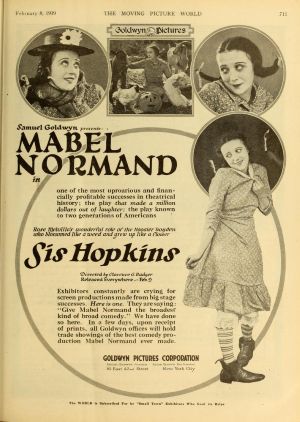 SIS HOPKINS (1919) – Mabel stars as the title character, a homespun farm girl, and John Bowers plays her beau Ridy Scarboro, the general store clerk. One day the pair are so caught up in flirting with each other that they accidentally spill a container of oil into a stream on the farm.
That leads to a greedy and calculating man mistakenly thinking the farm stands on an oil deposit. The villain uses his money to dazzle Mabel, whom he wants to marry to take over the land and get the oil rights.
He sends Mabel to a women’s finishing school to try to refine her but she unleashes havoc at the school. Deciding to just buy the land rather than marry the oafish farm girl, our bad guy pays much more than the oil-free land is worth. Sis and Ridy are set for life from the money he paid Sis for the farm. 50 minutes.
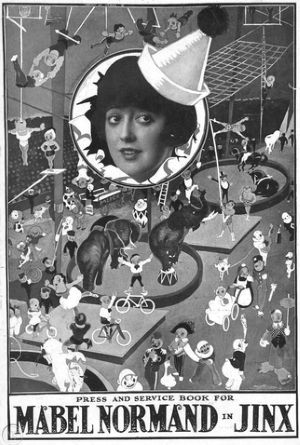 JINX (1919) – Mabel is once again the title character. As the jinx of the circus with which she travels, she winds up causing all kinds of slapstick havoc during their latest show.
Having worn out her welcome, she runs away from the circus and winds up falling in with a group of young orphans who seem to have inspired the later silent film Our Gang troupe.
Mabel brightens the lives of the youngsters and finds work at their orphanage. Normand’s young costars included Jackie Condon (an Our Gang star), Mae Giraci, Peaches Jackson, Frankie Lee, Buddy Messinger and Edouard Trebaol. This 50-minute film has not survived.
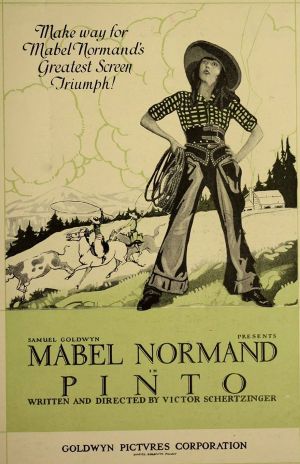 PINTO (1920) – Out in Arizona, a young lady named Pinto (Mabel of course) has been raised by five ranchers who were friends of her late parents. Pinto’s rough riding, sharpshooting, lariat playing lifestyle becomes so dangerous that the five men send her back east to be safer and to become a refined lady.
She stays with a former rancher named Pop Audry (George Nichols) who takes a liking to Pinto, but his snobbish wife and her family despise the girl. Once again, Mabel’s “just folks” charm lets her outmaneuver all her detractors and attract a handsome young man (Cullen Landis).
At a Wild West Show that Pinto has organized for her Park Avenue adversaries, she exposes Pop’s wife as a cheater, setting up the happy ending for Pinto, Bob and Pop. 50 minutes.
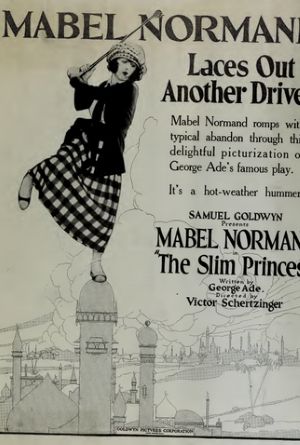 THE SLIM PRINCESS (1920) – A remake of the 1915 comedy based on the same George Ade story. Mabel stars as Princess Kalora of Morovenia, a fictional country where fat women are considered beautiful and thin ones like Kalora are scorned.
Kalora’s obese younger sister has plenty of suitors but tradition dictates that she cannot marry until after her older sister does. Mabel’s character comes under so much pressure to gain weight to attract a beau that she uses an inflatable fat suit to appear in public as a more zaftig and desirable woman.
The suit deflates, ruining that attempt. Her impatient family sends her to America to gain weight but of course Mabel is attractive to American men just as she is. She gets a marriage proposal of her own, and that makes her younger sister eligible for marriage herself. 50 minutes.
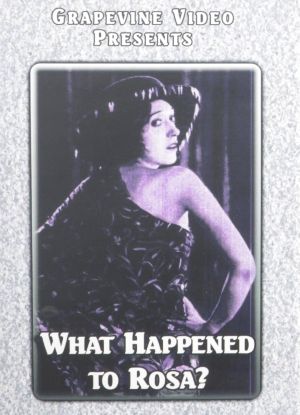 WHAT HAPPENED TO ROSA? (1920) – In this 54-minute comedy Mabel stars as store clerk Mayme Ladd. A fortune teller informs Mayme that she was a Spanish noblewoman named Rosa Alvaro in an earlier life.
This goes to the head of the daydreaming Mayme who begins acting like Spanish nobility. Men are drawn to her spicy new personality, setting up a series of comical misunderstandings as well as a rivalry for the love of the handsome Dr. Maynard Drew.
Drew first meets Mayme after a slapstick moment covers her in coal dust, so he initially thinks she is simply a lunatic. Our heroine’s rivals are bested and Dr. Drew falls for her.
*** Next time I’ll pick up with Mabel’s 1921 comedies.
FOR A SIMILAR LOOK AT THEDA BARA’S SILENT FILMS CLICK HERE.
FOR THE GREAT SARAH BERNHARDT’S SILENT FILMS CLICK HERE.
MARIE WALCAMP: SILENT FILM ACTION STARLET HERE.
 Balladeer's Blog
Pingback: MABEL NORMAND’S BEST SILENT COMEDIES (1916-1920) – El Noticiero de Alvarez Galloso
Logged, thank you sir!
Those look too cute.
Yeah, pretty much, thanks!
Those are pretty good silent comedies, and I’m a fan of the silent film. Fatty Arbuckle was quite good, very animated on the silent screen as if born to do it. Too bad about his demise. Keep on blogging my friend!
Thank you very much! Yes, a shame about Fatty. You’d have thought the final jury at last acquitting him and making a point of how wronged he had been would have helped, but unfortunately not.
Shame that “Jinx” didn’t survive; I really like circus-based movies! Fatty and Mabel make a cute couple! 😊
I agree about Jinx! Yes, Fatty and Mabel did a whole series of shorts together since their cuteness made them a big hit!