
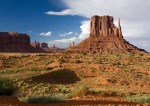
 The first Friday of every August marks Frontierado, the holiday devoted to the myth of the old west rather than the grinding reality. For some of us the celebration kicked off Thursday night, for others they wait until the actual day of Frontierado to hold their festivities. Enjoy yourselves today and tonight, and enjoy the leftovers on Saturday and Sunday.
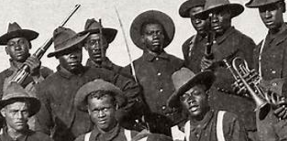 BUFFALO SOLDIERS – Obviously the historical significance of these African American soldiers begins during the U.S. Civil War and goes far into the 20th Century, but for the purposes of this blog post I’ll be looking only at their involvement in conflicts from 1866-1896.
For newcomers to this topic, the label Buffalo Soldiers was bestowed on these African American troops by Native Americans in the Great Plains. Buffalo Soldier units included the 10th Cavalry, 9th Cavalry, the 24th and 25th Infantry Regiments plus more.
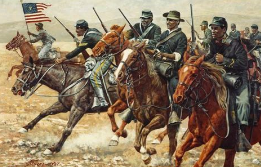 BATTLE OF THE SALINE RIVER (August 1867) – In Kansas, Cheyenne warriors led by Tall Wolf attacked and killed a party of railroad workers laying the transcontinental railway. Buffalo Soldiers from Fort Hays were sent out after the Cheyenne, and this resulted in the 8-hour long Battle of the Saline River. Under 100 soldiers from the 10th Cavalry clashed with over 400 Native Americans, inflicting greater casualties on them and making it back to Fort Hays alive.
TEXAS-INDIAN CAMPAIGNS (1867) – Various units of Buffalo Soldiers served throughout Texas in garrison duty, random clashes and military campaigns against the Comanches, Apaches and the Kiowas. They also protected mail service in Texas from attacks and carried out raids to rescue civilian captives taken by those Indian tribes. On December 26th, 1867 units of Buffalo Soldiers fought over 900 mixed Native American warriors and white outlaws near Fort Lancaster, TX.
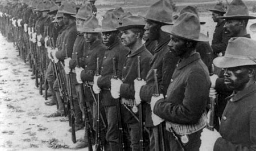 WINTER CAMPAIGN (1867-1868) – Buffalo Soldier units saw action in General William Tecumseh Sherman’s Winter Campaign against the Cheyenne, Arapahos and Comanches. The soldiers proved vital to cutting off the Cheyenne forces when they tried retreating further westward. This contributed to victory in the climactic battle near Fort Cobb, Oklahoma (then called Indian Territory).
BATTLE OF BEECHER ISLAND (September 17th-19th, 1868) – In August 1868 Arapaho, Cheyenne and Sioux forces killed 79 civilians along both sides of the Kansas-Colorado border. General Philip Sheridan authorized retaliatory action, resulting in September’s Battle of Beecher Island in Colorado. Buffalo Soldiers were among the participants in that three-day battle.
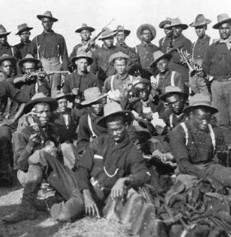 BEAVER CREEK (October 14th-21st, 1868) – Buffalo Soldiers were escorting a Major Carr to his new command along with ample supplies for the troops. Over 500 allied Arapaho, Cheyenne and Sioux warriors attacked our outnumbered heroes, who literally circled the wagons and held off the attacking Native Americans. Eventually, after suffering far greater casualties than the Buffalo Soldiers had, the attackers retreated from the area.
FORT SUPPLY (June 12th, 1869) – Comanche warriors raided Fort Supply in Oklahoma (Indian Territory) to steal cavalry horses. Buffalo Soldiers rode out in pursuit afterward. The Comanches doubled back and ambushed the soldiers, who fought hard and eventually managed to flank the Comanches, forcing them to withdraw.
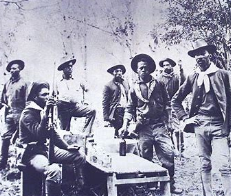 ANADARKO RESERVATION (August 22nd & 23rd, 1869) – Kiowa and Naconee forces raided the Anadarko Reservation in Indian Territory to destroy buildings and start brush fires. Buffalo Soldier units had been stationed in the area and clashed with the attackers throughout both days. Several war parties, ranging from roughly 50 to as high as 500 or more men, clashed with the Buffalo Soldiers. Ultimately our heroes prevailed and drove off the raiders, who had targeted the reservation to strike at the Wichita tribe for being peaceful.
1870-1872 – Units of Buffalo Soldiers were constantly patrolling territory around reservations and engaging hostiles while also protecting railroad workers and men installing telegraph lines.
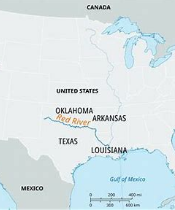 NORTH FORK OF THE RED RIVER (September 1872) – Buffalo Soldiers were among the units participating in a campaign to seek out and strike still-hostile Comanches in the heart of their territory – the Staked Planes in the Texas Panhandle. Comanches had so successfully kept out the U.S. that this campaign marked the discovery and mapping of multiple sources of water that were so numerous they outnumbered the water along the famous Goodnight-Loving Trail used in cattle drives.
On September 28th the major clash of the campaign broke out along the North Fork of the Red River. Roughly 300 soldiers battled with under 200 Comanches and defeated them, killing around 50 and capturing 130. Among the killed was Comanche leader Kai-Wotche.
ROUND TWO AT THE ANADARKO RESERVATION (August 1874) – Kiowa and Comanche raiding parties of varying numbers were again trying to punish the Wichita for being peaceful or harass them into joining them on the warpath. Again, the Buffalo Soldiers prevailed against them and defended the Wichita from their destructive attacks.
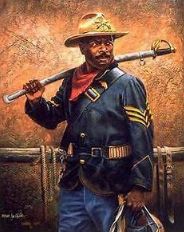 FORT CONCHO (1875) – Beginning on April 17th, 1875 several units of Buffalo Soldiers were restationed at Fort Concho near San Angelo, TX. Their role was to protect mail and travel routes, guard civilians from the frequent raids by Apaches, and provide protection from incursions by Mexican bandits.
APACHE WARS (1875-1881) – Other Buffalo Soldier units were moved to Fort Union in Mora County, New Mexico. They scouted constantly for hostile Apache activity, participated in assorted skirmishes with them, and provided military escorts for mail delivery throughout the region.
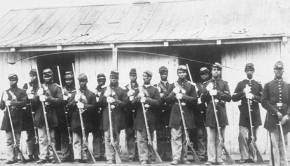 COLFAX COUNTY WAR (1876) – By July of 1876 this New Mexico Range War among railroad tycoons, longtime settlers and newly arrived Maxwell Land Grant recipients had been raging for 3 years. Buffalo Soldiers from Fort Union were among the federal troops sent in to put down violent elements from all sides. Roughly TWO HUNDRED men from all sides were killed during the Colfax County War, giving it by far the highest body count of any Range War of the old west. Buffalo Soldier involvement ended by late December of 1876 but the war continued.
THE BUFFALO SOLDIER TRAGEDY OF 1877 – In July of this year, Buffalo Soldiers allied with freelance buffalo “hunters” were pursuing hostile Comanches through the Staked Plains and became lost. Four of the soldiers died from the heat as did 1 of the “hunters.” After 5 days the entire unit was given up for dead and telegraphed reports describing the supposed “massacre” of the Buffs spread far and wide. When the survivors showed up alive, the newspapers, with tongue in cheek, described them as having “returned from the dead.”
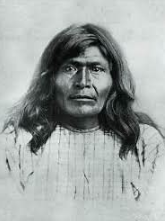 VICTORIO’S CAMPAIGN (April 1879 through October 1880) – The brilliant but often overlooked Apache leader Victorio waged a military campaign throughout New Mexico in the U.S. and the state of Chihuahua in northern Mexico. Victorio’s attacks against both nations kicked off in April 1879 with attacks on civilians at iconic Silver City, NM. This sent the Buffalo Soldiers of the 9th Cavalry into almost non-stop fighting pursuit of Victorio and his men until the end of the campaign.
In addition to scattered skirmishes here and there, a significant clash happened on May 29th, 1879 in the Mimbres Mountains. Victorio’s camp was broken up, then he and his warriors plus their women and children settled at the Mescalero Reservation in New Mexico.
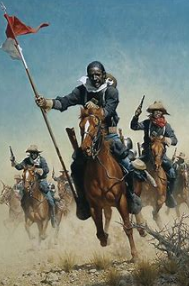 In July and August of 1879 survivors of Victorio’s attacks on civilians at Silver City were demanding more action against the Apache leader and his men. The hubbub prompted Victorio to lead his warriors off the reservation on August 21st. They were joined by additional warriors from the Mescaleros and from other Apache tribes.
Some significant actions of Victorio’s Campaign:
SEPTEMBER 4th, 1879 at Ojo Caliente. A detachment of Victorio’s forces attacked elements of the 9th Cavalry and defeated them, then made off with 68 horses and mules.
SEPTEMBER 11th at McEver’s Ranch. Over 100 Apaches killed 11 civilians on McEver’s Ranch and an entire family of noncombatants near Jaralosa Creek.
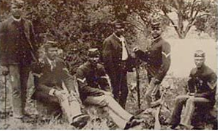 SEPTEMBER 18th at Las Animas Canyon. Victorio and over 150 of his men lured 120 of the pursuing Buffalo Soldiers into Las Animas Canyon and ambushed them. The exchange of gunfire lasted all through the day, but after dark the Buffalo Soldiers were able to withdraw from the canyon. A graveyard exists there to this day, with the 6 dead soldiers and 26 dead Apache warriors.
SEPTEMBER 29th and 30th in the mountain range called the Cuchillo Negro. A two-day long running battle was waged between the Buffalo Soldiers and some of Victorio’s forces. Sprinkled casualties on both sides.
OCTOBER 10th-12th at Lloyd’s Ranch. Victorio and his men raided the ranch on the 10th, killing non-combatants and then spent the 11th and 12th ambushing armed rescue parties. Four men of the October 11th attempted rescue party were killed, and on the 12th 5 men were killed from that day’s attempted rescue party, which included THE Johnny Ringo. Ultimately, the attempted rescuers gave up and let the Apaches have the wagons of supplies.
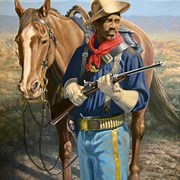 OCTOBER 27th and 28th in Mexico’s Guzman Mountains – Major Morrow of the Buffalo Soldiers took the dangerous move of leading 81 of his men across the border when Victorio’s army fled into Mexico. After a 2-day fight the Native Americans forced the Buffalo Soldiers to withdraw when their water supply dipped too low. Eight black soldiers and 1 Apache Scout dead for the U.S. forces, unknown casualties among Victorio’s men.
JANUARY 12th, 1880 at Percha Creek – Victorio’s forces had spent the rest of 1879 fighting the Mexican army south of the border. In early 1880 they slipped back into the U.S. and on the 12th fought Buffalo Soldiers – with artillery this time – at Percha Creek near Hillsboro, NM. Despite the heavy firepower involved, the U.S. had just 1 dead while the Apaches suffered 6 dead.
JANUARY 17th in the San Mateo Mountains. Victorio led his men against the Buffalo Solders and lost the battle but managed to escape with his force intact.
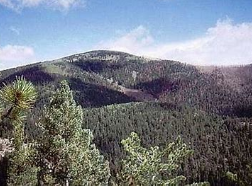 JANUARY 30th in Mexico’s Caballo Mountains. Once again, the shrewd Victorio lured Buffalo Soldiers, this time under Captain Rucker, into following his army across the border, then ambushed them. It was a rout, and the U.S. soldiers were forced to flee back into New Mexico.
FEBRUARY 3rd at Aleman. The Buffalo Soldiers pursued Victorio’s forces into the Jornada del Muerto Desert. At Aleman a battle broke out with the Native American forces suffering greater casualties but then managing to elude pursuit.
FEBRUARY 9th at Hospital Canyon. Victorio led his men in routing the Buffalo Soldiers, forcing them to retreat in such disorder that the Apaches seized all their supplies.
MARCH 1880 – Temporarily holding the upper hand, Victorio and his forces raided livestock, ammunition and other supplies from civilian settlements along the Rio Grande Valley. The Apache killed at least 20 noncombatants.
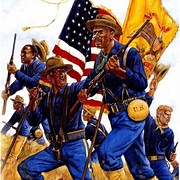 APRIL 5th-8th in the Hembrillo Basin. The largest concentration of forces from both sides clashed, with the end result being that Victorio was driven off, but his men eluded capture.
APRIL 16th at the Mescalero Reservation. Buffalo Soldiers shut down a network of hostiles covertly funneling supplies and intelligence to Victorio’s forces. Many resisted, leaving 14 dead.
APRIL 28th at Alma. Victorio, his troops now reinforced with Chiricahua Apaches, launched the Alma Massacre, killing 41 civilians in Alma, NM and raiding supplies.
BATTLE OF FORT TULAROSA (May 14th, 1880) – A famous action during Victorio’s Campaign in New Mexico. A few dozen Buffalo Soldiers were left holding Fort Tularosa while awaiting much needed troops to restore the fort to full strength. Apache leader Victorio took advantage of the situation to kill several civilians south of the fort, then attacked Fort Tularosa with over 100 warriors. The Buffalo Soldiers repulsed the attack and held on until reinforcements arrived.
JUNE AND JULY 1880 – Victorio and his men were fighting the Mexican army south of the border.
 JULY 30th at Quitman Canyon. Victorio fled back across the border into Texas this time. Colonel Benjamin Grierson and his Buffalo Soldiers refrained from playing into the Apache leader’s hands by pursuing him. Instead, they secured the various water sources in the Trans-Pecos Deserts, preventing Victorio’s forces from accessing them. On July 30th, Victorio and 125 men tried a concentrated effort to dislodge the Buffalo Soldiers securing the water in Quitman Canyon but were driven off by them with at least 7 dead.
AUGUST 6th at Rattlesnake Springs, TX. Colonel Grierson anticipated that this was where Victorio would next attempt to access water sources and managed to get his Buffalo Soldiers there ahead of him. The Apaches made multiple attempts to force their way through to the water but were repulsed each time. Victorio fled back into Mexico.
OCTOBER 28th, 1880 at Ojo Caliente. Back on October 15th the Mexican army had dealt Victorio’s forces their final, fatal defeat at Tres Castillos. On the 28th, Buffalo Soldiers on the U.S. side of the border were ambushed at Fort Quitman by Apaches hoping to reinforce Victorio. Five Buffalo Soldiers died with more wounded, and the Apaches escaped.
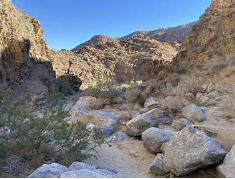 CARRIZO CANYON (August 12th, 1881) – Twenty Fort Wingate Buffalo Soldiers led by Captain Parker battled over 60 Apache warriors under Nana aka Kas-tziden. The soldiers lost 2 dead, while 5 Apaches were killed. Nana was defeated but managed to extract his force intact from the canyon.
BATTLE OF CUCHILLO NEGRO CREEK (August 16th, 1881) – After Nana and his men had mutilated and killed a family of Hispanic-Americans near the Cuchillo Negro Mountain Range in New Mexico, Buffalo Soldiers from Fort Craig were sent after the Apaches and caught up with them at Cuchillo Negro Creek. Fifty soldiers battled 60 warriors under Nana. Things stood at a stalemate as darkness fell and by daybreak the Apaches had slipped away.
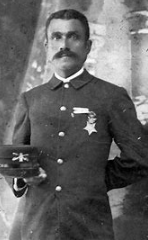 GAVILAN CANYON (August 19th, 1881) – In Gavilan Canyon near Deming, NM, Nana and his surviving warriors ambushed some Buffalo Soldiers from Fort Cummings. Firing down into the canyon from the rocks above, the Apaches killed 4 Buffalo Soldiers before Sgt. Brent Woods took action. Realizing that staying put meant the slaughter of himself and his comrades, he courageously led the Buffs UPHILL against the Apaches. The unexpected maneuver succeeded, driving off Nana’s men, who fled to Mexico.
APACHE CAMPAIGNS (1885-1886) – Units of Buffalo Soldiers were transferred to Arizona in 1885 and served in battles with Apache warriors led by the likes of Geronimo, Magnus, Nachez and Chihuahua. This service continued through Geronimo’s surrender in September of 1886.
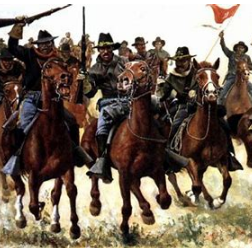 THE CROW UPRISING (September 30th – November 13th, 1887) – This was the only war between the U.S. and the Crow Nation. Buffalo Soldier units were among the few hundred American troops taking on nearly 3,000 Crow warriors in a series of battles in Montana and Wyoming. After a few losses, literally hundreds of hostiles surrendered to U.S. forces. By the time of the climactic fighting in November, just over 600 Crow warriors were still under arms, and they were defeated by the Buffalo Soldiers and other army units.
CHERRY CREEK CAMPAIGN (March 2nd-7th, 1890) – On March 2nd, Apaches killed a wagon driver and stole a few horses about 10 miles west of Fort Thomas in Arizona. Buffalo Soldiers were among the troops sent out to deal with any hostiles in the Cherry Creek area. By March 7th the soldiers had cornered the Apaches in Skeleton Canyon along the Salt River and defeated them.
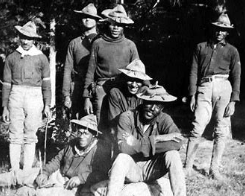 JOHNSON COUNTY WAR – The Buffalo Soldiers did not get involved in Wyoming’s infamous Johnson County War until June 1892. Back in April the white soldiers of the 6th Cavalry had been sent to tamp down on the growing violence that had been raging in this Range War since 1889. When the 6th proved unable to maintain order, 300 Buffalo Soldiers were sent in and succeeded. The soldiers participated in actions at Fort Bettens, Suggs and other sites in the county, fighting armed outlaws and hired gunmen of the Wyoming Stock Growers Association, the major aggressor in the war.
YAQUI UPRISING (August 12th-14th, 1896) – Mexico’s corrupt leader Porfirio Diaz was making Mexico’s Yaqui Indians the scapegoats for the latest pushbacks against the abuses of his notorious regime. He had Mexican forces sent to Nogales, in Sonora, Mexico to put down the less than 100 Yaqui. The Yaqui put up such a good fight that the amoral Diaz pretended an insurrection endangered Mexico and clamored for help from the U.S. government, which sent Buffalo Soldiers and other troops from Arizona down to Nogales. The unfortunate Yaquis were defeated.
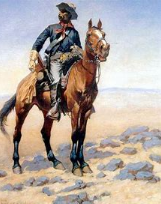 *** After this, the Buffalo Soldiers served in the Spanish-American War, the Philippine War, the Moro War and many others, but they were well outside the American west, so I’ll cover those topics at another time of year.
FOR NOW, FRONTIERADO MAY TECHNICALLY END TODAY BUT WE’LL ALL BE ENJOYING LEFTOVERS AND WATCHING WESTERNS FOR THE REST OF THE WEEKEND.
 Balladeer's Blog
An important history that many people do not know. Thank you for sharing. Happy Friday
Thank you very much! Happy Frontierado and Happy Friday!
Grea sharing
Thanks! Happy Frontierado!
Same to you
😀
Happy Frontierado! I have never heard about the Buffalo Soldiers before so I found your post extremely informative. I find it interesting how these were African-American soldiers enlisted to serve in war amid a time of racism. The stories about these soldiers brought to mind great films about African-American veterans that I have seen. For instance, it reminded me of the movie “Da 5 Bloods”. Spike Lee’s movie was an excellent Vietnam war epic telling the story of African-American soldiers that participated in an iconic war. The four veterans in the film that identify as ‘Bloods’ bear a striking resemblance toward the Buffalo Soldiers you discussed here. “Da 5 Bloods” is a fantastic war film, and one of Spike Lee’s finest movies to date. It shares common themes with the story of the Buffalo Soldiers you discussed, which is one reason to watch it.
Here’s why I recommend it strongly:
Thanks! I’m looking forward to reading your review!
I think I left a similar comment on my blog (when you visited), but for the benefit your readers: I love that when you Google “Frontierado”, above the fold, Page 1, are you and I!
I agree! That is terrific! Happy Frontierado!