
 Regular readers of Balladeer’s Blog will remember my review of three neglected swashbuckler novels by Alexandre Dumas. (For those three – Georges, Captain Pamphile and La Dame de Monsoreau click HERE )
Regular readers will also recall my look at the way Dumas’ The Corsican Brothers is NOT really a swashbuckler story in the spirit of The Three Musketeers, The Count of Monte Cristo or The Man in the Iron Mask, but because it’s a Dumas tale it often gets adapted AS IF it’s an action-oriented sword and pistol saga.
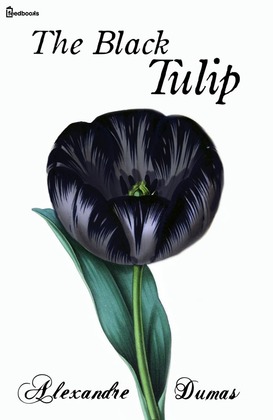
And that brings us to Dumas’ novel The Black Tulip set in the Netherlands’ city of Haarlem in the 1670s.
 When I was a little boy thrilled with the Musketeers, Monte Cristo and Iron Mask I excitedly grabbed The Black Tulip to read, assuming it, too would feature derring-do and swordplay. Much to my disappointment the novel instead dealt with attempts to cultivate a black tulip, the mob-slaying of Netherlands politicians Johann and Cornelius de Witt, romance and the redemption of personal honor.
Using the approach of the adaptors of The Corsican Brothers, let’s MAKE The Black Tulip a rousing swashbuckler just because it’s by Dumas.
THE BLACK TULIP (1850) – I would make it so that “the Black Tulip” was a masked and costumed identity adopted by the novel’s hero Dr. Cornelius Van Baerle in order to pursue his crusade to redeem his family honor, tainted from the scandal following the grisly slaying of the de Witts (Insert your own Joyce de Witt joke here). Continue reading
 Balladeer's Blog