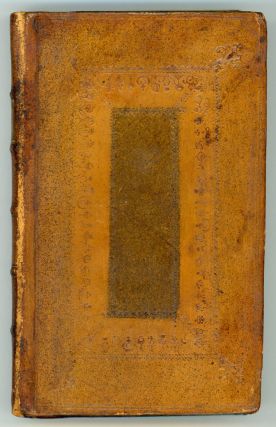
 A VOYAGE TO THE WORLD IN THE CENTRE OF THE EARTH (1755) – This intriguing work was published in London anonymously and no author has yet been decisively identified. The novel’s narrator – who remains as anonymous as the book’s author – parties away his inheritance and then ships out for Italy.
Exploring on Mount Vesuvius our hero accidentally falls into what we readers are eventually told is just one of many holes that lead to the interior of the Earth, where another world awaits. A miraculous landing on a haystack saves the narrator’s life but he finds himself unable to move because of the greater gravity of this interior world.
A friendly inhabitant of the inner Earth applies a chemical salve to our protagonist’s body, a salve which allows him to stand up and move about in the higher gravity. A second salve massaged into the narrator’s body renders him capable of understanding and conversing in the language of Inner Earth.
The inhabitants of this interior world dress in silk robes and live to be 200 years old or older. They possess limited telepathy. Precious gems litter the ground but those jewels are meaningless to the Inner Earthers. Their society is partially socialist but with families held sacrosanct and with paternal authority sovereign in each household until the children reach adulthood.
 Periodically a King is elected for a lifetime term. Common-sense morality prevails, and ingratitude is especially frowned upon. All of the inhabitants are strict vegetarians, as are the animals so the humans and the beasts interact peacefully.
In addition to the usual above-ground animals, Inner Earth also boasts gigantic birds who are trained to provide air travel throughout the subterranean land. Our hero gets to meet the reigning King in the world capital called Oudentominos.
The King makes him welcome but stresses that visitors are usually encouraged to leave after a year. That custom was set in place when a still-extant colony of British men and women discovered Inner Earth nearly a hundred years earlier and have been causing frequent problems.
During our protagonist’s stay the cantankerous Brits once again come close to mutinying so the Inner Earthers attack them and subdue them. The men are castrated and both sexes of the Anglos are scattered around Inner Earth to prevent any more rebellions from fermenting.
As for life on other planets in our solar system: Continue reading →

 MY COUSIN’S AIRSHIP, A TALE OF 1950 (1902) – Written by W.F. Alexander. Though written in 1902 this story is set in a fictional 1950 which has seen incredible scientific advances.
 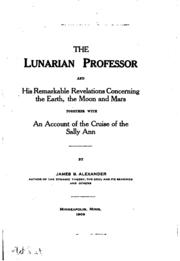 THE LUNARIAN PROFESSOR AND HIS REMARKABLE REVELATIONS CONCERNING THE EARTH, THE MOON AND MARS TOGETHER WITH AN ACCOUNT OF THE CRUISE OF THE SALLY ANN (1909) – Written by James B Alexander back in the glory days of titles so long they might not fit in a 140 character limit.
  THE PURPLE DEATH (1895) – Written by William Livingston Alden. Presented in the first person this story is narrated by a British gentleman staying in Italy. He becomes friendly with his neighbor, a German M.D. and bacteriologist named Dr Schmidt.
  NUMBER ONE – My two-part look at NEW DEMOCRAT SLOGANS was a comedy hit. This “Party of CEO’s” has come to deserve its reputation for having driven away all of us except pompous snobs and hilariously pretentious asses.
  NUMBER TWO – One of Balladeer’s Blog’s most popular Ancient Science Fiction posts EVER was this look at a very obscure 1896 work and its fascinating female lead.
  NUMBER THREE – Legendary Camille Paglia was in rare form this year, speaking on behalf of all of us who left the Democrats in disgust in recent years.
  NUMBER FOUR – For Frontierado Season this year one of my blog posts dealt with the story-telling possibilities inherent in a neglected aspect of Mormon history.
  NUMBER FIVE – Another western figure got a lot of attention in July, a gunslinging lady who braved Old California on a stage coach route.
 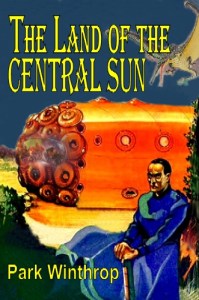 THE LAND OF THE CENTRAL SUN (1903) – Written by Park Winthrop. The Wintons – Jack and Louise – plus the Livingstons – Bert and Lily – are among the passengers on the ship Golden City when it gets blown off course. The ship winds up near Antarctica and gets trapped in ice.
 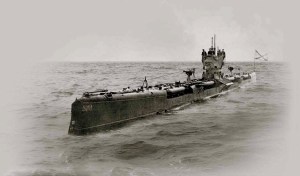 THE TERRIBLE SUBMARINE (1901) – Written by THE Archibald Williams. The Teredo, a souped-up, futuristic submarine is roaming the high seas preying on the world’s shipping at will. The speed and weaponry of the vessel and its anonymous Captain outclass anything that anyone else has in use.
  THE NEW HUMANS (1909) – Written by B Vallance. No other name has come to light for the author of this thought-provoking work. Explorer Montgomery Merrick is roaming around the wilds of 1909 Uganda when he falls down a mountainside and into a concealed valley.
 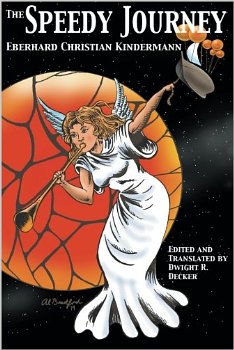 One of the most popular posts here at Balladeer’s Blog was my list about “ancient” science fiction from 1634-1909. Here is a followup list of sci fi tales that were way ahead of their time. FOR THE ORIGINAL LIST CLICK
 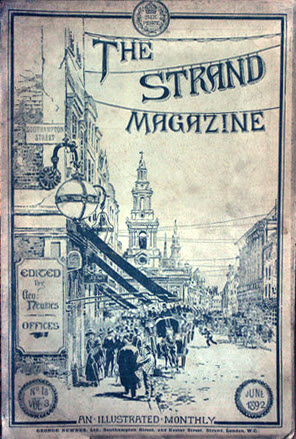 THE QUEER SIDE OF THINGS (1890s) – Written by James Frank Sullivan. Straight from the Gay Nineties, it’s a selection of Sullivan’s contributions to the Strand magazine’s short fiction column The Queer Side of Things.
