 TRAVELS AND ADVENTURES OF JAMES MASSEY (1714) – This is Part Two of Balladeer’s Blog’s look at Simon Tyssot de Patot’s work of ancient science fiction about his creation James Massey. We will pick up where we left off last time – our main character Dr. Massey and his travel mate La Foret had just been taken in by the first living human beings they encountered on the lost island.
A few days later, while our heroes were still in the very early stages of learning the language spoken in the city, James and his friend got caught up in a ritual they barely understood. Early one morning, every family in the city made their way across the major bridge with each head of household carrying their largest rooster.
For a sophomoric laugh I’ll mention that one of the lines in the book is literally “Our opposite neighbor expos’d his cock against ours; and the others did the same thing, it being a general cock-match between the people on both sides of the canal.”
 I’ll spare all of us any details of the actual cockfights. When the fighting was over, the family whose cock lost the fight welcomed the winner’s family over to their home. The winner’s family brought along all of the food they had prepared for this eventful day, and the two families feasted and drank together the rest of the day.
The following day the holiday celebrations continued, this time with the eldest son from each family on both sides of the canal taking part in Grease Pole competitions for the prize poultry at the top of said poles. Rather than a ham or turkey, the prize in this case was one of the oversized eagles indigenous to the uncharted island.
NOTE: In Part One of my review it was established that birds, like all the other animals on the island, were much larger than they were in the outside world. For instance, a beaver the size of a bear and a 25 foot long serpent were encountered. Goats were as large as horses and were used as mounts and beasts of burden. Continue reading →

 A DEMIGOD (1886) – Written by American author Edward Payson Jackson, this work preceded Philip Wylie’s Gladiator by more than 4 decades.
  THE MILLTILLIONAIRE (1895) – This novel was written by American author Albert Waldo Howard under the pen name M. Auburre Hovorre. A second edition came out in 1898.
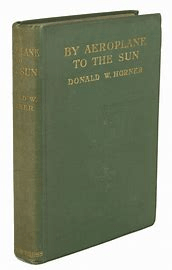 BY AEROPLANE TO THE SUN (1910) – Written by Donald W. Horner. This British novel features ideas that wouldn’t have been out of place decades earlier but in 1910 it’s astounding to encounter concepts like an alleged scientist believing that the sun is inhabited.
 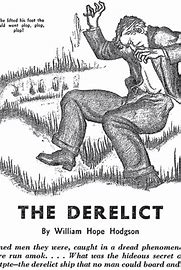 THE DERELICT (1912) – This short story was originally published in Red Magazine in December of 1912. The author was William Hope Hodgson, whose other works have already been reviewed here at Balladeer’s Blog.
  A TALE OF THE X-RAY (1898) – Written by Clara H. Holmes. This short story was first published in her collection titled Floating Fancies Among the Weird and the Occult, but it’s more science fiction.
 A JOURNEY TO THE WORLD UNDERGROUND BY NICHOLAS KLIMIUS (1741) – This novel was written by Danish author Ludvig Holberg and became a European sensation. Like Swift’s Gulliver’s Travels, Holberg’s work in this book had satirical political meaning and though the issues and social criticism no longer apply to the modern-day world, the fundamental story structure still holds up on its own.
  The rope breaks, and Nicholas falls so far that his colleagues assume he was killed. Actually, Klimius fell down into the often-theorized Hollow Earth. In this case with an interior sun and small worlds in orbit around it.
 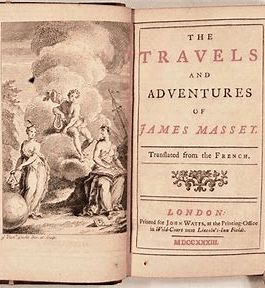 TRAVELS AND ADVENTURES OF JAMES MASSEY (1714) – By Simon Tyssot de Patot. Supposedly written in 1710 but not published until 1714, this novel dealt with the travels of the title character to exotic lands.
 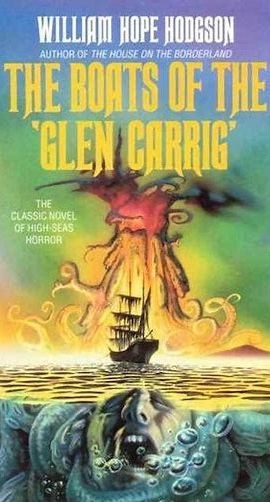 THE BOATS OF THE GLEN CARRIG (1907) – Written by horror legend William Hope Hodgson, whose works
 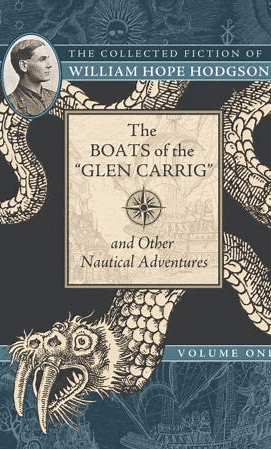 In 1757 the story’s main character, John Winterstraw, is telling his son James Winterstraw about the horrific adventure that brought John together with the boy’s mother. (How I Met Your Mother: The Prequel Series) John and other sailors were on board the Glen Carrig when it struck a rock near the surface of the waters and sank.
 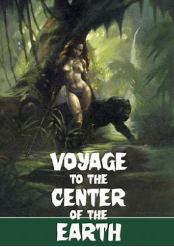 VOYAGE TO THE CENTER OF THE EARTH aka Planet at the Center of the Earth aka “Journey to the Centre of the Earth, or Various Adventures of Clairancy and His Companions, to Spitsbergen, to the North Pole, and to Unknown Countries, translated from the English of Hormidas Peath by M. Jacques Saint-Albin”.
  This particular story centers around the fictional seaman Hormidas Peath and his crew who became shipwrecked in the icy Arctic Sea in 1806. They were shocked to discover that temperatures got warmer the further north they went, so they kept following the warmer air until they reached the Iron Mountains.
  Balladeer's Blog