
 MOUNTAINS, SEAS AND GIANTS aka BERGE MEERE UND GIGANTEN (1924) – Written by Alfred Döblin, later famous for the novel Berlin Alexanderplatz. A 2021 translation of the book uses the title Mountains Oceans Giants: A Novel of the 27th Century.
I wanted to make sure I made my blog post about this work during its Centennial year and I’m squeezing it in with a little time to spare. Berge Meere und Giganten is quite a piece of work, ranging as it does from standard Future History themes to dystopian settings and ultimately an Earth ravaged by wild and grotesque abominations of nature unleashed by reckless experimentation and terraforming.
The novel is almost Dune-like in its environmental concerns and its epic scope, in this case from shortly after World War One to the 2600s AD. Given Döblin’s experimental use of language I would have loved to read a review by James Joyce if he had ever read this novel.
Berge Meere und Giganten is broken down into nine main sections: Continue reading

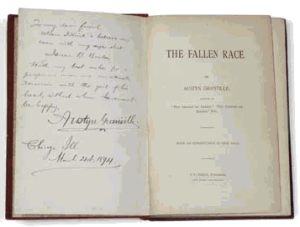 THE FALLEN RACE (1892) – Written by Austyn Granville. If you’ve ever thought to yourself “How come nobody ever combined science fiction, H. Rider Haggard-style Lost Race tales AND kangaroo-human hybrids” then THIS is the story for you.
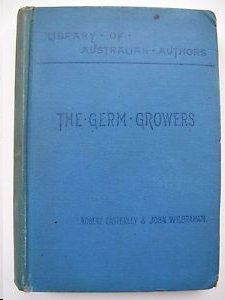 THE GERM GROWERS (1892) – Robert Potter wrote this work of “ancient” or vintage science fiction dealing with biological warfare and alien abductions.
 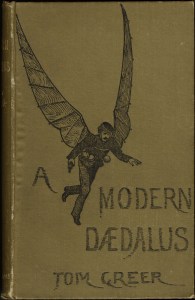 A MODERN DAEDALUS (1887) – By Tom Greer. No, the title’s not referring to James Joyce’s character Stephen Dedalus (sic) but this tale IS about Ireland. The main character is a young man named Jack O’Halloran, a recent college graduate who returns to his native Ireland.
 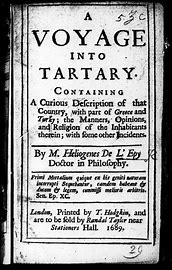 A VOYAGE INTO TARTARY (1689) – The real author of this work is unknown. It is a fictional encounter with a lost race, advanced technology and more. It’s possible that the writer wanted anonymity due to his then-blasphemous attitudes toward religion.
 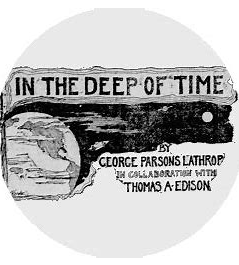 IN THE DEEP OF TIME (1897) – This story was written by George Parsons Lathrop, who also wrote the libretto for Walter Damrosch’s opera version of The Scarlet Letter. Though Lathrop credited an interview with Thomas Edison for the scientific concepts in this tale, it is NOT an Edisonade. In the Deep of Time is instead one of the many 19th Century stories about “present day” characters waking up in the far future.
  The multi-step procedure begins with Gerald being administered a drug that prepares his body for suspended animation, followed by another drug (mortimicrobium) that renders his body germ-free at all levels. Next, Bemis is placed in a glass cylinder at body temperature to “sleep” away the centuries.
 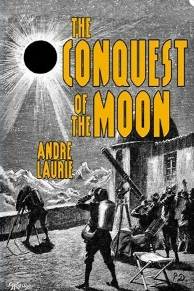 THE CONQUEST OF THE MOON (1887) – Written by French author Paschal Grousset under the alias Andre Laurie. This work ranges from absurd to fascinating, with – for people looking for science fiction – WAY too much time devoted to the fighting in the Sudan during 1884 and 1885.
  THE AIR BATTLE: A VISION OF THE FUTURE (1859) – Written by an unknown author using the name Herrmann Lang. (Ignore the misspelling on the cover to the left.) Speculation has it that the author was British despite the German pseudonym and despite the narrator’s claim that he is a black man.
 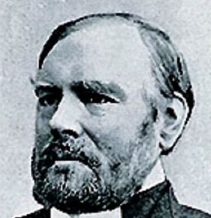 A VOICE FROM ANOTHER WORLD (1874) – Written by W.S. Lach-Szyrma. The 1874 date marks when a selection of stories that Lach-Szyrma had written beginning at some point around 1865 in untraced magazines were finally collected in novel form. The author penned more novels in the series as the years went by.
  Eventually during his years traveling among human beings, “Dr. Posela” rescues a friendly Englishman who is among those trapped in the Siege of Paris during the Franco-Prussian War. The Earthling gets returned to England, and is delighted with Dr. Posela and his philosophical observations about humanity and his theories that life certainly exists on many other planets.
 Balladeer's Blog