
 THE PLANET JUGGLER (1908) – Written by J. George Frederick. An early space opera set in an undesignated future year. Absurdly enough, Esperanto has become the global language in a reflection of the high hopes held by Esperanto speakers at the time this book was written.
An alien from the planet Canopus broadcasts a message to the entire Earth, in Esperanto of course. The extraterrestrial demands 500 million tons of gold or else it will send the Earth hurtling into the sun.
 The Planet Juggler claims to have monitored Earth people for a decade, thus accounting for their fluency in Esperanto, but world leaders are skeptical that it’s all a hoax perpetrated by someone on our own planet. To disabuse Earthlings of that notion, the alien entity shuts down all of the electricity in and around New York.
Later, to convince any remaining doubters, the Canopian throws the Earth out of its orbit just enough to make their point. World leaders surrender and claim to be mining enough gold to meet the demanded 500 million tons. Secretly, the scientist Elverson and a network of other brilliant minds desperately struggle to devise a solution to this crisis.
Continue reading
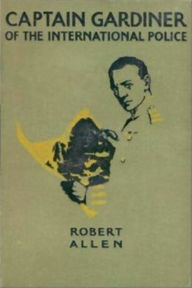 CAPTAIN GARDINER OF THE INTERNATIONAL POLICE (1916) – Robert Allen Dodd wrote this story over one hundred years ago under the name Robert Allen. Narration informs us that the story is set 60 years after the conclusion of the then-raging World War. Since we know it ended in 1918 we can look forward to visiting the “far-off future” of 1978.
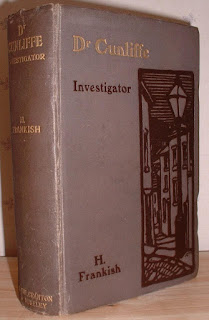 DR. CUNLIFFE, INVESTIGATOR (1913) – Written by Harold Frankish. This book was a collection of short stories centered around Frankish’s fictional “scientific detective” Dr. Theodore Cunliffe.
 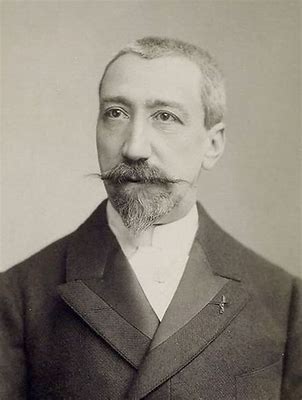 THROUGH THE HORN OR THE IVORY GATE (1905) – Written by Anatole France. In this story a Frenchman, the tale’s narrator, finds himself in the year 2270 A.D. The large buildings that used to fill Paris have been replaced by small cottages inhabited by people whose tastes run to fine art and statuary.
  ACCOUNT OF AN EXPEDITION TO THE INTERIOR OF NEW HOLLAND (1837) – Written by multiple parties, with Lady Mary Fox, Richard Whateley and Lord Holland the likeliest authors. “New Holland” was an old name for Australia. In 1860 the novel was reissued under the title preface The Southlanders.
 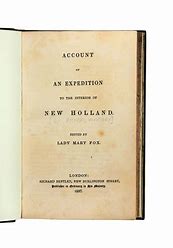 Southland boasts a population of roughly four million and is divided into eleven distinct regions which, though under one overall parliamentary government, enjoy a large amount of internal sovereignty. Some regions are republics and others live under a hereditary monarchy. In several of the republics, however, their chief executive figure is still called a king despite being elected.
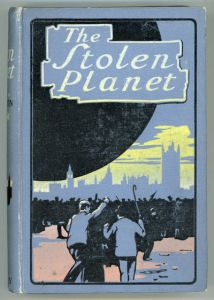 THE STOLEN PLANET (1906) – Written by John Mastin. Jervis Meredith, a wealthy young British man and his equally wealthy friend Fraser Burnley are so brilliant they invent anti-gravity. Next the young tycoons have a spaceship built so they can use their anti-gravity device to tour outer space.
  The explorers make the eccentric decision to explore the region around Sirius first, rather than our own solar system. Enroute the Regina accidentally pulls an uncharted planet out of its orbit (?) and causes it to collide with another uncharted planet. This collision causes a new sun to be born. (Regular readers of Balladeer’s Blog will remember that this was apparently a big idea for a time since a lot of these old stories feature suns forming from colliding planets.)
 A FLIGHT TO THE MOON (1813) – Written by George Fowler. This story introduces readers to Randalthus (no last name given), an 1800s American man who has come to regard the moon with a mixture of near-pagan worship and pioneer longing.
 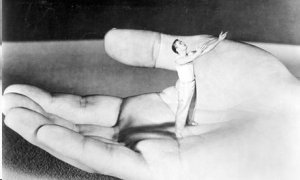 THE ADVENTURES OF A MICRO-MAN (1902) – This work of vintage or “ancient” science fiction was authored by Lancelot Bayly under the pen name Edwin Pallender. The central character of the story was Doctor Geoffrey Hassler, a wealthy eccentric scientist who has discovered “microgen” a gas which shrinks objects down to a very small size.
 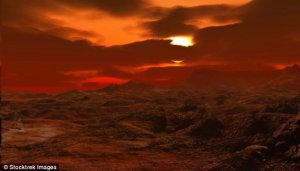 A NARRATIVE OF THE TRAVELS AND ADVENTURES OF PAUL AERMONT AMONG THE PLANETS (1873) – I shortened the title when naming this blog post. Paul Aermont was the pseudonym of an unknown author, so full credit cannot be officially given.
