
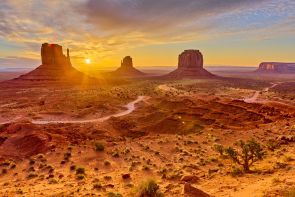
 HAPPY FRONTIERADO! The first Friday of every August marks Frontierado, the holiday devoted to the myth of the old west rather than the grinding reality. For some of us the celebration kicks off Thursday night; for others they wait until the actual day of Frontierado to hold their festivities.
Enjoy your buffalo steaks, rattlesnake fried rice, corn on the cob, tumbleweed pizza, cactus salad and more today and tonight, and enjoy the leftovers on Saturday and Sunday.
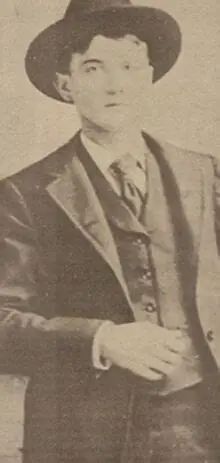 WHISKEY JIM – James Greathouse was born in Texas around 1854. Nothing is known about his early life but at age 20 he was living in Fort Griffin and running a successful bootleg whiskey network he had shot his way to the top of. As you could guess that illicit trade earned him his nickname Whiskey Jim.
Greathouse and his ring thrived selling their contraband liquor largely to Native American tribes along the Colorado River. By 1874 Colonel Ranald (his spelling) S. Mackenzie was expending every effort to take down Whiskey Jim and his network, even offering a Dead or Alive reward for him.
Mackenzie had his entire 4th Cavalry scouring Texas for Greathouse, picking off his operatives one by one. During 1875 Whiskey Jim was so hemmed in from every direction that he decided to get out of bootlegging. He also steered clear of Fort Griffin for years.
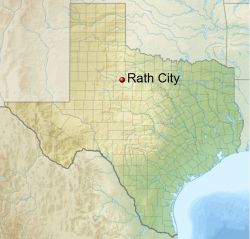 Jim reorganized the surviving men from his whiskey ring into a horse and mule stealing network centered in up-and-coming Rath City, Texas on the Brazos River. Rath City was growing rapidly thanks to the trade in buffalo hides so buffalo “hunters” were the biggest market for Whiskey Jim’s stolen horses and mules.
Our man wielded his guns against competitors and against assorted hostile Native Americans in the wilder regions of the west at the time.
Greathouse was earning a reputation for pushing his luck further than most men would dare and it got to the point where he and his men were sometimes stealing livestock from one set of buffalo hunters and selling them to another.
That figurative spinning plate approach resulted in a few buffalo hunting gangs buying some of their own horses from Whiskey Jim after he had – unknown to them – stolen them in the first place. Some of those disgruntled customers began gunning for Jim and two of his prominent lieutenants, Larapie Dan Moran and Little Red Randolph.
Whiskey Jim wound up blowing away more and more former clients, from buffalo men to gambler-gunslingers. With Rath City getting too hot for him and his boys, Jim skipped town and began feeling out new distribution contacts for a return to bootlegging.
Soon, Greathouse got word that Larapie Dan and Little Red had been caught up with and lynched by some angry hombres. Whiskey Jim shrewdly abandoned his plans for a new liquor network and kept a low profile with Pat Garrett’s band of buffalo hunters for a time.
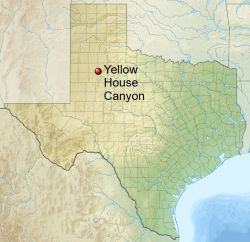 From December 1876 through March 1877 Jim and his colleagues took part in the Buffalo Hunters War against Comanche Chief Black Horse and his warriors. Greathouse was even on hand for the climactic clash of that conflict – the Battle of Yellow House Canyon on March 18th.
The raids by the Comanches and Whiskey Jim’s role in ending that final Indian War of the Texas High Plains made Greathouse more welcome back in Rath City than he otherwise might have been. Jim was even voted captain of a fresh expedition of buffalo hunters who set out to shut down Las Lagunas Comanchero Gangs who were still selling firearms to the Comanches.
When that expedition was through, Whiskey Jim decided he had had enough Indian Fighting, so he tried his hand as a gambler-gunslinger at card tables in Texas and New Mexico.
By 1879 Jim was in Las Vegas, New Mexico during Hoodoo Brown’s criminal reign there. Whiskey Jim probably could have fit in fine if he had played ball with Brown and his gang of outlaws and crooked lawmen.
Instead, Greathouse rubbed Brown and his men the wrong way by staying freelance. That meant he didn’t get the benefit of the blind eye that Hoodoo’s organization was willing to turn to troublemakers who were in their good graces.
One night Whiskey Jim gunned down two rival gamblers during an argument over a poker game. Jim supposedly bribed his way out of trouble that time but eventually he blew away another irate gambler at the card tables and Hoodoo’s men gave Greathouse a warning to settle down.
Always pushing the envelope, Jim killed another man in a gunfight not long after that, and he had to leave Las Vegas behind. Using his gambling winnings, Whiskey Jim bought a ranch along the Pecos River near Anton Chico, NM.
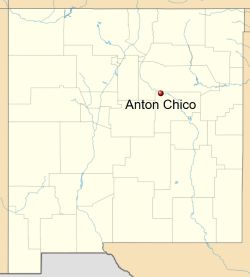 His funds temporarily exhausted after that purchase, Greathouse put together a gang of rustlers to acquire livestock for his ranch. Rustling became Whiskey Jim’s latest criminal enterprise and he often had dealings with Billy the Kid and his gang, letting them hide out on his ranch when posses were bearing down on them.
With money rolling in, Jim bought a second, even larger ranch to the south, this one just north of White Oaks at the foot of the Jicarillo Mountains. Soon he added to his rustling earnings by returning to his former trade of horse and mule stealing as well.
Whiskey Jim was ruthless in dealing with competitors who tried moving in on his territory. When small-timers stole a dozen mules from John H. Mink, one of the locals who paid protection money to Greathouse, Jim single-handedly tracked them down. He blew away the two leaders, drove off the rest and recovered Mink’s mules for him.
April 1880 found two of Jim’s subordinates – Ike Snow and Sam Stockton – showing up at his ranch with fourteen horses stolen in Texas. On their trail was a posse led by John Farrington, THE Charles Goodnight’s range boss.
Farrington and the men with him got reinforcements from New Mexico lawmen Lloyd Jarrett and Charley Taylor, then rode onto Whiskey Jim’s property. They came across Jim and some ranch hands digging a well and the lead started to fly.
This exchange of gunfire was won by the law, with Farrington shooting down Stockton, most of the fourteen horses being recovered, and Ike Snow arrested for horse theft. Greathouse seethed over being handed a defeat on his own land and later confronted Lloyd Jarrett, Charley Taylor and an unknown deputy in Las Vegas.
In this gunfight on the Sodomia La Calle de la Amargura (named after the more famous street in Madrid, Spain), Whiskey Jim killed the unknown deputy, wounded Jarrett and Taylor, then fled town. He put one of the resident families on his ranch in charge and holed up at his larger spread to the south.
 That fall Greathouse fenced another bunch of stolen horses and mules from his friend Billy the Kid and his boys. Weeks later, Billy and company were carousing in White Oaks (left) and shot up the town. That brought down a posse on their heads led by White Oaks Constable T.B. Longworth.
On November 27th, 1880, the Kid ungratefully led the posse right to Whiskey Jim’s stone house on his larger ranch. A siege occurred as Longworth and those with him tried to negotiate with Billy and his fellow fugitives to come out and turn themselves in.
This notorious incident saw posse member Jimmy Carlyle get killed, sparking an orgy of gunplay that ended with the Kid, Dirty Dave Rudabaugh and Billy Wilson escaping into the night, leaving the befuddled posse behind.
Whiskey Jim soothed the ruffled feathers of the lawmen by treating them to a meal cooked by his household staff and his common-law wife Jane, then sent them on their way. The next day he rode north to his smaller ranch near Las Vegas.
A new posse from Lincoln County showed up at the larger ranch to send a message to Greathouse about harboring fugitives. That message took the form of burning down every wooden building on Jim’s southern ranch and torching the interior furnishings of the stone house.
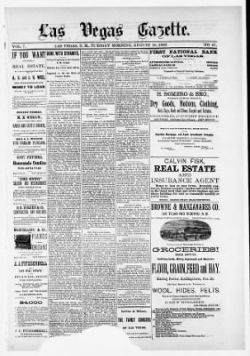 A furious Whiskey Jim complained to the Las Vegas Gazette that the damages totaled $5,500 ($173,300 here in 2025) and swore to the public that he had no idea where Billy the Kid and his boys were hiding now.
Uncomfortable in the spotlight that all this had placed on him, Greathouse abandoned his own criminal activities for a while and bided his time partying and gambling in post-Hoodoo Brown Las Vegas. During the early months of 1881, with Sheriff Pat Garrett clamping down on all of Billy the Kid’s past and present associates, Jim kept his head down by posing as a ranch hand working for the Stapp & Nelson Ranch.
That cover didn’t hold up long, and on March 1st Whiskey Jim was arrested for his role in the November 27th shootout at his ranch’s stone house. Greathouse posted $3,000 bail and called Garrett’s bluff by pleading not guilty. The flimsy charge was eventually dropped before going to trial.
Still, attention remained riveted on anyone and everyone who had ever had dealings with media darling Billy the Kid, so Jim moved out of the rustling and horse theft business to open up a legitimate freight company.
He transported freight from Las Vegas to White Oaks to Socorro and the Black Range, getting positive notices from the Gazette for the law-abiding new leaf he had seemed to turn over. On May 19th, 1881 the paper stated “Greathouse is regarded as an honest man and any who have freight to be taken to White Oaks and elsewhere should make terms with him.”
Ironically, Whiskey Jim warmed to this naive public impression of him as a reformed rogue now on the straight and narrow. Like many organized crime figures of later decades he cultivated a respectable public persona but covertly returned to criminal activity.
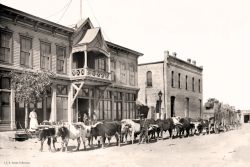 Greathouse was back in the rustling business, but this time on a much smaller scale. His more surreptitious ring dealt directly with butchers in Las Vegas, White Oaks, Fort Stanton, Socorro (left) and mining camps.
After Billy the Kid’s shooting death on July 14th much of the legal heat was off of the Kid’s former associates, making life and larceny easier for them.
In October of 1881 a trio of competing dealers in rustled cattle approached Whiskey Jim and threatened violence unless he stopped servicing their mining camp territories. Our man drew his pistol and in the resulting gunfight he shot down two of the thugs and let the third go back to tell his chief that Whiskey Jim Greathouse couldn’t be intimidated.
On December 15th, 1881, Jim was visiting a fellow less-than-honest rancher – Bert Shaw – when Joe Fowler, noted for shooting men from behind, showed up with some of his own ranch hands and accused Shaw of rustling some of his cattle.
The situation seemed to resolve itself peacefully and Whiskey Jim even rode off with Fowler and the others to have their company on the way back to one of his own spreads. That was a fatal mistake as Bushwacking Joe struck once again from behind, treacherously shooting Greathouse to death near Point of Rocks, New Mexico.
 Whiskey Jim was only 27 years old. He was fondly remembered by many, especially since most of the public still believed he had gone straight. Joe Fowler, as usual, slithered his way out of legal consequences for the killing. ***
FRONTIERADO 2021 – CHARLIE SIRINGO, GUNSLINGER.
FRONTIERADO 2022 – BUCKSKIN FRANK, GUNSLINGER.
FRONTIERADO 2023 – LONG HENRY, GUNSLINGER.
FRONTIERADO 2024 – THE BUFFALO SOLDIERS.
 Balladeer's Blog
Loved hearing about ruthless Whiskey Jim and his many escapades! Thanks for sharing 😊
Glad to do it! Thank you and have a Happy Frontierado!
Dear Balladeer
It’s a rare pleasure to consistently enjoy your posts.
🙏
Thank you!
Dear Balladeer
It’s a rare pleasure to consistently enjoy your posts. 🙏
I appreciate it! Thanks!
Great posts as always. I have never heard about Whiskey Jim before but he certainly appears to be an interesting character. He reminds me a lot of classic heroes that I adore in classic spaghetti western films. For instance, he brought to mind the movie “The Good, the Bad and the Ugly”. Sergio Leone created a classic western that has stood the test of time as a classic. It shares similar themes with the story of Whiskey Jim you discussed here.
Here’s why I recommend it strongly:
I enjoy The Good, the Bad and the Ugly, too, but my favorite Spaghetti Western is Once Upon a Time in the West.
This is sad for Whisky Jim ! What happened to Greathouse ?
Whiskey Jim Greathouse was his full name. I used “Greathouse” interchangeably with his nickname Whiskey Jim.
I read it 😁 I was joking 😃😃 ha ha 😂
Oh, sorry! You fooled me!
Ha ha 😂😂 no no just fun
You’re hilarious!
😎😃😃
😀 😀 😀
Charlee: “Hmm, this can’t be about our Dada I guess. He doesn’t drink whiskey, he drinks Kahlua and Amaretto mostly.”
Java Bean: “Ayyy, somehow I don’t think ‘Toasted Almond Jim’ is going to have the same panache as ‘Whiskey Jim’ …”
Ha! I think you’re right, Charlee and Java Bean!