
 It is such a waste that so few installments of National Educational Television Playhouse are available despite video copies still being in their archives. For six years, N.E.T. Playhouse offered up some of the most interesting, profound and innovative productions from around the world. That 1966-1972 run puts what passes for educational television today to shame.
 HAMILE (January 15th, 1970) – A Ghanaian adaptation of Hamlet written by that nation’s Joe C. De Graft and performed by actors from the National Theatre of Ghana.
De Graft sets the action in Tongo, changes the names Hamlet and Laertes to Hamile and Laitu, plus he adapts swordplay into traditional Ghanaian wrestling in this 2-hour production.
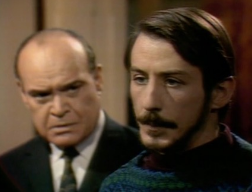 YESTERDAY THE CHILDREN WERE DANCING (February 26th, 1970) – A 90-minute CBC drama about the 1964 terrorist attacks in Canada launched by Quebec Separatists and plans for further attacks during the federal elections.
The French-Canadien Gravel family falls apart over divisions on the entire issue of independence for Quebec. Adapted from the play by Gratien Gelinas.
THE TALE OF GENJI (September 8th-October 27th, 1967) – An 8-week run of hour-long episodes, this time of a Japanese television adaptation of Genji Monogatari, written in the 12th Century.
The story dealt with the experiences of the handsome and personable Prince Genji, whose romantic pursuits include his father’s young wife. His angry father exiles him from the court and forces him to live as a commoner, so Genji becomes a soldier. Ichizo Itami starred. English subtitles.
GEORGE ELIOT (April 22nd, 1971) – A look at the life and struggles of the 19th Century female writer and her defiance of societal conventions of the time period. Sheila Allen starred. Paired with the short film Virginia Woolf: The Moment Whole, about that female author. I could not find the time breakdown between the two pieces.
 FIVE TOMORROWS (February 5th, 1970) – Kurt Vonnegut Jr. hosts five short films which present grim visions of the future. The Scream (Italy) – A man struggles to maintain his identity in a super-state which demands total suppression of the individual. The Other Side (Belgium) – A powerful yet enigmatic force subjugates an entire community in the name of law and order.
Silo (Australia) – Two men stationed in an underground missile silo face the prospect of unleashing a nuclear holocaust. The Fall of Varema (Italy) – A city of the future lies in ruins from escalating violence. Faster, Faster! (France) – High-speed, bustling activities that amount to nothing obsess future humanity. 90 minutes total.
DUBLIN ONE (December 1st, 1967) – A co-production of the N.E.T. Playhouse and Ireland’s Telefis Eireann, this presented the Abbey Players performing scenes from some of James Joyce’s short stories in Dubliners. Dublin One lasts 75 minutes and, in order to flesh out the program to 88 minutes, was shown with the short film Rabbits are the Friends of Toads, about a 3-year-old boy encountering a howitzer, a machine gun and a hand grenade in his Northern Ireland place of play.
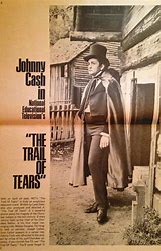 TRAIL OF TEARS (April 30th, 1970) – Mock documentary dramatization of Cherokee Chief John Ross’s legal efforts to save his people from being removed from their land and forced to travel the Trail of Tears, along which thousands would die.
In this 90-minute production, Johnny Cash played John Ross, with a supporting cast including his wife June Carter Cash, Jack Palance, Joseph Cotten, Melvyn Douglas and Paulette Smart.
TRUMPETS OF THE LORD (May 10th, 1968) – Black-cast stage musical adapted from the book God’s Trombones, written by African-American icon James Weldon Johnson. People of color in the deep south strive together for social change, empowered by their shared religious faith. The songs range from spirituals to original pieces.
The cast features James Earl Jones, Jane White and others. Numbers include We Shall Not Be Moved, Prayer is the Key, Amen and We Shall Overcome. 81 minutes, followed by the 9-minute short film Sonny, about Sonny Greer, Duke Ellington’s drummer.
 COLETTE: MY MOTHER’S HOUSE (February 17th, 1972) – A 1967 telefilm about the younger years of the female author Sidonie Gabrielle Claudine Colette. Kathy Cody portrayed Colette, Colleen Dewhurst portrayed her mother Sido with Joanna Miles as Collette’s half-sister Juliette. The story centers around the young woman’s formative years and her relationship with her influential mother. 90 minutes.
THE STRATFORD NATIONAL THEATRE CANADA – THE THREE MUSKETEERS (November 5th, 1970) – Filmed performance of the Stratford’s very ambitious staging of the Alexandre Dumas novel. The production featured 44 actors, 69 scenes and 14 swordfights & battles. Martha Henry starred as Lady de Winter, with a supporting cast that included Colin Fox, Leo Cicero and Mia Anderson. 2 hours.
 DEVI (November 22nd, 1968) – An airing of the 1960 Indian movie that was, for many Americans, their introduction to the films of that country. This landmark work was directed by Satyajit Ray based on the short story by Prabhat Kmar Mukherjee.
Doyamoyee (the flawlessly beautiful Sharmila Tagore), a 17-year-old girl in 19th Century India, comes to be worshipped as the incarnation of a goddess and is ultimately driven mad by the adoration and expectations of her new devotees. 93 minutes.
JULIUS MONK’S PLAZA 9 (March 15th, 1968) – A performance of the Plaza Hotel’s Plaza 9 comedy troupe. The players lampoon social and political issues and figures of the time. The sketches targeted the pending election, singles bars, hippies, bicycling, the New York newspapers, the subway system and the cottage industry that was forming over books about the Kennedy Family & the Kennedy assassination. Figures targeted included Richard Nixon, California Governor Ronald Reagan, Charles de Gaulle and Robert F. Kennedy. Liz Sheridan was among the stars.
JOHN AND SAM ADAMS (May 13th, 1971) – Dramatic rendering of the trial for the British soldiers accused of committing the Boston Massacre in 1770. Lawyer John Adams (Laurence Luckinbill) serves as one of the defense lawyers for the soldiers, whom he feared could not receive a fair trial given the public anger. This put John at odds with his cousin Sam Adams (James Karen), who was pushing for violence against the British. 90 minutes.
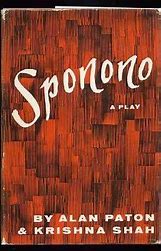 SPONONO (April 14th, 1967) – Taped stage play performed at the Cort Theater by the original South African cast during its American tour. The play was adapted by South African writer Alan Paton and Krishna Shah from three of Paton’s short stories in Tales from a Troubled Land. The story was set in a boys’ reformatory in Johannesburg. 2 hours.
A CRACK IN THE ICE (December 13th, 1968) – Eighty-five-minute adaptation of the story The Sentry by Russian writer Nikolai Leskov. In 1860s Russia, a soldier on guard duty sees a peasant fall through the ice while walking across the frozen Neva River. He leaves his post to save the peasant’s life even though the unforgiving military attitudes under the Czars mean he could be shot for desertion.
Ultimately, the soldier gets 200 birch lashes as punishment while an upper-class officer takes credit for the rescue and gets a medal. James Maxwell, Michael Hordern and Richard Hurndall were among the cast members.
OPEN THEATRE – THE SERPENT (October 22nd, 1970) – This was a 50-minute production of Jean-Claude van Itallie’s “play-ceremony” about Adam and Eve creating God in their own image and similar variations on elements of the Book of Genesis. The Serpent was followed by a half-hour documentary about the history of the Open Theatre.
 LORRAINE HANSBURY: TO BE YOUNG, GIFTED AND BLACK (January 20th, 1972) – A 90-minute biography of African-American playwright Lorraine Hansbury, whose works include A Raisin in the Sun. Her husband Robert Nemiroff wrote this drama which includes performances of scenes from her plays. Ruby Dee, Roy Scheider, Blythe Danner, Barbara Barrie and Claudia McNeil were among the cast members.
LA MARMITE (December 30th, 1966) – This was presented in French with English subtitles. The Theatre de la Mandragore Troupe wore masks and performed the Plautus play about a miser obsessed with his gold. Two hours long.
DEFECTION! THE CASE OF COLONEL PETROV (March 22nd, 1968) – Adaptation of Donald Bull’s play about the great Australian Cold War case involving Aussie intelligence turning the disillusioned Colonel Vladimir Petrov. The colonel was part of the Soviet spy apparatus in Canberra, where he was recruited to work against the U.S.S.R. as a prelude to defecting. Lee Montague, Nigel Stock and Madge Ryan starred. 1 hr and 45 min.
THE QUEEN AND THE WELSHMAN (April 25th, 1969) – Hour and a half production of Rosemary Anne Sisson’s play about Catherine de Valois’s affair with Agincourt hero Owen Tudor and its many positive and negative results. Starred THE Jeremy Brett, Dorothy Tutin, Derek Godfrey and Jack Wild.
 THOUGHTS OF THE ARTIST ON LEAVING THE SIXTIES (January 1st, 1970) – Assorted figures performed, did selected readings and offered perspectives on moving into a new decade. Among those appearing: Christopher Walken, Jessica Tandy, Fred Rogers, George Carlin and Dick Gregory.
An entire version of Edward Albee’s short play The Sandbox was enacted, as well. Approximately 60 minutes for the bulk of the show and 30 minutes for The Sandbox.
ROSMERSHOLM (May 17th, 1968) – This was a 1 hour and 45 minute production of Ibsen’s tragedy of the same name from 1886. The story involves Beata, the widow of a man named Rosmer, and the efforts of her and her friend Rebecca to deal with the social and political changes of the time period.
THE WRIGHT BROTHERS (June 24th, 1971) – Years before The Long Riders, James and Stacy Keach starred in this 90-minute depiction of Orville and Wilbur Wright. Replicas of the Wright Brothers’ experimental aircraft leading up to the December 17th, 1903 flight at Kitty Hawk were featured in this drama. Despite countless obstacles, the brothers become pioneers in aviation.
 THE RISE OF LOUIS XIV aka THE TAKING OF POWER BY LOUIS XIV (April 20th, 1972) – An airing of the 1966 French telefilm depicting the battle between King Louis the 14th and his rival aristocrats – including his own mother – following the death of Louis’ advisor Cardinal Mazarin. 1 hour and 40 minutes.
THE CHANGELING (April 26th, 1968) – Doctor Who‘s Patrick Troughton was among the cast of this 90-minute production which first aired on the British program Play of the Week. Adapted from the 1623 play, the story involves the beautiful and cruel Beatrice-Joanna of Spain and her various crimes and killings that she carries out in league with her lustful lackey De Flores.
FREDERICK DELIUS: A SONG OF SUMMER (June 27th, 1969) – This is the often-neglected work from director Ken Russell’s productions about composers. The 72-minute presentation dramatizes the final 6 years in the life of composer Frederick Delius, who, despite having been struck with paralysis and blindness, produced many of his most famous works during that period thanks to the help of organist Eric Fenby. Eric moved in with Delius and his wife and helped the immobile Delius realize his orchestral vision. The 10-minute Polish short People of the Road was paired with the Russell film.
SISTER BALONIKA (May 14th, 1970) – CBC drama about Cowichan Indian nun Sister Veronica, who is sent to teach at a Yukon Territory school for First Nations children. The young students pronounce Veronica as “Balonika.” Paul St. Pierre wrote this story about the unorthodox sister clashing with unyielding superiors and the fire that burns down the school due to the title character’s own negligence. 80 minutes and paired with a 10-minute Polish short film Little Sorrows.
 Balladeer's Blog
Oh, great films and stories, where is the shame in those stories? We used to enjoy Hamlet and many old foreign films and series. It seems that the whole world forgets the old ones.
You are right about that and it is so sad! I hope you have a great week!
👋🏻🙋🏼♀️🙏🏼
😀
They remind me of the BBC Shakespeare plays. I think we are going backwards with television now. Bring it all back!
Exactly! I wish they would bring such material back, too!
Wow, a Ghanian adaptation of Hamlet: I didn’t even know this existed! Some great movies here and sadly forgotten . . . until now! 😎
I was blown away by many of these, too! I’m glad you felt the same way. I was so frustrated when my research found that copies of most of them exist in archives but have never been released on video!
Pingback: BEST OF N.E.T. PLAYHOUSE (1966-1972) FORGOTTEN TELEVISION – El Noticiero de Alvarez Galloso
Logged, thank you sir!
I remember NET. Before it became PBS. Even that has been destroyed
Yes it has, I know what you mean!
Sometimes I wish I could return to the late 50s early 60s; build a cocoon and just stay there. I’d never run out of decent entertainment.
I understand how you feel, Espie!
Great posts as always. I have not heard about any of these movies but found it a very interesting post. Being a huge fan of Bollywood Cinema, the film that stood out most to me is “Devi”. I have actually never heard of this film which is surprising because I have seen many Indian films starring Sharmila Tagore. She truly was a one of a kind actress that left a lasting legacy in Bollywood Cinema. Incidentally, Tagore’s son Saif Ali Khan has also become a legendary actor in India. He’s a great actor that has appeared in many amazing Bollywood movies. If you’re a fan of Tagore’s work, I would highly recommend seeing Saif Ali Khan’s movies. I love all his films but “Omkara” is definitely my favourite. An incredible Indian adaptation of Shakespeare’s play “Othello”. One of my favourite films of all time.
Here’s why I recommend it:
Thank you so much! I did not know her son is a big star, too! I will check out some of his movies! I’m on my way to your review of Omkara right now.