
 HOLLYWOOD (1980) – A week ago Balladeer’s Blog took a look at the classic documentaries Buster Keaton: A Hard Act to Follow and Harold Lloyd: The Third Genius, by Kevin Brownlow and David Gill. This time around I’m examining their 1980 documentary series Hollywood: A Celebration of the American Silent Film.
This series was one of the duo’s earliest masterpieces at capturing the appeal and unique beauty of silent movies from the pre-sound era. Like all their subsequent documentaries about silent films, this one features irreplaceable interviews with many stars, directors and staff members who worked in the industry during the early 1900s.
James Mason’s authoritative voice sets the mood for this educational and moving tribute to a long-lost era. The episodes:
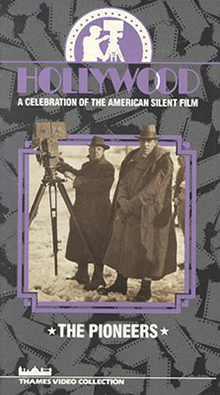 THE PIONEERS – A look at the era when movie production was predominantly in New York and New Jersey, until expenses and encroachments by organized crime forced the industry to migrate to Hollywood, CA, a place then known mostly for its lemon groves. Featuring footage from The Great Train Robbery (1903) on up through films from the mid-teens and the 1920s like Ben-Hur (1925), The Black Pirate (1926), The Fire Brigade (1927) and The Wind (1928).
IN THE BEGINNING – An examination of the movie boom’s virtual conquest of the world, with Hollywood becoming the hub of that multi-million dollar enterprise, partly due to the way World War One severely hindered the formerly dynamic European studios. Featuring interviews with industry legends like Lillian Gish (who had advised Annabeth Gish against going into acting), Henry King and Agnes de Mille, Cecil B’s wife.
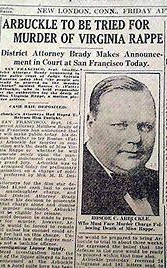 SINGLE BEDS AND DOUBLE STANDARDS – Stories from the raucous, hard-partying years of Hollywood’s silent movie era. As covered previously here at Balladeer’s Blog, silent movies at first openly portrayed drug use, marital infidelity, drinking at speakeasies, etc. There was even a silent porn industry. When public scandals involving Fatty Arbuckle and others blackened Hollywood’s reputation, the Hays Code was introduced, blocking many adult themes from the big screen well into the 1960s.
HOLLYWOOD GOES TO WAR – America’s entry into World War One presented the business’s first experience with throwing its considerable weight into propaganda and gave movie stars their first experience with raising money through war bonds. A fascinating historical account tracing the hardcore jingoism of the early war days through the word from the Wilson Administration that the war was winding down, so Hollywood should move on to more profound looks at the global conflict.
 HAZARD OF THE GAME – A wonderful examination of the wild and untamed years of Hollywood stunt work in movies, from slapstick comedies like the Keystone Cops to the more precision-executed stunts of comics like Buster Keaton. On the action side, the agile and athletic Douglas Fairbanks moved from action-comedies to swashbuckling blockbusters. Specialized stunt work like airplane flying for the various World War One flying ace movies gets featured as well.
SWANSON AND VALENTINO – As the title implies, this episode covered the careers of two superstars – Gloria Swanson, from her Mack Sennett years to the peak of stardom and from there to becoming the embodiment of the fall of the silent era as Norma Desmond in Sunset Boulevard. And Rudolph Valentino, who epitomized the big-screen lover for several decades and whose funeral was attended by throngs of sobbing women.
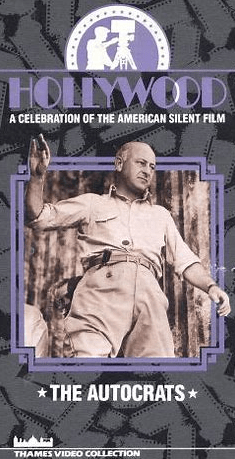 THE AUTOCRATS – This episode provides an intriguing contrast between Cecil B. de Mille, who, though autocratic, was willing to make compromises for the sake of commercial appeal; and Erich Von Stroheim, the autocrat who churned out overlong works of art that he fought to release in their impossible original form. Obviously, his film Greed is featured.
COMEDY: A SERIOUS BUSINESS – Comedy shorts and features had the most widespread appeal of Hollywood’s product in the silent movie era. We follow pioneering figures like John Bunny, Fatty Arbuckle, Mabel Normand and Charlie Chaplin on to more refined filmmakers like Buster Keaton, Harold Lloyd and Harry Langdon.
 OUT WEST – The cinematic vision of the wild west, from primitive shorts filmed on stages with painted backdrops through high-budget productions filmed on location. Features stars like Tom Mix, William S. Hart and Harry Carey, Sr. plus movies like The Iron Horse, Hell’s Hinges, The Virginian, Riders of the Purple Sage and enduring classics like The Vanishing American, The Covered Wagon and Tumbleweeds. We also get films glamourizing Buffalo Bill, Kit Carson and others.
THE MAN WITH THE MEGAPHONE – As opposed to The Autocrats, this episode took a more general look at silent film directors, both male and female. Big names and more obscure figures who held the creative reigns get the spotlight along with their assorted eccentricities.
TRICK OF THE LIGHT – A look at the cinematography and special effects of the silent movie age. Everything from simple trick photography to much more sophisticated technological approaches. And not just props and scenery but even the physical glamour of the stars was enhanced.
STAR TREATMENT – This episode examines the way the studio owners at first stymied individual stardom for actors and actresses by refusing to provide onscreen credits for the performers. Eventually, one actress with Biograph Studios so thoroughly caught the public’s imagination that she was nicknamed “the Biograph Girl” (real name Florence Lawrence) and a star was born, even without her name being known. As it became clear that there was no minimizing the appeal of the thespians even if their names were not made public the studios gave in, and the Star System arrived. Features nearly every silent movie star you could want.
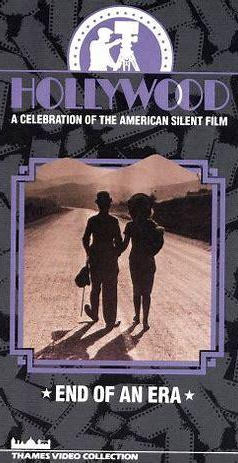 END OF AN ERA – The bittersweet final episode of this magnificent series covers the earliest attempts at synching sounds and dialogue with film footage on through the notorious talkie which heralded the end of silent movies – The Jazz Singer. I’m such a sentimental fool that I still sometimes feel moved by the tableau of the formerly silent MGM Lion suddenly getting to roar as it appeared on screen. And to quote one of Al Jolson’s lines “You ain’t heard nothin’ yet!”
*** I literally cannot recommend this series highly enough, especially if you’re curious about silent films but don’t feel like sitting through entire movies from that period.
FOR A SIMILAR LOOK AT DOUGLAS FAIRBANKS’ SILENT SWASHBUCKLER MOVIES CLICK HERE.
FOR STARLET THEDA BARA’S SILENT FILMS CLICK HERE.
FOR HARRY HOUDINI’S FOUR SILENT FILMS AND ONE SILENT SERIAL CLICK HERE.
FOR TWENTY-FOUR CLASSIC SILENT HORROR FILMS CLICK HERE.
FOR ALFRED HITCHCOCK’S SILENT MOVIES CLICK HERE.
 Balladeer's Blog
These are old but looking great 👍
Thanks! I really enjoy them!
💜
Thanks!
[If] You truly enjoy the “silent” era [and one assumes also the ‘golden age’ of film] and find something missing [or at the very least perverse] in current offerings, you would enjoy Stuart Kaminsky’s Toby Peters series: short, famously entertaining, quick reads, all situated in the WWII years where Toby works to solve difficulties for sundry celebs, fictional events all, but authentic in setting and personality. So good, I’ve read most of his works more than once [thrice, even, Snagglepuss]. Kaminsky very good with several other main characters, not all humorous or ‘American,’ some biographics,; Kaminsky also was a screen writer – notable [from memory, I hope I’m accurate] CSI and Rockford Files, and a filmographer. Talented guy. I miss him. Occasionally, when reading your posts, I imagine you as talented as Stuart.
Thank you for such kind words, sir. I will check out the Toby Peters stories. Your description reminds me of the 1980s movie Sunset, set in silent movie Hollywood with Tom Mix (Bruce Willis) and Wyatt Earp (James Garner) solving a murder likely committed by a Charlie Chaplin pastiche played by Malcolm MacDowell.
Great post. I’ve never been a massive fan of silent movies but do appreciate your ability to capture their appeal. It’s true silent films were influential during the 1920’s and had a magical appeal. Unlike modern day movies, silent films relied on actors’ expressions rather than sounds to convey emotion. I’m not a big fan of silent movies but “The Artist” is an exception. Released back in 2011, this was a beautiful tribute to silent films from a bygone era. The Oscar-winning drama gave me appreciation for silent Cinema.
Here’s a list of my favorite films from 2011 (The Artist is number 1):
I really appreciate it! I am looking foward to reading your list of the best movies of 2011.