
Another neglected American horror legend from Balladeer’s Blog to help celebrate Halloween Month.
THE DEAD DANCE BY MOONLIGHT
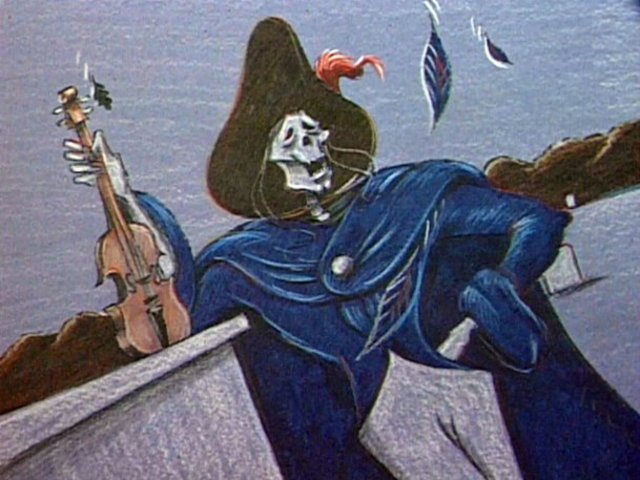 Manetti was the violinist’s last name. His first name has been lost to history. He was making a name for himself throughout New England when twin milestones occurred which prevented him from earning the full musical fame he longed for.
Those twin milestones happened in 1775 and they were:
On the personal level, Manetti was diagnosed with consumption (tuberculosis) and on the national level, the Revolutionary War broke out. Due to his medical condition the thirtyish violinist was not looked down upon for refraining from military service. However, none of the New England towns had funds to spare for the type of symphonies or opera houses Manetti had envisioned for the area.
The Italian gentleman took to a nomadic existence while the war raged, playing for Rebels and Tories alike. All he cared was that he got paid. No matter if he was called upon to play with fellow classical musicians at parties thrown by British officers or to play as a mere “fiddler” for Rebels Manetti was a veritable magician.
Manetti often modestly attributed his gift to the paraticular violin he played. He claimed it was fashioned from the wood of trees that lined New Hampshire’s White Mountains. Those trees were said to be alive, like the very rocks and flowers that surrounded the infamous glowing peak feared by both red men and white.
The more scientific- minded insisted Manetti was merely being theatrical with those claims, but others could tell he was quite serious, and that he also credited the enchanted wood of his instrument for keeping him alive despite his condition. As the 1780s rolled along the violinist seemed to grow healthier rather than paler and weaker.
The 1790s arrived and Manetti found himself more and more out of favor. He had adopted the airs of a grand artiste and refused to play alongside any musicians that he did not deem worthy. He also turned up his nose at playing any of the homier tunes audiences requested, preferring to concentrate on classical music.
Needless to say this made him less and less popular and much less in demand. In Duxbury, MA one of Manetti’s alienated potential clients told him to “Go play your hoity-toity music for the dead! None of the living want to hear you!”
That night a drunk and despondent Manetti was walking by the cemetery in Duxbury and decided to do just that. The master violinist threw himself into his performance as always and, owing to the eldritch forces in his instrument, the dead in their coffins were stirred to a form of life and clambered out of the grave to dance in the moonlight to Manetti’s music.
The besotted musician took this macabre development more calmly than a sober mind would have and he exalted in the intricate dances his music inspired the dead to perform. An idea struck him and he led his unliving mob into the heart of the town.
The mayor and other prominent citizens – clad in their night clothes – rushed from their homes and beheld the sight of the cavorting corpses moving in time to the music of Manetti’s violin. Some men and women fled, children cried and all who remained prayed to Heaven and pleaded with the mad musician to stop this infernal spectacle.
For the right price the wily violinist agreed to lead his perverse assembly back to the cemetery so the animated corpses could lie back down in their graves. Come morning the citizens of Duxbury could shovel dirt back on the ruptured graves and all would be as good as new.
Manetti found this to be a far more lucrative business than he had previously pursued. In the first few towns he reached the authorities and the moneyed people were skeptical and rejected his extortion demands with a laugh. When their own dead were encountered gamboling in the town square that night they proved only too happy to pay.
Soon the mad violinist’s reputation as the man who had made the dead dance at Duxbury had sufficient currency that his demands were met upon his first arrival in any New England town. It was better to pay Manetti to play his classical music to the living rather than have him unleash dancing and decaying corpses.
As the years passed it had been so long since Manetti had been forced to use his violin to make the dead dance that the whole story was being regarded as mere superstition in some quarters. Those skeptics tended to just shrug and laugh at the people who paid the seemingly unhinged violinist to avoid having him summon up the dead.
A handful of the criminal element in New England took the money Manetti raked in very seriously even if they doubted the veracity of the tall tales about him and his enchanted instrument. Catching the violinist alone after dark this gang of thugs threatened harm to the musician if he didn’t agree to start splitting his fee with them when he performed in their territory.
Manetti calmly refused and issued his warning about raising the dead with his music to show the gang that he was not to be trifled with. The gang laughed and dragged the violinist to the nearest graveyard and encouraged him to do his worst.
The mad musician set out to convince these vulgar skeptics and began to play under the moonlight while strolling among the graves. To the horror of the band of criminals the dead began making their way up and out of their resting places to dance with wild abandon to Manetti’s music.
A few of the gang fled in fear, but the chief and his most loyal lieutenants had survived terms in prison and were not so easily frightened off. Manetti now underestimated his would-be assailants and ordered them to run off, saying he and his dancers would consider the matter closed.
The gang’s chief was not moved. He had visions of using the violinist’s macabre gift in ways Manetti had not conceived of. A fierce argument ensued and with the musician concentrating so hard on maintaining his tune he miscalculated the severity of the criminal chief’s threats.
Assuming anyone could use the enchanted violin as easily as Manetti did, the outlaw leader pulled out his wooden club and angrily beat the musician to death with just a few blows.
The following silence did not cause the dancing corpses to fall to the ground inert as the criminal mastermind had planned. Instead the undead dancers simply stared at him and the fallen Manetti in silence, all the while drawing closer to surround the gang of crooks.
The putrid corpses in the vanguard eyed the stricken Manetti and the fallen violin and bow. They tilted their heads like dogs do when confused and looked back and forth from the violinist and his instrument to the increasingly frightened gang of strongarm thieves.
One corpse in particular picked up the violin and bow and proffered them to the gangster chief. Uneasily the man shook his head, following which another of the animated corpses seized his wooded club from him and beat him to death with it.
The other crooks attempted to flee but were easily subdued and slain by the living dead surrounding them. Some of the limbs came off the decaying corpses as they beat and kicked and strangled their victims.
Soon only one of the gang was left standing and, as he had always considered himself something of a fine fiddler himself, he picked up Manetti’s enchanted violin and began to play a tune on it. The dead resumed dancing and for a time the fiddler began to feel less fear.
Unfortunately every time he tried to stop playing the surrounding dancers would immediately crowd around him threateningly. The intimidated fiddler would resume playing and the dead would return to their frolicing.
Eventually weariness began to assail the frightened man. He could only grab a brief instant of rest here and there before his demanding audience would move in on him with clearly violent intentions.
At one point the fiddler felt salvation was his when he recognized the newly-dead Manetti among the corpses cantering to his music. He begged the late musician to tell him how to maneuver the dead back into their graves but there was no light of intelligence in Manetti’s eyes. Just the fog of death. Manetti was unable to answer.
The fiddler’s body at long last betrayed him. Too weary to even hold the violin up to his chin any longer he collapsed in exhaustion and the furious unliving dancers proceeded to rend him limb from limb.
With no one left alive to potentially play the bewitched violin the mindless corpses tore it apart, too, with the end result being that they all fell where they stood, like marionettes with their strings clipped.
The next morning the grisly tableau at the graveyard was discovered by the citizenry. Fearful of the unholy drama that must have played out overnight they reburied the dead and tossed the remains of Manetti and the criminals into a mass, unmarked grave.
The incident was rarely discussed and as generations passed it was all considered to be a mere folk tale.
FOR MORE HALLOWEEN ITEMS CLICK HERE: https://glitternight.com/category/halloween-season/
© Edward Wozniak and Balladeer’s Blog 2015. Unauthorized use and/or duplication of this material without express and written permission from this blog’s author and/or owner is strictly prohibited. Excerpts and links may be used, provided that full and clear credit is given to Edward Wozniak and Balladeer’s Blog with appropriate and specific direction to the original content.
 Balladeer's Blog
There’s a movie in this story!
I agree!
Macabre little story here.
I agree.
I see dancing dead people!
Ha! I like that!
Nice updating on some old folktales.
Thanks!
Marvelous! Very gothic!
Thanks!